
Stock Markets March 13, 2026

Deutsche Bank Starts Coverage of Czechoslovak Group with Buy Call, Flags Long Ammunition Restocking Cycle

Analyst Sriram Krishnan sets €35 target as shares trade below listing levels amid heavy early volume

By Marcus Reed
Deutsche Bank Starts Coverage of Czechoslovak Group with Buy Call, Flags Long Ammunition Restocking Cycle

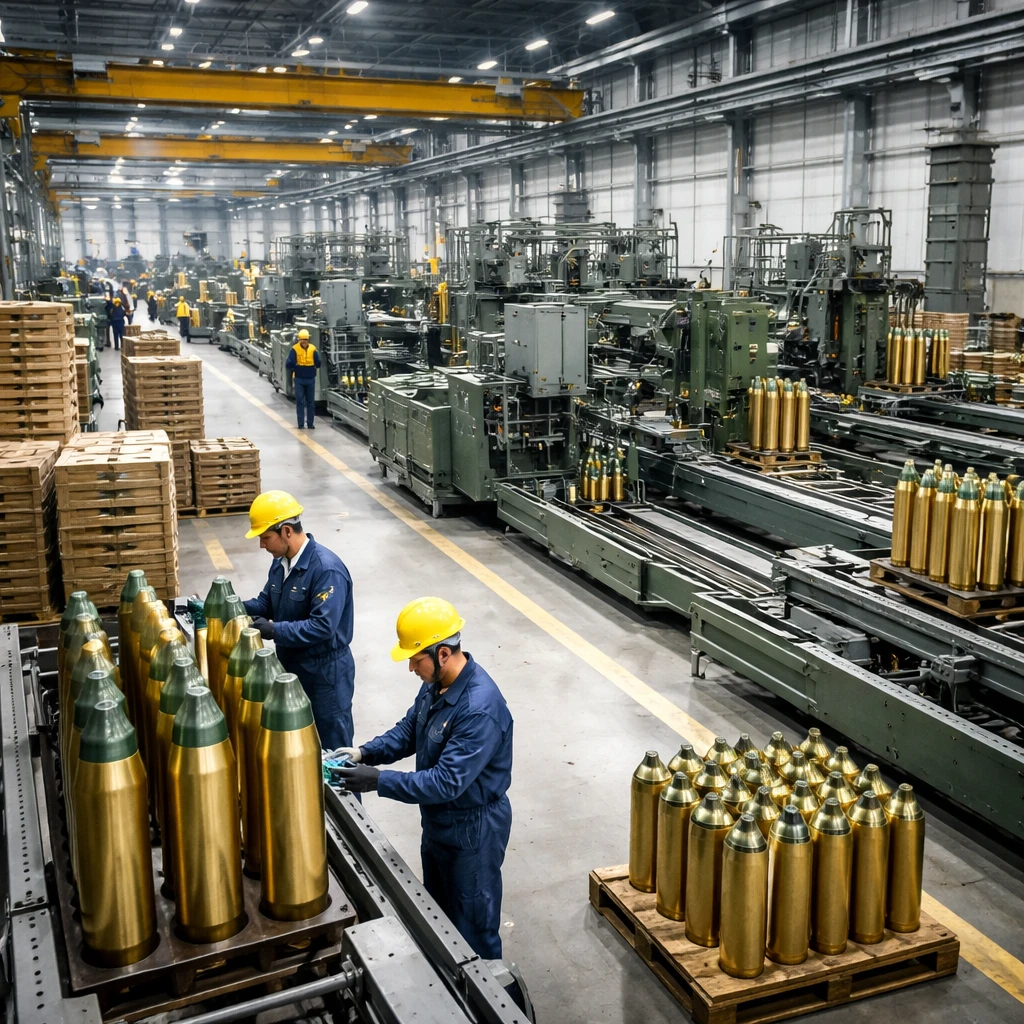
Deutsche Bank initiated coverage of Czechoslovak Group (CSG) with a buy rating and a €35 price target, citing the company's position as Europe’s second-largest ammunition maker and a multi-year NATO restocking cycle. Analyst Sriram Krishnan highlighted that medium and large caliber ammunition generates the majority of the group's profit, and that structural demand and a strong backlog support mid-teens revenue growth ambitions through 2030.

Key Points

  • Deutsche Bank begins coverage of Czechoslovak Group with a buy rating and a €35 target, while the stock closed at €28.59 on March 12.
  • Medium and large caliber ammunition represent 55% of group sales and about 80% of group EBIT, central to the company's plan to achieve mid-teens revenue CAGR through 2030.
  • Deutsche Bank projects elevated EBIT margins, potentially reaching 26% by 2030, driven by vertical integration; NATO restocking demand for medium and large caliber ammunition could take more than 13 years to fulfill.

Deutsche Bank has opened coverage on Czechoslovak Group with a "buy" recommendation and a price target of €35, according to analyst Sriram Krishnan. The call comes as shares of the Czech defense and industrial manufacturer closed at €28.59 on March 12 on Euronext Amsterdam.

CSG's listing was recent: the stock made its trading debut on Euronext Amsterdam on Jan. 23, when it closed at €32.85 on a single-day volume of 38.14 million shares, the largest trading volume recorded in the company's brief history on the exchange. Five sessions later, on Jan. 28, the shares reached an intraday high of €34.35 before moving lower in the subsequent weeks.

By March 12, the closing price of €28.59 represented the lowest closing level seen since the company began trading.

Krishnan's note frames CSG as the second-largest ammunition manufacturer in Europe and stresses the company’s exposure to medium and large caliber ammunition, which comprise 55% of group sales and roughly 80% of group EBIT. He positions that segment at the core of the group's objective to deliver mid-teens compound annual revenue growth through to 2030.

The Deutsche Bank analysis points to a prolonged period of demand tied to European NATO restocking of medium and large caliber ammunition, noting that this requirement could take more than 13 years to satisfy. Separately, Krishnan cites a robust backlog in CSG’s Land Systems division as a supporting factor for the group's mid-teens revenue growth targets.

On profitability, Deutsche Bank expects the group’s EBIT margins to remain elevated over the coming years, with the note suggesting margins could reach as high as 26% by 2030. That margin trajectory is attributed in the note to the company’s vertical integration efforts.

Krishnan also addressed near-term demand drivers related to the conflict in Ukraine, stating, "Despite short term growth is aided by Ukraine war, a potential peace agreement is unlikely to derail this story and will only kick-start the restocking effort which provides robust long term growth visibility." The note frames this restocking dynamic as underpinning longer-term visibility for CSG’s revenue profile.


Context for markets and supply chains - The note highlights a prolonged ammunition restocking cycle that has implications for defense manufacturing supply chains and industrial production planning in Europe, and for capital markets as investors evaluate CSG's growth and margin outlook.

Risks

  • Market volatility in the stock since listing - shares fell from initial trading highs to the lowest closing price recorded on March 12, indicating short-term price risk for investors.
  • Long horizon for fulfillment of European NATO restocking - the note estimates this demand could take more than 13 years to meet, creating extended timing uncertainty for revenue realization in the defense sector.
  • Near-term demand sensitivity to geopolitical developments - while the analyst views a potential peace agreement as unlikely to derail long-term restocking, changes in conflict dynamics could alter the timing and profile of procurement in defense markets.

More from Stock Markets

Ulta Beauty Shares Slide as Higher Costs Dent Margins; Company Bets on TikTok to Win Younger Shoppers Mar 13, 2026 Carvana Board Approves 5-for-1 Split as Shares Tick Higher Mar 13, 2026 Liquidity Strain in Private Credit: Redemption Gates Expose Structural Weaknesses Mar 13, 2026 Insider Activity Snapshot: AdaptHealth Purchase Tops Thursday Filings Mar 13, 2026 HSBC Elevates NIO to Buy, Cites New Product Cycle and Clearer 2026 Earnings Outlook Mar 13, 2026