
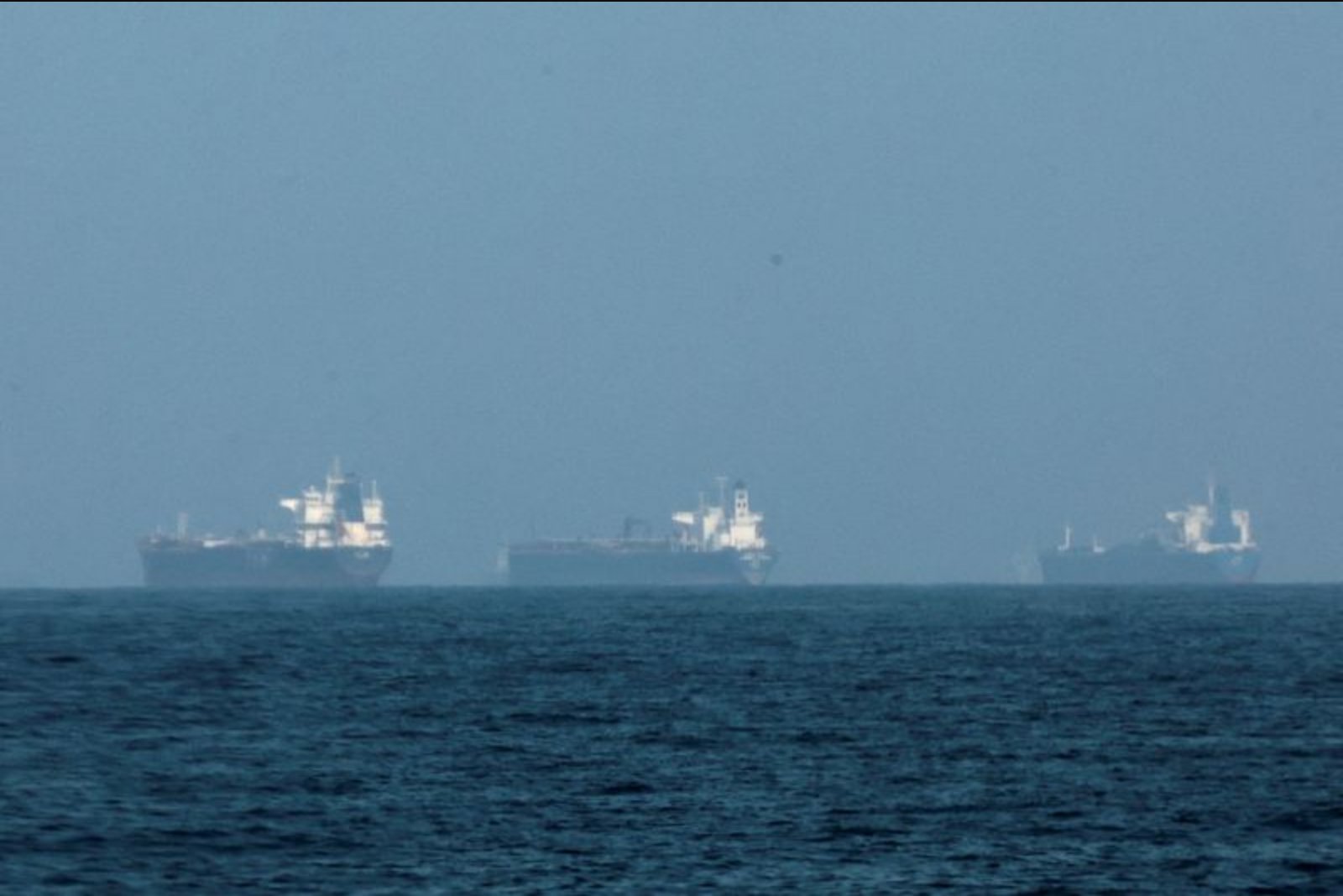
Markets have reacted sharply to the recent Israel-U.S. attack on Iran, with energy-related risk measures spiking as war-risk insurance costs climbed, freight rates reached record levels and shipping flows through the Strait of Hormuz were disrupted, leaving hundreds of vessels stranded. Yet, derivatives markets - where traders can express views on future price paths via options and futures - are signaling that participants largely expect those disruptions to be temporary.
Short-dated option prices and the structure of the futures curve show concentrated risk premia at the front of the market. Over the week through Tuesday, 30-day at-the-money Brent implied volatility rose 17.5 percentage points to 68%, while the 60- and 90-day tenors climbed by only 5.9 and 2.8 percentage points respectively, according to LSEG data. Those disparities imply traders are paying a much higher premium for near-term protection than for exposure further out along the timeline.
Similar signals appear in the Brent futures curve. The gap between the front-month Brent contract and the six-month contract widened to about $10, producing the steepest backwardation observed since the Russia-Ukraine conflict in 2022. That structure reflects tightness in immediate supply availability yet leaves room for a normalization once the immediate disruption subsides.
Options on West Texas Intermediate (WTI) also convey a rapid shift in positioning. The put-to-call ratio - which gauges the balance between bearish puts that profit on price falls and bullish calls that benefit from price rises - plunged to 0.35 on Monday from Friday's close before recovering to 0.56 on Tuesday, based on CME data. The sharp fall reflected heavy buying of call options during the initial rally, with a subsequent re-emergence of demand for downside protection as market participants rebalanced.
Market participants point to dealer positioning as another factor shaping price dynamics. "Dealers are already short a meaningful amount of these deep out-of-the-money calls, creating a more negative gamma profile in crude," said Rebecca Babin, senior energy trader at CIBC Private Wealth US. That contrasts with a more typical setup where dealers are long gamma and sell into rallies. Gamma measures how an option's sensitivity to the underlying futures price - the delta - will change if the market moves.
Despite the immediate volatility, longer-term contracts have not been repriced to reflect a durable supply shift. Much of the 2027 Brent strip remains priced below $70 a barrel, a sign traders have not adopted a view of enduring tighter supply. Producers have also used the price spike as an opportunity to hedge future output, which introduces natural selling pressure and dampens longer-dated volatility, according to market participants.
Darrell E. Fletcher, managing director of commodities at Bannockburn Capital Markets, noted that risk premiums remain concentrated at the front of the futures curve, reinforcing the notion that the market sees the disruption as temporal. The front-end focus is visible across multiple metrics.
Open interest movements underline the rapid repositioning that occurred around late February and early March. Brent options open interest collapsed in late February before rebuilding in early March, an indication that positions were actively unwound and then re-established. Front-month open interest dropped from about 388,000 contracts on Feb. 18 to roughly 73,000 contracts by Feb. 27. That figure then surged to more than 700,000 contracts on March 2 as new positions were put on.
"The open interest data seems like a pretty clear tell that it was a sharp unwind in positioning and not a structural repricing. The front end is clearly closing a trade while the back end is what to pay attention to," observed Brian E. Kinsella, former Goldman Sachs energy specialist. His observation frames the market as closing short-term trades while monitoring longer-dated pricing for signs of a permanent shift.
Futures positioning mirrors this concentration at the front of the curve. CME data show that more than 40% of open interest is concentrated in April through July expiries, while positioning thins further out. That distribution underscores the market's emphasis on near-term outcomes and the expectation that elevated near-term risk may abate over subsequent months.
In sum, derivatives metrics - heightened short-dated implied volatility, steep front-month backwardation, heavy call buying followed by a rebound in demand for put protection, and front-loaded open interest - collectively signal that traders currently expect the Middle East disruption to be short-lived. The market's structure suggests tightness and elevated premiums in the immediate term, paired with a cautious view that long-term supply fundamentals have not shifted materially.