
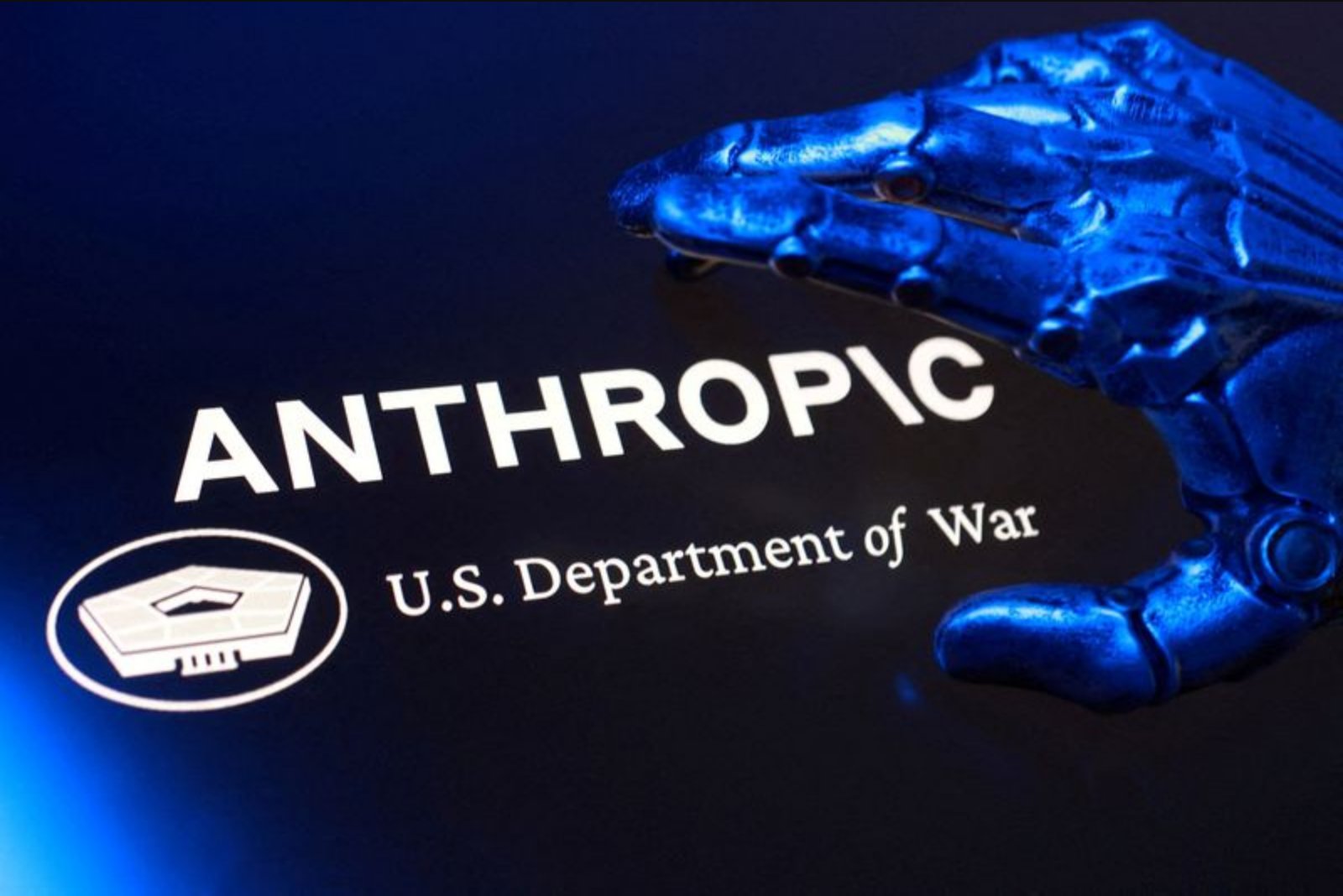
WASHINGTON, March 3 - U.S. defense contractors are expected to remove Anthropic's AI tools from work tied to the Pentagon and from their defense-oriented supply chains after President Donald Trump announced a federal agency-wide ban on the company, legal and contracting specialists said. The announcement capped an intense, weeks-long standoff with Anthropic over technology guardrails for the firm's Claude models and included a six-month phase-out period for government use.
The White House move was followed by a forceful statement from Defense Secretary Pete Hegseth, who said he would designate Anthropic as a supply chain risk to national security and posted: "Effective immediately, no contractor, supplier or partner that does business with the United States military may conduct any commercial activity" with the company. Anthropic has said it will challenge the ban in court.
Attorneys who specialize in government contracting and technology law say the legal authorities the administration could use to impose such a ban do not clearly permit barring defense contractors from using Anthropic in their broader commercial operations. Even so, lawyers and contracting experts expect defense firms to act quickly to align with the administration's directive because of the stakes involved in competing for parts of the federal government's annual, trillion-dollar procurement budget.
"We will follow the president's and the Department of War's direction," Lockheed Martin said in response to questions about its use of Anthropic after the administration's action, using the phrase as the company did to refer to the Department of Defense. Lockheed added that it "expects minimal impacts" and noted it does not rely on any single AI vendor "for any portion of our work."
Lawyers said that with billions in government contracts at risk, defense contractors that derive meaningful revenue from Pentagon work are likely to purge Anthropic from programs connected to the military. "Most companies that do significant business with the government are hyper-aware of what the U.S. government wants and they're likely already taking steps to cleanse their supply chains of Anthropic," said Franklin Turner, a government contracts attorney. Turner added that the ban itself has already inflicted "significant harm" on Anthropic, regardless of whether it ultimately survives legal challenge.
When asked whether they would comply with the order, General Dynamics, Raytheon parent RTX, and L3Harris declined to comment. The Department of Defense did not immediately respond to a request for comment. Anthropic declined to provide a new statement but pointed to its prior assertion that the Pentagon lacks the statutory authority to prohibit its contractors from using Claude.
Legal questions about authority
Despite the administration's public posture, lawyers who follow defense contracting said it is unclear whether the statutes cited by the administration authorize a government-wide prohibition on Anthropic's tools. Under the Defense Department authority most likely to be invoked, commonly referred to as the DOD Supply Chain Risk Authority, the agency may bar contractors from using a supplier in work for the government if a supplier creates a demonstrable supply chain risk - for example, a threat that an adversary could sabotage, insert unwanted capabilities, or otherwise "subvert" technology to "surveil, deny or disrupt" its proper use.
Even so, that authority generally pertains to government-related work and does not give the Defense Department carte blanche to forbid a company from employing the technology in its non-government business. Jason Workmaster, a contracts attorney at Miller Chevalier, described the Pentagon's posture as a "highly aggressive position" and said that if challenged in court there is a high likelihood the department would be found not to have that sweeping power, "unless there are facts that we do not know about."
Another statutory path, the Federal Acquisition Supply Chain Security Act - FASCSA - creates a similar mechanism but includes procedural steps the agency must follow before taking enforcement action. Those steps include providing the business an opportunity to respond and notifying Congress, among other requirements. Legal scholars note the government has not publicly demonstrated that it completed those procedural obligations in this case.
"Capitalism and free markets rely on the rule of law," said Alan Rozenshtein, a law professor who studies technology regulation, reflecting on the importance of following statutory processes. "This is the opposite of that," he said, characterizing the administration's swift move as contrary to the procedural norms embedded in the statutes.
Industry behavior and precedent
Defense companies have in recent months shown a readiness to implement administration directives rapidly. Reporting has documented instances where contractors removed references to Diversity, Equity and Inclusion initiatives from contracts after an executive order required agencies to include language in awards mandating recipients certify they do not operate DEI programs that violate federal anti-discrimination law. That episode is cited by industry observers as an example of how quickly government contractors adapt contract language and procurement practices in response to administration priorities.
Legal experts say the practical effect of the current Anthropic ban may be immediate and significant even if it faces court challenges. Because winning and retaining defense work often depends on maintaining close relations with agencies and adhering to procurement requirements, contractors may choose to phase out vendor relationships pre-emptively rather than risk noncompliance with Pentagon directives.
Separately, the administration has used FASCSA previously to restrict certain suppliers for intelligence agencies; earlier action barred U.S. intelligence agencies from purchasing products from Acronis AG, a Swiss cybersecurity and data protection firm, under that law.
Implications for Anthropic and the supply chain
Attorneys and contracting specialists say the administration's order and the Pentagon's characterization of a national security supply chain risk impose immediate reputational and commercial costs on Anthropic, irrespective of eventual judicial outcomes. The question of whether the military itself can designate Anthropic as a supply chain risk in a way that excludes the Pentagon's own use of the technology remains unsettled in public documents and statements.
Anthropic's indication that it will pursue legal remedies ensures the question of statutory authority and procedural compliance will likely be litigated. In the meantime, defense contractors appear poised to adjust procurement and vendor arrangements to reflect the White House and Pentagon direction, a reaction that illustrates how quickly private companies that rely on government business can be influenced by executive branch priorities.
For defense suppliers and the broader defense contracting sector, the development underscores the intersection of national security policy, procurement law, and commercial technology adoption. Firms that depend on Pentagon contracts will have to weigh the legal merits of resisting an administrative ban against the practical consequences of noncompliance for access to government work.