
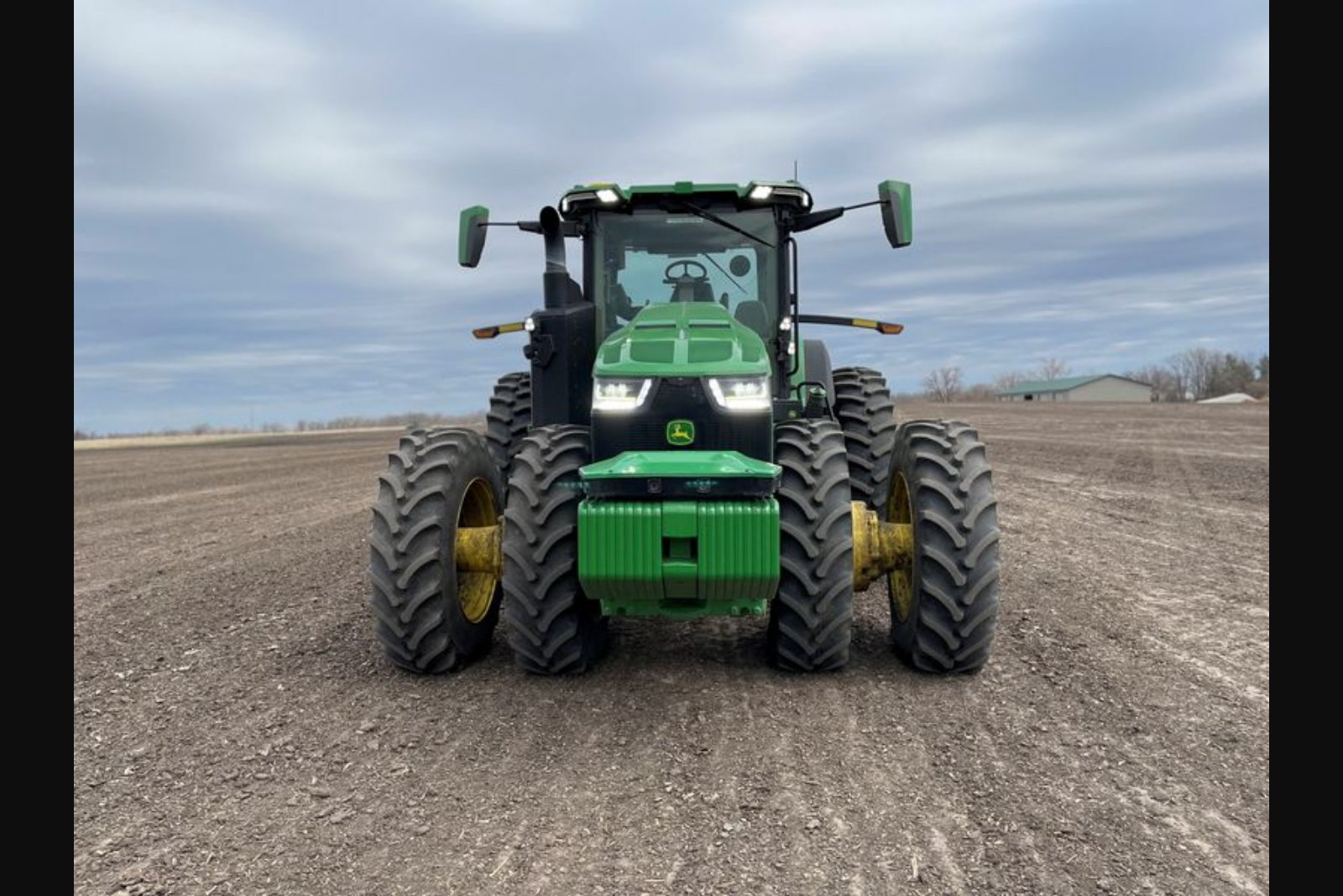
Deere & Co on Thursday raised its full-year net income forecast for 2026, saying prior cost-cutting measures have helped shield the company from softer demand for new equipment. The updated guidance calls for net income in a range of $4.5 billion to $5.0 billion, up from the previous outlook of $4.0 billion to $4.75 billion.
In early trading before the bell, Deere shares rose about 2 percent. Management highlighted pockets of improving demand as a factor behind the optimism.
Chief Executive Officer John May said the company is seeing an ongoing recovery in demand within both construction and small agriculture segments, and added that these trends support the view that 2026 represents the bottom of the current cycle. That comment frames the upgraded guidance as a response to modest improvements in two end markets even as the broader large agriculture sector faces ongoing difficulties.
Earlier, Deere had reduced factory output to better align production with subdued orders for new machinery. The company said the cuts were a response to weak demand driven by lower crop prices and higher input costs, which have led many farmers to delay large equipment purchases.
Deere is also coordinating with dealers across its distribution network to bring down elevated inventory levels. Company management cited active engagement with dealer partners as part of its approach to rebalance supply with current demand conditions.
The company noted that U.S. farmers are entering another season characterized by weak crop prices and higher operating costs, conditions that may force difficult decisions about whether and how to continue operations as abundant grain supplies weigh on markets.
On the top line, Deere reported that first-quarter revenue rose 13 percent to $9.61 billion, compared with $8.50 billion a year earlier.
Analysis - The combination of cost control, selective demand recovery in construction and small agriculture, and active dealer inventory management underpinned Deere's decision to lift its 2026 net income range. The results and revised outlook were reflected in a modest premarket share gain.