
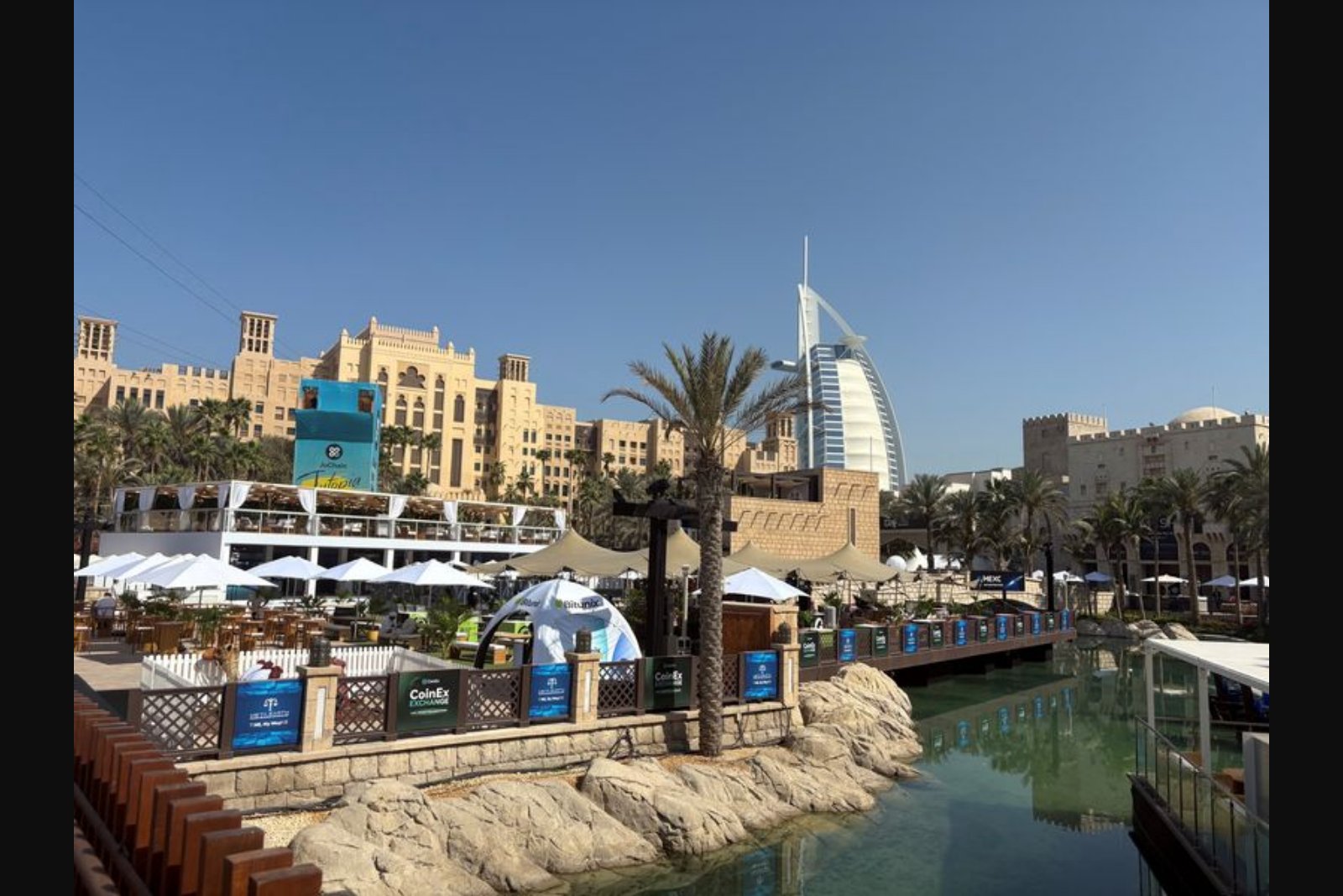
DUBAI, March 18 - As intermittent anti-projectile defenses punctuate the skyline of Dubai, crypto sector professionals in the United Arab Emirates say their work routines have mostly held steady even as the broader Middle East energy and transport landscape reels from the fallout of the U.S.-Israeli military actions tied to Iran.
Laia Fernández, who runs marketing for a crypto company from a high-rise apartment in Dubai’s downtown business district, said the everyday operations of her business have not been dramatically altered. The presence of occasional interception sounds are a reminder of the conflict, she said, but do not appear to have halted the global, virtual-first activity of her clients.
That virtual-first model - firms operating cloud-based infrastructure and relying on online trading venues - has helped maintain continuity. Fernández noted that many UAE-based crypto companies function across borders, with employees often working from home or traveling temporarily overseas, and that this flexibility has limited immediate operational disruption.
While attacks have been reported in and around Dubai, including an incident at the city’s airport on Monday that has dented its reputation as a regional safe haven for tourism and business, the transfer of crypto assets and trading activity appears easier to sustain than the movement of physical commodities such as oil and gas.
Alex Scott, who promotes the Solana blockchain in Dubai, said the longer-term appeal of the UAE remains intact because recent events have hastened discussions on the resilience of financial infrastructure. "The fundamentals that made the UAE attractive for crypto and blockchain haven’t changed," Scott said.
Market moves have been mixed amid the conflict. Bitcoin, which has inched upward since strikes began on February 28, reached $73,949 on Tuesday, though it remained roughly 15% lower for the year.
Thomas Puech, chief executive of crypto trading firm INDIGO, reported no evidence of trading flows that would indicate a mass departure from the UAE by crypto firms or their customers.
Policy and investment backdrop
The UAE’s policy environment has supported crypto adoption in several ways. The central bank has approved dirham-backed stablecoins, some local lenders provide blockchain trading services, and certain real estate projects - including a Trump Tower currently under construction in Dubai - have announced or accepted on-chain payment options.
Investment by government-backed or linked entities has further entwined crypto into the national financial fabric. Last year, Abu Dhabi-backed investor MGX bought a $2 billion stake in Binance, and another government-linked entity paid $500 million for partial ownership of World Liberty Financial, a crypto firm co-founded by U.S. President Donald Trump, his sons and other business partners. A World Liberty spokesman previously said the President had no involvement in the deal and rejected any suggestion of favour-trading.
Operational adjustments and caution
Karl Naim, an executive for crypto investment firm XBTO based in Abu Dhabi, said the most immediate consequence for local companies has been an uptick in caution. Practical disruptions have included altered travel plans, postponed meetings and a stronger focus on contingency preparations. His team, familiar with hybrid and remote work patterns, has shifted to working remotely rather than from their office in Abu Dhabi Global Market, which is near a military port that has been a target.
"We are not worried about our wellbeing, but worried about the situation not stabilizing anytime soon," Naim said.
Some high-profile regional gatherings have been cancelled or delayed - TOKEN2049, a major crypto conference in Dubai, is among the events affected - and the security situation across the region remains fluid. Several financial institutions have already adjusted operations: Citigroup said on Monday it was keeping most of its UAE branches and offices closed until further notice. Britain’s Standard Chartered and the London Stock Exchange Group had previously instructed Dubai-based staff to work remotely.
Regulatory functioning and investor movement
Gordon Einstein, founder of CryptoLaw Partners, said that regulatory functions within the UAE are continuing to operate and that Dubai still offers an attractive regulatory environment relative to many locations in Europe and Asia, particularly when access to local capital is considered. He observed a temporary outflow of many transient expatriate investors and entrepreneurs, who have left the country for the time being but retain the ability to run their businesses from abroad.
Einstein cautioned that the strength and persistence of the UAE’s crypto ecosystem will depend on the duration of the conflict and its broader effects on travel and confidence. "Dubai lives off the idea that people want to come here," he said. "That’s on hold right now."
Industry view and outlook
Executives and operators in the UAE’s crypto sector generally describe an industry resilient to immediate physical disruptions because of its digital architecture and dispersed workforce. That resilience has so far allowed trading and other blockchain activity to keep moving while traditional, physical flows in energy and transport have been more visibly affected.
At the same time, heightened caution, travel interruptions and event cancellations signal an environment where contingency planning and operational flexibility will remain priorities for firms. How long that posture persists will depend on developments in the region and whether the security environment stabilizes.
In the interim, market watchers will be monitoring investor confidence, regulatory continuity, and whether the current operational resilience translates into sustained activity or a gradual reconfiguration of crypto firms' regional footprints.