
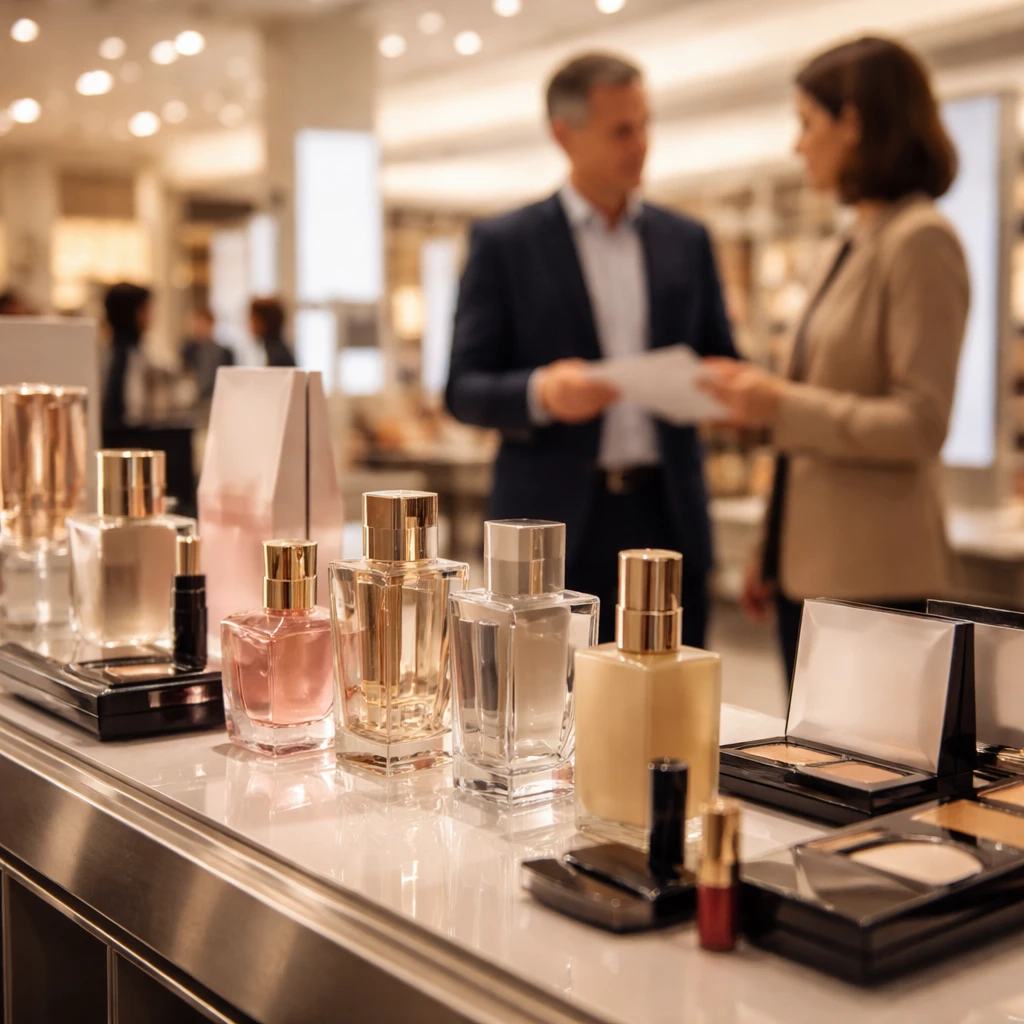
Coty has abandoned its full-year guidance and announced a sharper strategic focus on a narrower set of flagship brands under interim chief executive Markus Strobel, who took the reins on January 1. Strobel, a veteran of Procter & Gamble, said the company needs stronger discipline and execution to reverse what management describes as disappointing financial performance.
The decision to withdraw guidance accompanies a restructure of priorities toward Coty’s most valuable assets, with management making clear it will move resources away from lower-performing consumer beauty lines. Coty’s shares fell about 7% in after-hours trading, extending a slide that has left the stock down roughly 73% over the past two years.
For the quarter ended December 31, Coty reported net revenue of $1.68 billion, a 0.5% increase versus the prior year, a result marginally above analysts’ expectations. Despite that modest top-line gain, the company warned that third-quarter gross margins are likely to decline by 200 to 300 basis points compared with the year-ago period.
Management outlined the near-term trade-offs it expects as it redirects spending to regain market share. With advertising outlays earmarked to support share recovery, Coty now projects adjusted EBITDA for the third quarter in a range of $100 million to $110 million - far below analysts’ average estimate of $201.6 million for the period.
CFO Laurent Mercier framed the strategic shift under the banner "Coty. Curated," describing a ‘‘less is more’’ approach intended to reduce organizational complexity and concentrate investment on proven winners. Mercier said the company will select the largest, highest-potential assets where Coty has clear strengths and redeploy resources accordingly.
Management identified several of those core assets by name. Kylie Cosmetics was highlighted as an example of a brand that has doubled in size over the past three years. Long-term licences with Burberry and Marc Jacobs were also cited as among Coty’s key strengths to be prioritized for growth and profitability.
The company has already been reviewing its consumer beauty division since September, a process that could result in divestitures of some mass-market brands, including names such as CoverGirl and Rimmel. Strobel indicated the review will now be pursued with greater urgency as part of the new strategy.
Coty also flagged that certain licence arrangements may be wound down as the company seeks greater scale and margin improvement. One example called out by management is the licence with Orveda, a biotech-led skincare brand co-founded by the company’s former CEO, which could be among the assets considered for exit.
On the balance-sheet front, Coty has been taking steps to reduce leverage. In December, the company sold its remaining 25.8% stake in Wella to private equity firm KKR for $750 million and used the bulk of the proceeds to pay down long-term debt. As a result, Coty’s net debt to adjusted EBITDA ratio has fallen to 2.7x, the lowest level reported in nine years.
Management said the company may receive additional proceeds from an initial public offering of Wella, which sources indicated could occur in the U.S. as soon as this year. That potential monetization would further influence the company’s ability to lower debt and reallocate capital toward core franchises.
However, Coty faces continuing external pressures. The company will lose its exclusive Gucci fragrance and beauty licence in 2028 after the sale of the Kering beauty business to L’Oréal. At the same time, inflation-sensitive consumers are increasingly leaning toward lower-cost cosmetic alternatives, including brands such as Elf Beauty, heightening competitive pressure across Coty’s consumer-focused portfolio.
What management says
"Our financial performance over the past year and a half has been disappointing, and our current share price reflects that reality," Strobel said. "Coty has outstanding assets and capabilities, yet we have not been delivering at the level we should."
Outlook and strategic priorities
- Withdrawn full-year guidance while shifting to a curated portfolio strategy called "Coty. Curated."
- Planned increase in advertising to support core brands, accepting near-term margin compression and lower adjusted EBITDA for the third quarter.
- Continued portfolio review that could include sales of consumer beauty brands such as CoverGirl and Rimmel, and possible exits from certain licences like Orveda.
- Balance-sheet repair through asset sales, exemplified by the December sale of the remaining Wella stake to KKR for $750 million and using proceeds to reduce long-term debt, bringing net leverage to 2.7x.