
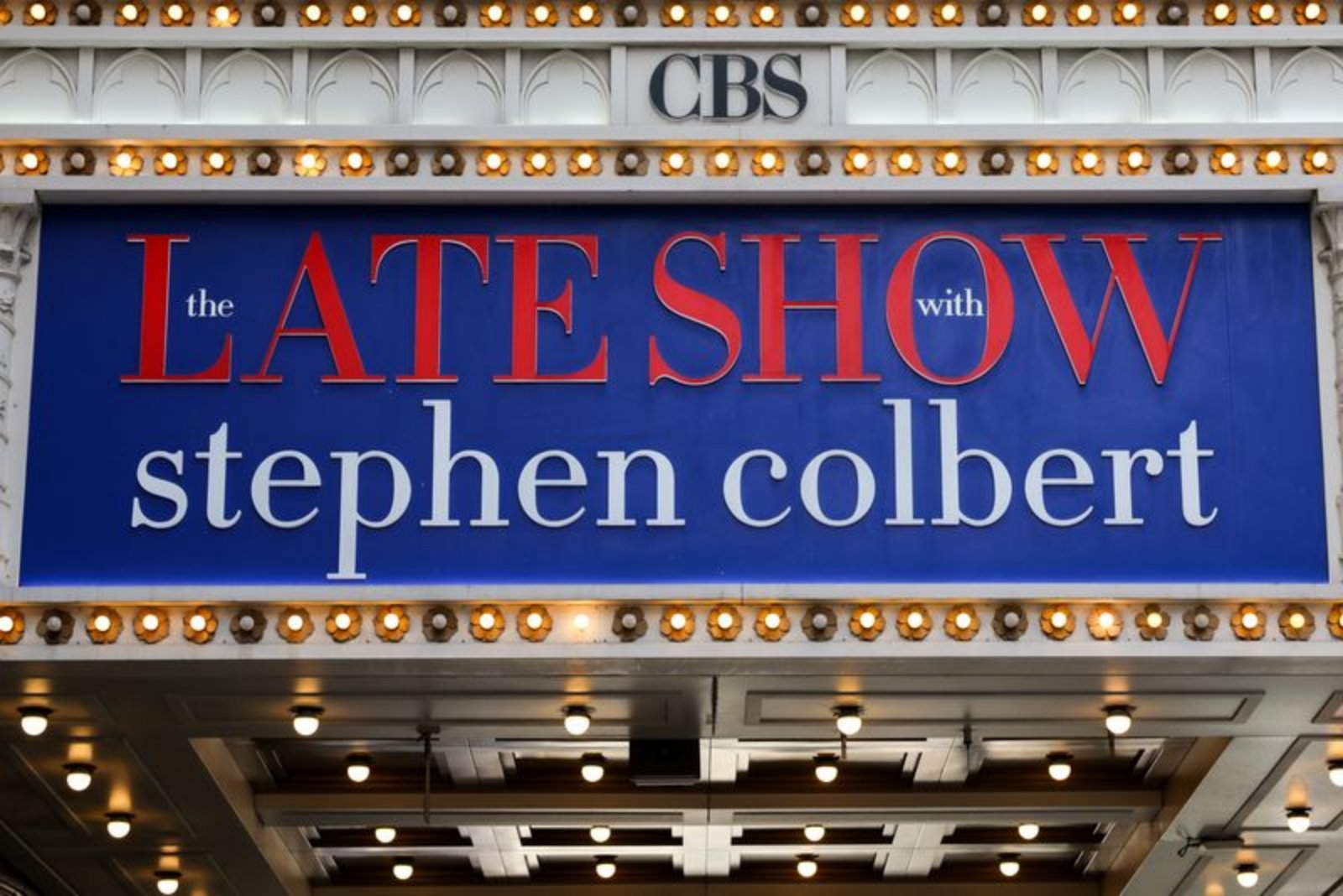
In a Monday broadcast, late-night host Stephen Colbert said network lawyers barred him from airing an interview with James Talarico, a Democratic member of the Texas State House who is seeking his party’s nomination for the U.S. Senate.
On "The Late Show," Colbert accused the administration of trying to silence criticism on television, stating: "Donald Trump’s administration wants to silence anyone who says anything bad about Trump on TV, because all Trump does is watch TV." He also criticized the Federal Communications Commission Chair Brendan Carr and the network’s legal team, accusing them of enforcing Carr’s directive for "purely financial reasons."
Colbert instead published the interview on the program’s YouTube channel. As of 11 a.m. ET, that posting had drawn roughly 1 million views.
The controversy stems from a recent policy change at the FCC. Republican leaders of the commission said last month that daytime and late-night television talk shows will no longer be treated as "bona fide" news programs that are exempt from equal time rules. Those rules require broadcasters to provide comparable airtime to opposing political candidates.
Until January, many networks had relied on a long-standing exemption for interview segments on talk shows. The exemption dated back to a 2006 FCC Media Bureau decision that carved out the interview portion of Jay Leno’s "The Tonight Show" as qualifying for an equal opportunities exemption. Networks have used that precedent when booking political candidates on popular talk programs.
The FCC has opened further scrutiny into candidate appearances on talk programs. Earlier this month the commission started an inquiry into whether the daytime talk show "The View" violated equal time rules after Talarico appeared on that program.
Colbert connected the network’s decision not to air his interview to the broader regulatory climate and to corporate considerations tied to merger approvals. He noted that Paramount previously offered a similar rationale when it announced that his program would be taken off the air in May while the company sought FCC sign-off for its $8.4 billion merger with Skydance Media.
Paramount Skydance is also pursuing a separate transaction to acquire Warner Bros Discovery, matters that place the company before regulators.
Colbert’s remarks and the wider sequence of events have drawn public rebuke from at least one FCC commissioner. Democratic Commissioner Anna Gomez said CBS’s choice to withhold the interview amounted to censorship. Gomez asserted that the FCC lacks lawful authority to pressure broadcasters for political reasons and emphasized that CBS retains free speech rights to air the material.
"This is yet another troubling example of corporate capitulation in the face of this administration’s broader campaign to censor and control speech," Gomez said. "It is no secret that Paramount, CBS’s parent company, has regulatory matters before the government, but corporate interests cannot justify retreating from airing newsworthy content."
Requests for comment directed to FCC Chair Brendan Carr, Paramount Skydance and CBS about Colbert’s statements went unanswered. The White House also declined to comment.
The political dimension to the regulatory push has been visible in prior incidents. Carr faced bipartisan criticism after exerting pressure on broadcasters in September to remove ABC late-night host Jimmy Kimmel from the air, warning that networks could face fines or license revocations. Carr said at the time that "it’s time for them to step up." Two major broadcasters moved to pull Kimmel from the air, and Disney briefly suspended the show before reinstating it.
In December, Democratic Senator Tammy Baldwin of Wisconsin accused Carr of using his federal position to take Kimmel off the air in what she described as an effort to chill free speech.
Against this backdrop, Colbert’s decision to post the interview on YouTube reflects an alternative distribution route when traditional broadcast avenues are constrained. The episode underscores a shifting regulatory environment for talk shows and a moment of tension between broadcasters, regulators and political figures as media companies navigate both editorial choices and merger-driven financial calculations.