
Under Armour's stock moved lower on Tuesday after Citi lowered its rating on the company to Sell from Neutral, pointing to intensifying challenges for the brand's recovery in North America and other markets. The shares dropped roughly 6% in premarket trading by 05:39 ET.
The downgrade came despite Under Armour raising its full-year guidance last week after reporting third-quarter results that outperformed expectations. While fiscal third-quarter 2026 adjusted earnings per share topped consensus estimates, Citi's analyst Paul Lejuez outlined several reservations about the sustainability of the recovery in North America (NAM) and flagged signs of softness elsewhere.
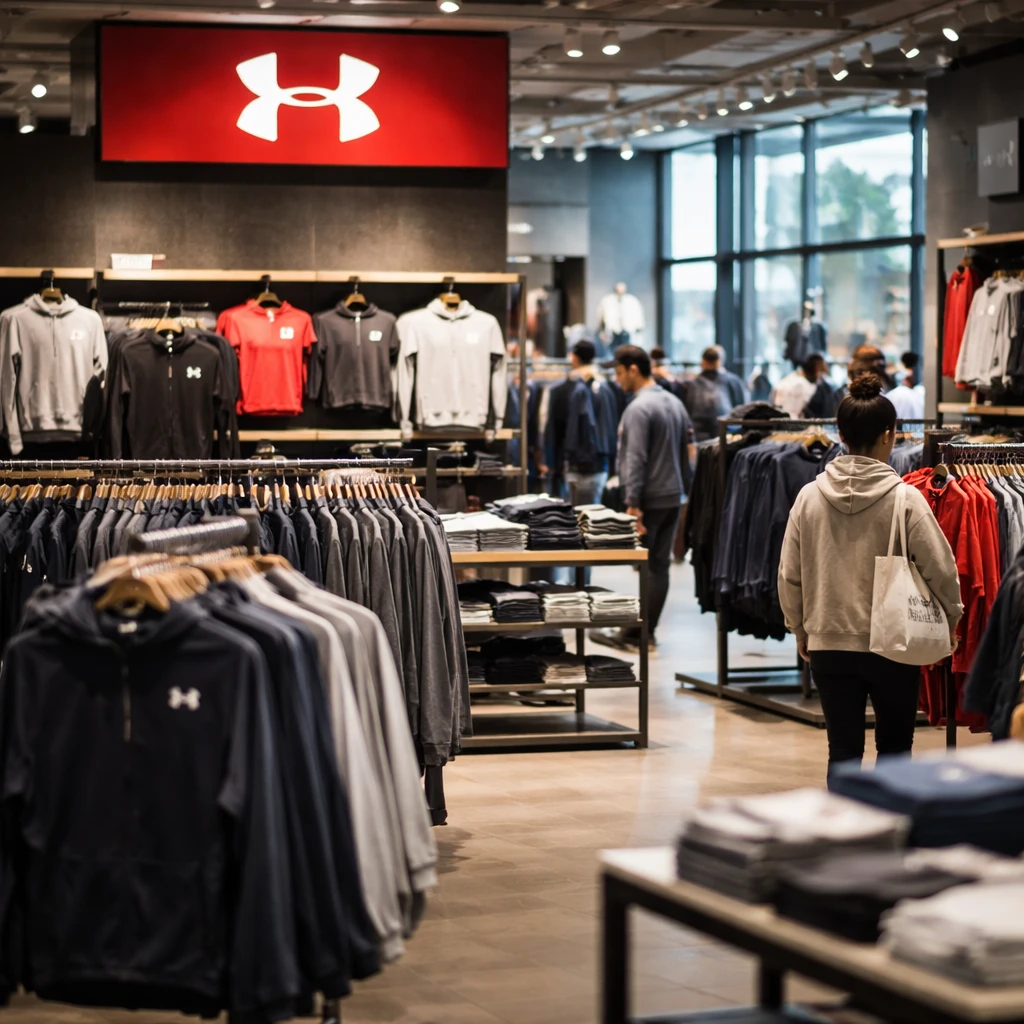
Lejuez cited a highly competitive U.S. athletic market, persistently weak traffic in the company's direct-to-consumer (DTC) channel and an apparent need for increased marketing spend to rebuild brand momentum. He emphasized that Under Armour must show that consumers are actively seeking the brand before major wholesale partners will materially increase shelf space or orders.
"DTC trends in NAM remain weak due to weak traffic trends," the analyst wrote, noting that promotions in the region were a 140-basis-point headwind to third-quarter gross margin.
Lejuez added: "3Q results show UAA is still needing to promote to drive traffic, implying the need to invest more in brand building/marketing to prove to their key retailer partners that their customer is seeking out the brand." He described this as a difficult underwriting proposition given the competitive environment in the U.S., where other athletic brands such as Nike, On, Hoka, Salomon and Adidas are focused on gaining wholesale share.
On geographic performance, Citi flagged a slowdown in EMEA. Constant-currency sales growth in the region decelerated from high single digits in the first half of the year to 2% in the third quarter, with macro pressures - particularly in the U.K. - weighing on demand. The bank models fiscal 2027 EMEA constant-currency growth of 1.5%, a pace below consensus expectations.
Under Armour has described fiscal 2027 as a stabilization year for North America, forecasting flattish sales. Citi's assessment stresses that stabilization will need to be validated by convincing consumer response and better DTC trends before wholesale partners materially change their allocations.
Beyond top-line dynamics, Citi warned of continued cash flow pressure. The analyst cautioned that Under Armour is likely to record another year of negative free cash flow in fiscal 2026 and said it will be "tough for UAA to grow EPS in F27." With shares having risen about 25% following the earnings release and trading at 15.2x fiscal 2027 EV/EBITDA, Citi believes the risk/reward profile is skewed to the downside.
On estimates, Citi raised its fiscal 2026 EPS projection to $0.15 from $0.06 after a third quarter that benefited from lower SG&A and taxes, but left its fiscal 2027 forecast at $0.14, below consensus of $0.22. The bank retained a $6.20 price target.
The company itself adjusted guidance last week, lifting its fiscal 2026 adjusted EPS outlook to 10 to 11 cents from a prior 3 to 5 cents, and described its North America fall order book as "encouraging." Executives also said that while traffic remains soft, "underlying indicators are improving." The firm continues to expect a 4% decline in annual revenue, narrowing its earlier projection of a 4% to 5% drop. Analysts had anticipated a 4.2% revenue decrease to $4.95 billion, according to LSEG data.
Under Armour reported third-quarter revenue down 5% to $1.33 billion, which beat expectations for a 6.3% decline to $1.31 billion. Adjusted earnings were 9 cents per share, compared with forecasts for a 2-cent loss.
As investors weigh the recent results and the company's revised guidance, Citi's downgrade underscores questions about whether Under Armour can convert recent momentum into sustained growth without further margin and cash flow pressure. The analysis centers on consumer demand signals in North America, the trajectory of EMEA sales, and the extent of investment required to restore retail partners' confidence.
These issues remain focal points for assessing valuation and upside potential as the company navigates a competitive wholesale landscape and seeks to repair its DTC performance.