
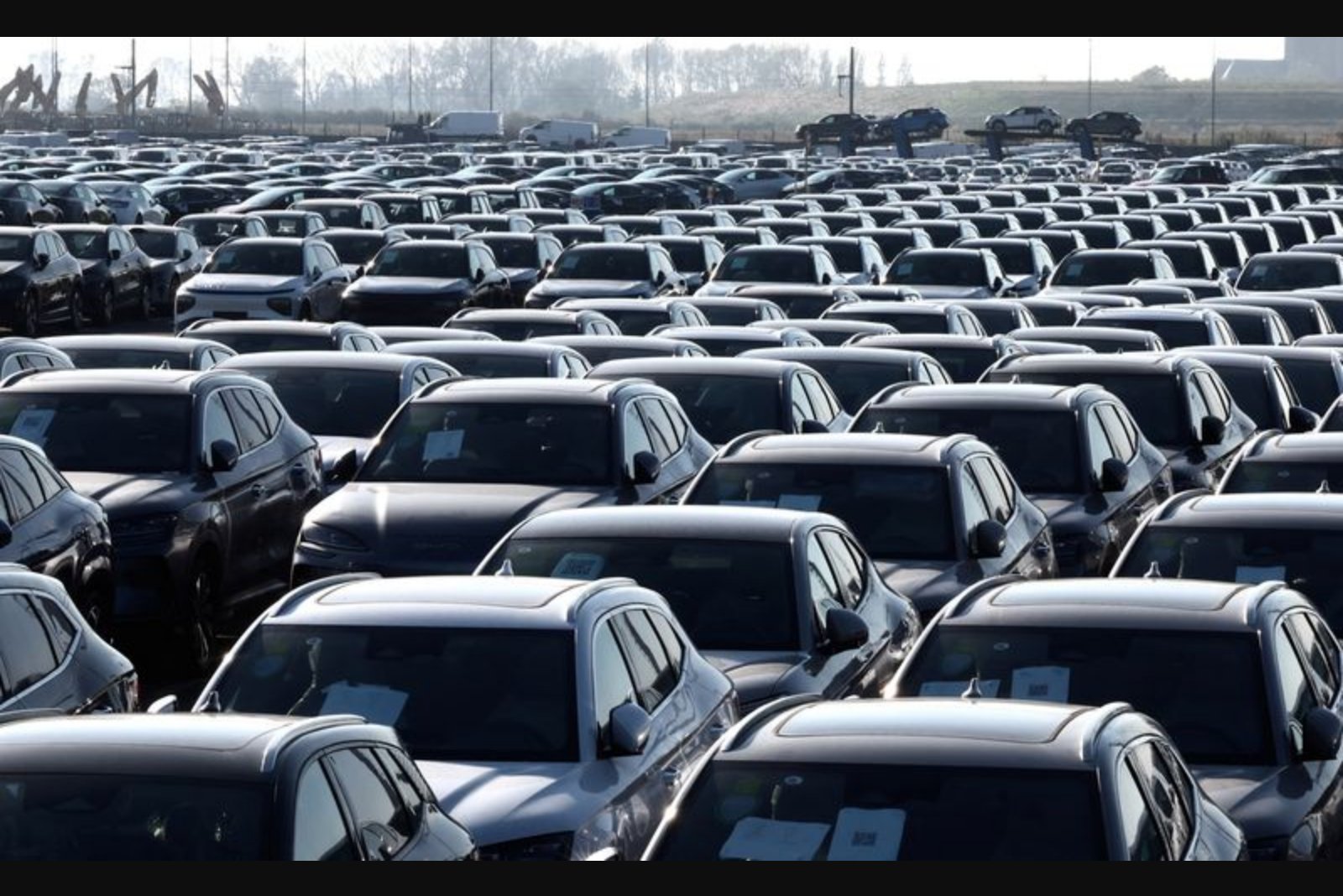
Chinese carmakers increased their presence in Europe’s new vehicle market in 2025, but the gains were far from uniform across countries, data compiled by automotive consultancy Inovev shows.
Across the markets covered by Inovev - the European Union, Britain, Switzerland and Norway - the combined share of new car registrations held by Chinese manufacturers rose to 6% last year, about double the level recorded the previous year. Nonetheless, that continental average masks sharp contrasts.
Norway recorded the strongest penetration, with Chinese brands accounting for nearly 14% of new-car sales in 2025. Norway’s market is notable for its high electrification rate: almost all newly registered vehicles were fully electric in the period reported.
By contrast, German and Slovak markets showed only marginal Chinese presence, with those firms representing just over 2% of new-car sales in each country. In established vehicle-producing nations such as Germany and France, the data indicate Chinese newcomers have struggled to convert market opportunities into significant shares.
Other major markets saw meaningful increases. In Britain, Chinese automakers reached about 11% of new car sales in 2025. Spain and Italy both recorded Chinese brand shares around 9% annually, roughly doubling their market shares from the prior year, according to Inovev.
Several Chinese groups - including BYD, Geely Holding and Chery - have accelerated rollouts into large European markets. Their value proposition has attracted cost-conscious buyers in some segments; in certain cases Inovev’s reporting notes that Chinese models were priced as much as 10,000 euros lower than comparable offerings from European brands.
Trade measures have not fully blocked this expansion. The European Union has imposed tariffs of up to 35% on Chinese-made electric vehicles, yet a number of Chinese manufacturers, including newer entrants like Changan, continued to introduce models into the market. Importantly, those tariffs do not apply to combustion-engine or hybrid models.
Poland illustrates how this distinction matters. Chinese automakers held an 8.2% market share in Poland last year, up from almost zero sales as recently as 2023. Almost two-thirds of the vehicles Chinese brands sold in Poland were equipped with combustion engines, highlighting a strategic emphasis on non-EV powertrains where tariffs are not levied.
Inovev’s dataset excludes Sweden’s Volvo Cars from Chinese ownership considerations despite the company’s majority stake by Geely. The consultancy’s coverage spans the EU, Britain, Switzerland and Norway, and Britain has not imposed tariffs on Chinese-made cars. ($1 = 0.8402 euros)