
Overview
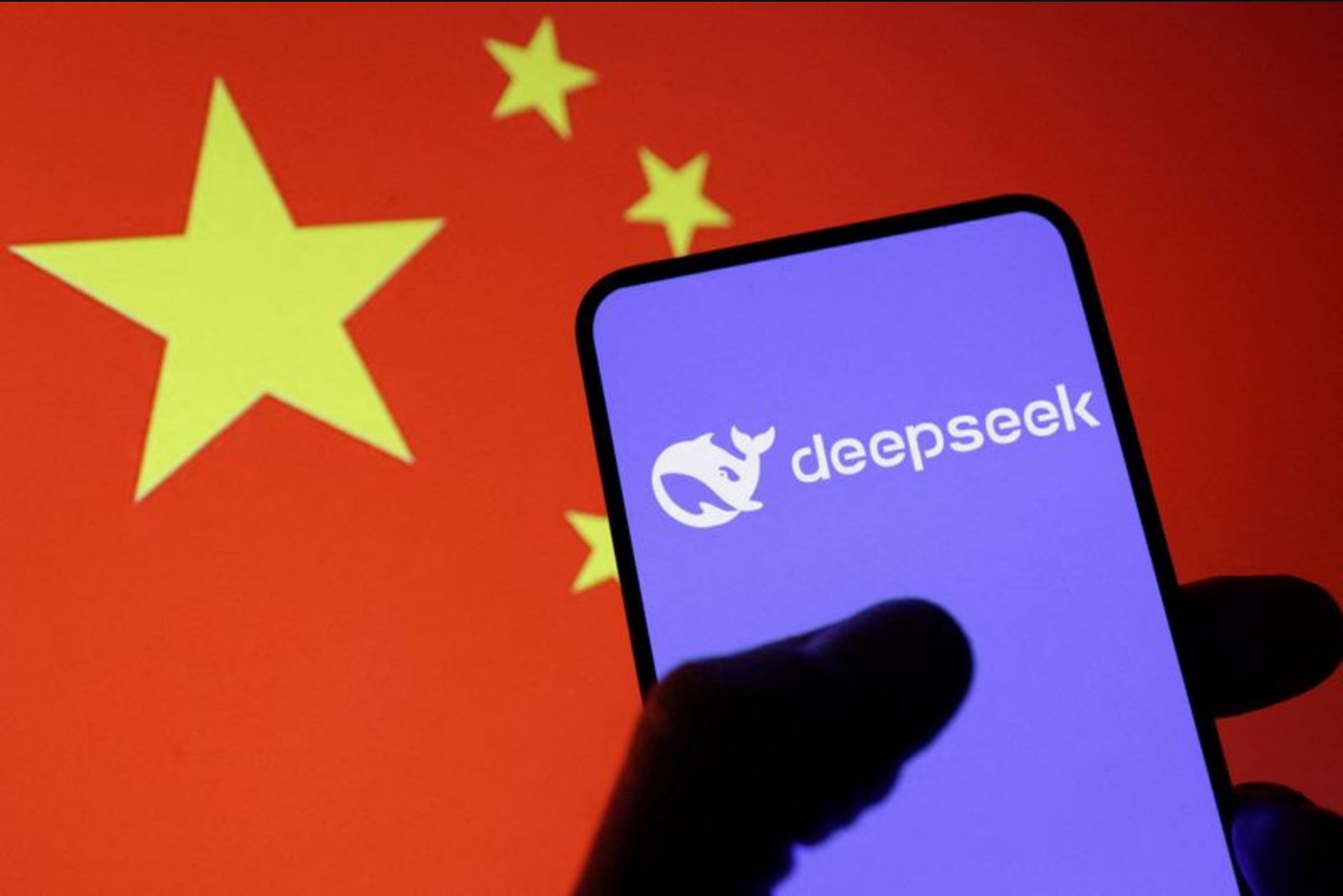
With Lunar New Year holidays set to begin on Sunday, a wave of Chinese artificial-intelligence model releases and upgrades is arriving just as rivals attempt to avoid the surprise that followed DeepSeek's breakthrough last year. DeepSeek burst into prominence with its R1 and V3 models, and competitors are now timing launches to gain visibility or at least ensure they are not caught flat-footed during Spring Festival.
DeepSeek - next-generation model and expanded context window
Hangzhou-based DeepSeek is preparing to follow last year’s V3 with a next-generation V4 model, according to a technology news report cited by industry watchers. Market attention is also on R2, the successor to the R1 model. This week the company increased its chatbot's context window - the amount of data the model can retain and process in a single task - from 128,000 tokens to 1 million tokens. That expansion allows the chatbot to handle book-length passages of text when responding to a single user command.
ByteDance - video and image generation advances
ByteDance, the parent of short-video platform TikTok, is expected to upgrade Doubao, China’s most widely used AI chatbot by active users. The company this week released Seedance 2.0, a video-generation model that has gone viral on Chinese social media and attracted high-profile praise on the social platform X, including from its owner. Seedance 2.0 is capable of producing high-quality cinematic videos from only a few prompts or even a single prompt. ByteDance also released an image-generation model, Seedream 5.0 Lite, the following day.
Alibaba - Qwen 3.5 and agentic commerce promotion
Alibaba, which responded to DeepSeek’s rapid ascent last year with Qwen 2.5-Max, is preparing to launch Qwen 3.5. The company has been promoting its Qwen app domestically and recently spent 3 billion yuan on a coupon giveaway campaign intended to advance "agentic commerce," in which AI handles consumers' online shopping. Alibaba said the coupon program generated more than 120 million consumer orders over the six days through Wednesday.
Zhipu - open-source GLM-5 and listings activity
Zhipu AI released its open-source GLM-5 model on Wednesday. The release highlights improved coding capabilities and support for long-running agent tasks. Zhipu, regarded as one of China’s so-called AI tigers, went public on the Hong Kong Stock Exchange last month alongside MiniMax. Both stocks have risen strongly as investors positioned for gains from the domestic AI expansion. A regulatory filing on Friday showed Zhipu plans a secondary listing in Shanghai.
MiniMax - M2.5 release and app portfolio
Shanghai-based MiniMax made its M2.5 open-source model available on its overseas agent website on Wednesday. The company's Hong Kong initial public offering raised HK$4.8 billion, or about $620 million, exceeding Zhipu’s $558 million. MiniMax is the developer behind consumer-facing tools such as Hailuo AI, a video-generation app, and Talkie, a character interaction application that lets users converse with AI-powered virtual personas.
Tencent - low-storage model for consumer hardware
Tencent’s Hunyuan research team released HY-1.8B-2Bit on Tuesday, a compressed, low-storage AI model designed to run on consumer hardware, including mobile phones. The model is positioned for use cases where memory and storage constraints are important.
iFlytek - Spark X2 trained on domestic chips
iFlytek introduced Spark X2 on Wednesday, describing it as trained entirely on Chinese-made chips. The company said the upgrade emphasizes practical deployment, naming sectors such as education, healthcare, automotive and agent-based applications as targets for the technology.
NetEase Youdao - LobsterAI personal assistant
NetEase Youdao launched LobsterAI on Wednesday, a desktop-level personal assistant agent capable of performing tasks like information retrieval, scheduling and data analysis by executing workflows locally on a user’s machine after the user authorizes the actions. The product supports both mobile and PC connections and allows remote interaction through enterprise communication apps commonly used in China, including DingTalk and Feishu.
Dexmal - robotics-focused DM0
Embodied-intelligence startup Dexmal unveiled DM0 on Tuesday, an AI model intended for robot-related scenarios. DM0 integrates multimodal internet data with driving, navigation and robotic operation datasets, and the company says it trained the model across multiple robot platforms.
Context and market signals
The flurry of releases spans consumer-facing chatbots and media generation tools, compressed models for edge devices, agentic commerce experiments and robotics-specific engines. Several companies emphasized open-source releases and cross-platform deployment, while others prioritized commercial activation through coupon campaigns or enterprise integrations. The concurrent listing activity for some AI firms has coincided with strong stock performance as investors place bets on the sector’s growth.
What to watch
- Product updates and timing - whether announced models reach users before or during the holiday period.
- Commercial adoption - measured through app usage, orders or enterprise integrations tied to specific model launches.
- Market reaction - how investor enthusiasm for newly listed AI firms evolves following product releases and filings.