
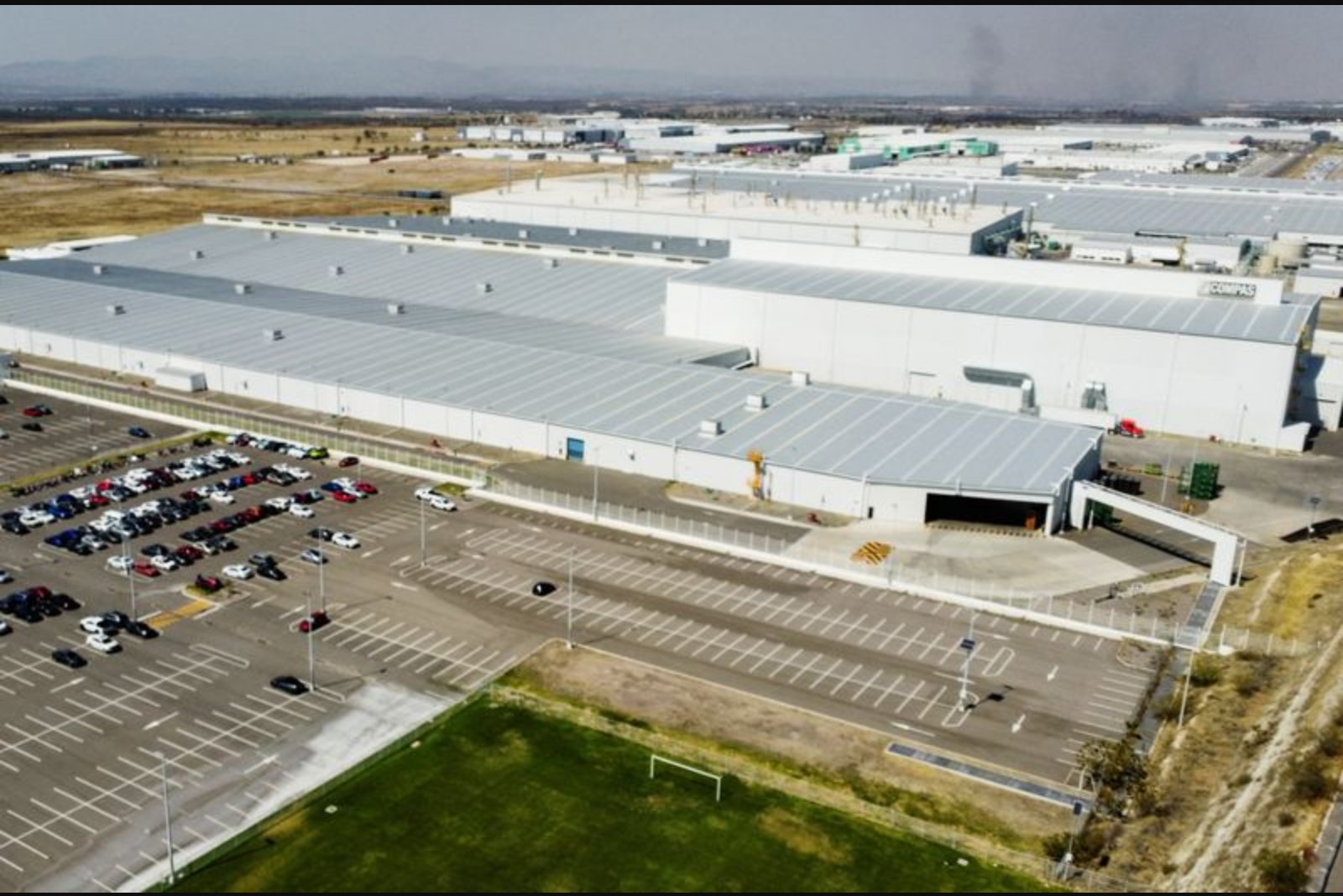
Two of China’s largest automakers, BYD and Geely, have advanced to the final round of bidders seeking to acquire a Nissan-Mercedes-Benz auto assembly plant in Aguascalientes, Mexico, according to a person familiar with the matter. The shortlist, drawn from nine interested companies, also includes Vietnamese electric-vehicle maker VinFast. Among the initial nine were at least two other big Chinese manufacturers - Chery and Great Wall Motor - sources said.
The emergence of Chinese companies as serious contenders for a Mexican factory signals a potential shift in the country’s automobile industry. For decades, U.S., European and Japanese manufacturers were the dominant investors and producers in Mexico, primarily assembling vehicles destined for the United States. Now, with U.S. tariffs reshaping trade flows and contributing to factory closures and layoffs, Mexican authorities face a difficult policy choice.
Mexican officials have said Chinese investment could deliver jobs and economic activity at a time when the auto sector is under strain. But they also worry that approving Chinese production within Mexico’s borders could provoke a political backlash in Washington and complicate ongoing North American trade negotiations later this year. The United States has effectively banned Chinese-brand vehicle sales, and President Donald Trump has accused Mexico of providing a back door for Chinese goods to enter the U.S. market.
Requests for comment to BYD, Geely, Chery, Great Wall and VinFast went unanswered. The apparent interest among Chinese manufacturers had not been previously reported.
The bids by BYD and Geely underscore the rapid expansion of Chinese automakers on the world stage. BYD’s vehicle sales have jumped ten-fold since 2020 and Geely’s have doubled. Both companies sold more than 4 million vehicles last year - about as many as Ford.
Mexico has become a meaningful export market for those Chinese brands. Collectively, Chinese automakers increased their share of the Mexican market from zero in 2020 to about 10% last year, based on an estimate from consultancy AutoForecast Solutions. Mexico sees roughly 1.5 million car sales annually.
Government response and trade tensions
Although Mexico lacks the legal authority to block a private factory sale, officials at the economy ministry have quietly asked state-level authorities to delay any approvals for Chinese automakers until U.S. trade talks conclude, according to two government sources. The request reflects concern about potential diplomatic fallout and the timing of negotiations with the United States.
A White House spokesperson framed U.S. trade barriers as grounded in national and economic security. "The issue here is subsidized Chinese overcapacity pushing Chinese firms to dump excess production into other markets," the spokesperson said.
China’s Ministry of Commerce did not respond to requests for comment.
Last year Mexico imposed 50% tariffs on Chinese cars and other goods, a move widely interpreted as an attempt to placate Washington. Those tariff measures, however, also create an incentive for Chinese automakers to build vehicles inside Mexico, thereby avoiding import duties.
Local disruptions and factory-level impacts
Some Chinese investment is already appearing in Mexico’s supply chain. In Ramos Arizpe, the Shanghai Yongmaotai Automotive Technology group is building an auto-parts plant expected to employ 600 workers. That development coincides with 1,900 layoffs announced at a General Motors plant in the same city, where GM cited weak U.S. demand for its decision.
Domestic EV demand in the United States has fallen following subsidy rollbacks implemented under the Trump administration, contributing to weakening production incentives for some manufacturers.
Mexico’s auto industry is heavily dependent on the U.S. market. In 2024, U.S. customers purchased 2.8 million of the 4 million passenger vehicles produced in Mexico, the Mexican Automotive Industry Association (AMIA) said. But the sector has been under pressure since January 2025 when the Trump administration imposed a 25% tariff on Mexican-made cars.
After more than three decades of growth, vehicle exports to the United States fell nearly 3% in 2025, according to AMIA. The association’s president, Rogelio Garza, warned of a further and steeper decline this year if tariffs persist. "We cannot continue like this," Garza said. "Right now, it’s cheaper to send cars to the U.S. from Europe and Asia than it is from Mexico." Government figures show Mexico lost about 60,000 auto-industry jobs last year.
President Trump has touted tariffs as a driver of a U.S. auto-manufacturing resurgence, asserting at a Ford factory visit in January that "We don’t need cars made in Mexico." Federal data show a loss of 17,000 auto-sector jobs since President Trump took office in January 2025; the White House emphasized that establishing new factories takes time.
Why the Aguascalientes plant is strategic
The Nissan-Mercedes plant in Aguascalientes is closing for several reasons, with U.S. tariffs cited by industry insiders as a final blow. Mercedes, which produced the Mercedes-Benz GLB at that facility, is shifting production to Hungary - a location from which it could ship cars to the United States under lower tariff exposure than exports from Mexico. Mercedes did not elaborate on whether tariffs prompted the change, stating only that production of the current-generation GLB model was ending.
Nissan, which assembled the Infiniti QX50 and QX55 at the factory, is discontinuing those models due to slow sales. Nissan described the plant closure as part of "broader strategic shifts." The struggling Japanese automaker is also closing another factory outside Mexico City as part of a global restructuring.
The Aguascalientes facility opened in 2017 and is capable of producing 230,000 vehicles per year. It comes with an experienced workforce and established transport links, making it an attractive acquisition for any manufacturer seeking rapid production scale in Mexico. BYD does not require Mexican government approval to purchase the plant, according to sources.
Chinese approvals and past plans
Chinese automakers must secure Beijing’s approval for overseas factory investments. One source familiar with the plant proposals said China’s commerce ministry is aware of the interest from automakers and has not objected.
BYD had previously planned to build a greenfield factory in Mexico but abandoned that effort after encountering what a government official described as extensive red tape. That prior experience may make acquiring an existing plant more attractive for Chinese firms.
Potential local benefits and political calculations
Analysts and consultants note that Chinese manufacturing in Mexico could deliver immediate employment and investment benefits to states competing for industrial projects. Victor Gonzalez, a business consultant who has helped Mexican states court Chinese capital, said that politics aside, every state in Mexico would be open to Chinese automakers establishing operations and hiring locally.
At the same time, Mexican officials are conscious of the diplomatic risks and are coordinating with federal trade negotiators. Economy ministry officials have asked state authorities to slow down decisions on Chinese investments until U.S. negotiations are resolved, reflecting the delicate balance between short-term economic relief and longer-term trade diplomacy.
Where things stand
The identity of the final buyer for the Aguascalientes plant remains undetermined. The finalists are reported to include China’s BYD and Geely, and Vietnam’s VinFast. The initial interest came from nine automakers and included at least two other Chinese manufacturers, Chery and Great Wall Motor. Mexican authorities, automakers and foreign trade partners continue to weigh the local economic benefits against potential geopolitical and trade consequences.