
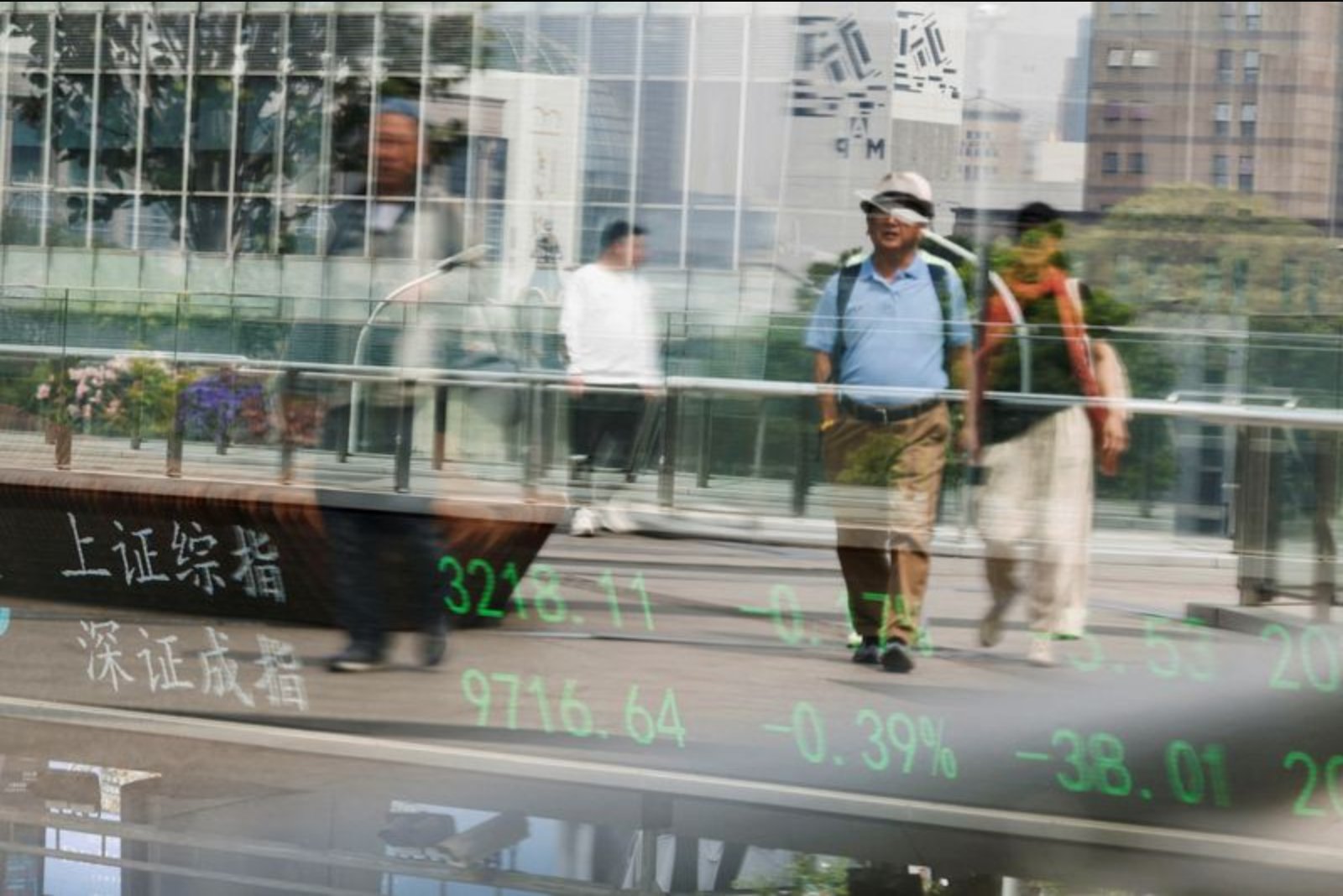
Chinese authorities are pursuing a deliberate strategy to cool parts of the market while encouraging longer-term, dependable growth as global investment interest re-emerges. Regulators have combined stepped-up enforcement with a range of cooling measures designed to rein in speculative excess - an approach officials and analysts frame as an effort to support market depth and investor confidence over time rather than chase short-lived rallies.
Market watchers note the policy mix is intended to entice capital back into Chinese assets, including from fund managers now seeking to diversify away from dollar-heavy allocations. The approach comes after a period in which some investors regarded the market as risky enough to label it effectively uninvestable. That reputation, regulators hope, can be reversed by signaling that gains will be permitted but not at the cost of systemic instability.
Enforcement surge
Authorities moved forcefully after recent market exuberance. The China Securities Regulatory Commission (CSRC) launched a crackdown on speculators following a surge in turnover when the Shanghai Composite Index reached 10-year highs. Over the past month, the Shanghai and Shenzhen exchanges recorded more than 2,000 cases of irregular trading - a monthly enforcement record - encompassing pump-and-dump schemes, spoofing, and other manipulative activity. Regulators also fined a local hedge fund 41 million yuan ($5.92 million) for illegal fundraising and misappropriation of investor funds.
A suite of broader regulatory steps accompanied the enforcement push: tightening margin financing rules, limiting access by high-frequency traders to exchange data, and curbing the activities of prominent stock-picking "influencers." Taken together, these moves are meant to diminish leverage-driven spikes and reduce retail-driven volatility without extinguishing positive market trends.
Sovereign and institutional action
State-backed investors, who have in the past acted as market stabilizers, took the unusual step of selling into recent rallies to help temper momentum. Sovereign funds have also pared back equity holdings, and exchange-traded funds that have been used by state-linked investors as a tool to manage market direction experienced notable outflows. One fund consultancy reported net ETF outflows exceeding 700 billion yuan last month, underscoring the scale of repositioning by large public investors.
Despite the sales, some strategists describe the state intervention as measured rather than suffocating. As Z-Ben Advisors put it: "The art of the slow bull is in effect." The consultancy said market dynamics are shifting toward a self-sustaining cycle, reflecting what it sees as increasing confidence in market depth among both regulators and investors.
Sentiment and analyst perspectives
Market participants and strategists broadly view the regulatory tightening as an attempt to preserve positive momentum while preventing excess. UBS China strategist Meng Lei noted: "A rising stock market helps fund China’s technology advancement, enhances people’s wealth, and aids economic growth." Morgan Stanley strategist Laura Wang characterized the state's buying and selling as "substantial yet well-paced selling by the National Team is curbing - but not killing - the positive market momentum," adding that market dynamics remain on a healthy track.
Some market practitioners are altering behavior in response to regulatory pressure. A Shanghai-based investment educator who previously taught short-trading techniques has switched instruction to value investing after traders received regulatory "warning calls" or had accounts frozen, illustrating a practical shift among retail and professional participants.
Commodities and futures controls
The tightening extended to commodities futures after metal prices surged. Regulators raised margin requirements and capped the number of new positions traders may open - measures intended to restrain rapid speculative accumulation in those markets as well.
These futures interventions complement equity measures, reflecting a broader policy aim: to cool pockets of overheating across multiple market segments rather than focus solely on Cash equities.
Policy context on capital markets and currency
Authorities have begun building a more investor-friendly market framework in recent years, particularly after a major selloff jolted confidence. Steps to limit equity fundraising, and to encourage buybacks and dividend distributions, have started to shift the balance of market incentives. Analysts say the heavy net issuance that once acted as a structural drag on performance was largely reversed last year, with listed companies returning more capital to shareholders than they extracted.
Currency policy has moved in a complementary direction. Policymakers have allowed the yuan to gradually appreciate against a weakening dollar, a change analysts say is important for long-term financial credibility. As one economist observed, a "sustainable uptrend is key to boosting the yuan’s global reach." The overall show of regulatory strength, combined with steadier currency trends, is intended to underpin a healthier environment for foreign inflows.
Market performance and outlook
China’s benchmark Shanghai Composite Index delivered an 18% gain in 2025, its strongest annual performance in six years, slightly outpacing a 16.4% rise in the S&P over the same period. Amid the recalibration of policy and market structure, some analysts argue that a repeat of past boom-and-bust cycles is less likely if the current measures take hold and produce sustained, transparent returns.
Yet industry voices stress that attraction of foreign capital depends on continued progress in transparency and market trust. A fund manager based in Hong Kong summed up the objective succinctly: to boost financial strength, "you need a steadily rising currency and steadily appreciating asset prices." Another market specialist emphasized that consistent outperformance over a multiyear period is likely to bring foreign money back to Chinese equities, but noted that such results depend on demonstrable improvements in governance and market integrity.
For now, the authorities appear to be walking a fine line - allowing prices to climb while actively clipping the wings of speculation. If the strategy succeeds, it could result in a sustained, lower-volatility advance in Chinese assets that appeals to cautious global investors seeking diversification beyond dollar-dominated allocations.
(Currency conversion: $1 = 6.9275 Chinese yuan)