
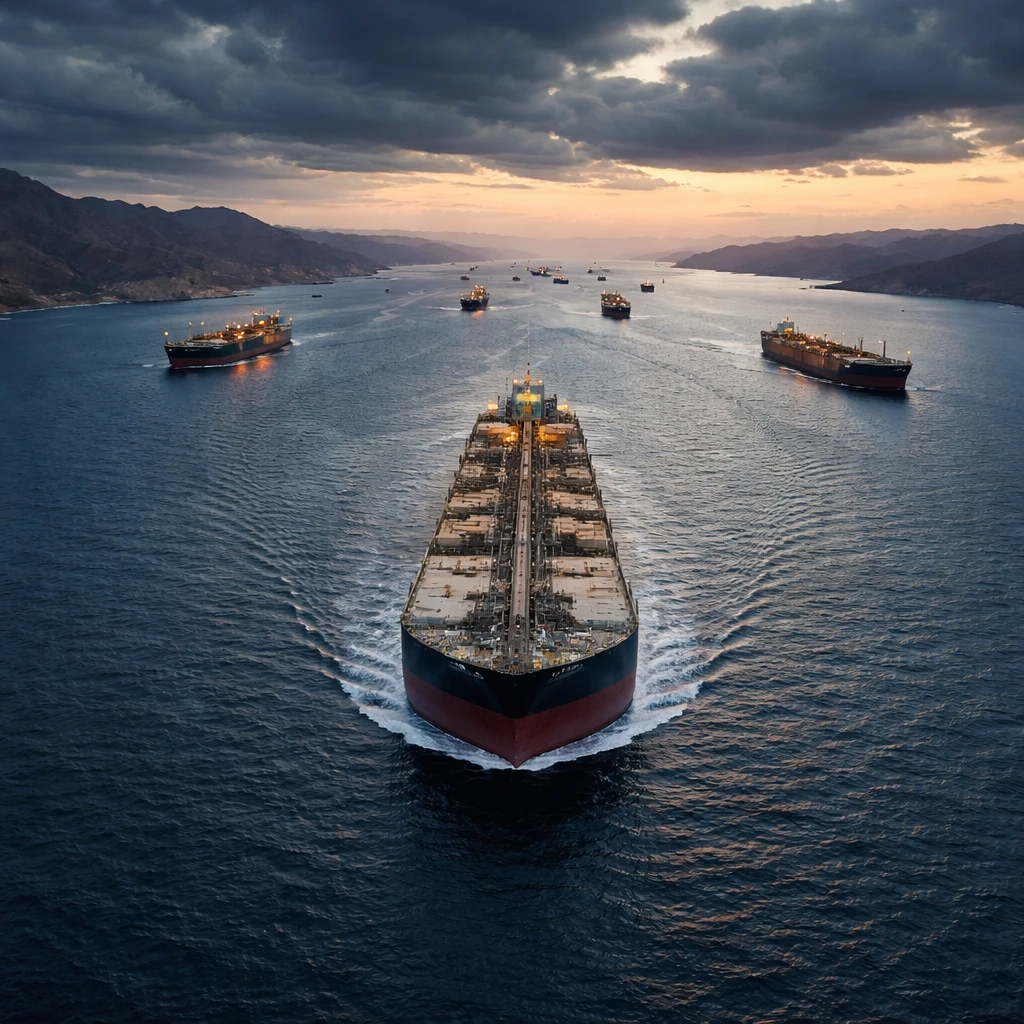
Crude prices eased and U.S. equity markets moved higher on Thursday afternoon after accounts emerged that China is pressing Iran to permit safe transit for crude oil and liquefied natural gas (LNG) vessels through the Strait of Hormuz. The reported discussions arrived as a U.S.-Israeli confrontation with Tehran entered its sixth day, a development that had intensified investor focus on shipping risks in the region.
Market participants reacted to the reports as a potential relief to supply worries. The Strait of Hormuz - a critical maritime corridor - had been effectively shut down, depriving global markets of access to about one-fifth of oil and LNG supplies. That disruption had become a major driver of volatility in energy markets.
According to three diplomatic sources cited by Reuters, Beijing, which maintains amicable ties with Tehran and relies heavily on Middle Eastern energy, is urging Iran to guarantee unimpeded movement for tankers. The sources said China receives roughly 45% of its oil shipments via the Strait, underscoring Beijing’s exposure and incentive to secure safe passage for commercial flows.
Ship-monitoring records indicated that a vessel named the Iron Maiden transited the Strait overnight after altering its signaling to read 'China-owner.' Observers noted, however, that further sailings will be required to restore confidence and stabilize global energy markets.
The possibility of a diplomatic accommodation between China and Iran provided markets with a measure of hope that energy flows through the chokepoint might resume even as the broader conflict continues. The Strait of Hormuz is among the world’s most consequential oil chokepoints, linking Middle Eastern producers with major markets in Asia and elsewhere. Prolonged interruptions there pose a clear risk of supply dislocation and upward pressure on prices.
For investors and industry stakeholders, the immediate market reaction - weaker crude and firmer U.S. equities - reflected the sensitivity of both energy and financial markets to developments affecting maritime access. Whether the reported talks translate into a sustained reopening of the waterway remains an open question; additional transits will be a necessary indicator that commercial shipping has begun to normalize.
Summary
Reports that China is negotiating with Iran to guarantee safe passage for crude and LNG vessels through the Strait of Hormuz coincided with a pullback in crude prices and gains in U.S. stocks. The Strait had been largely closed, cutting off about 20% of global oil and LNG supplies, and the prospect of diplomacy offered short-term relief to markets.
Key Points
- China is engaging Iran to secure safe transit for oil and LNG tankers, according to three diplomatic sources cited by Reuters.
- The Strait of Hormuz had been largely shut, removing roughly one-fifth of global oil and LNG supply from active trade, which had pressured energy markets.
- Markets reacted with lower crude prices and higher U.S. stocks; additional vessel transits will be needed to verify stabilization.
Risks and Uncertainties
- Ongoing conflict - The U.S.-Israeli confrontation with Tehran has continued into its sixth day, creating persistent geopolitical risk for shipping and energy sectors.
- Supply restoration uncertainty - Although a vessel named the Iron Maiden passed through after changing its signaling, further sailings are required before global energy markets can be deemed stabilized.