
SINGAPORE, Feb 6 - Chinese military and aerospace entities used this year’s Singapore Airshow to present a more forceful, visible presence in the region, attracting sustained interest from attending Southeast Asian delegations. The activity at the event coincides with an environment in which U.S. power has also been conspicuously demonstrated elsewhere this year through operations such as the precision extraction of Venezuelan President Nicolas Maduro and a major naval buildup around Iran. At the same time, public criticism from the U.S. President of some allies and the imposition of tariffs on partner countries have, according to observers at the show, created openings Beijing appears eager to exploit.
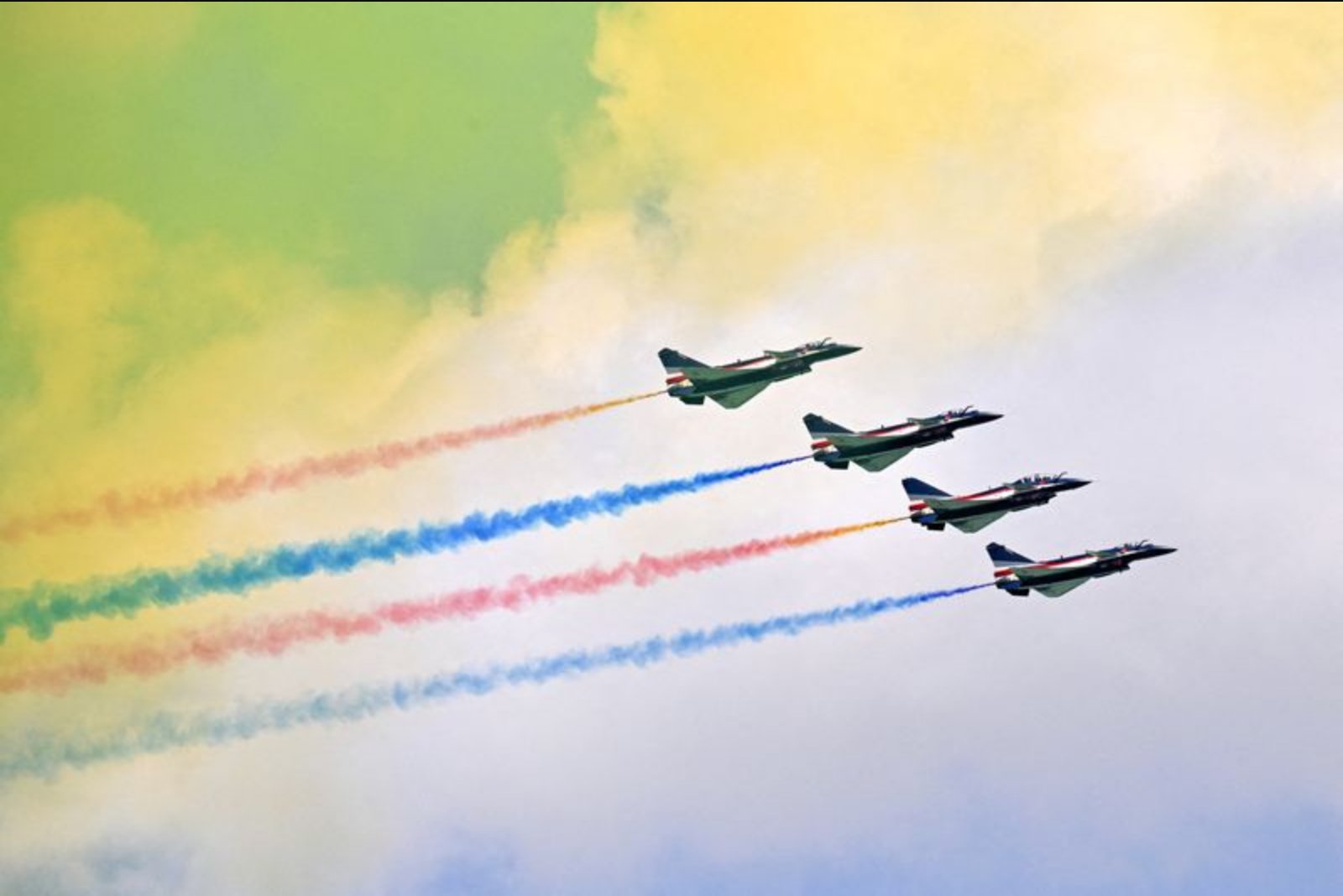
On the flying display circuit, China’s People’s Liberation Army Air Force aerobatic team made a notable debut in Singapore flying Chengdu J-10C fighters. Media reports noted the team had used mid-air refuelling to transit directly to the city-state for the deployment. Observers at the show framed that capability as an indicator of growing reach. "That’s a bit of a message to say: Our power projection is growing," said Tim Robinson, editor-in-chief of the Royal Aeronautical Society’s Aerospace magazine. "It’s one of the key enablers a modern air force should have. Previously people said this is one of their weaknesses." The J-10C’s export variant, the J-10CE, reached wider attention in 2025 when Pakistan reportedly used one to shoot down an Indian Air Force Rafale.
Inside the air-conditioned exhibition halls, Chinese state-owned companies occupied a prominent position on the show floor. AVIC’s display was dominated by a large, 1:2 scale model of the J-35A stealth multirole fighter, a platform first publicly seen within China in 2024 and otherwise shrouded in limited public technical detail. No technical specification sheets were shown at the booth, but industry observers said the visual emphasis on a stealth design sent an explicit signal to buyers in the region. "That’s obviously positioned to say: if you can’t afford an F-35 or are banned from buying an F-35 we’ve got an alternative," Robinson added.
Southeast Asian defence officials and delegations were frequently observed at Chinese military and aerospace stands, underlining the immediate appeal of Beijing’s outreach. A senior official at a Western arms company attending the show said the delegations present were familiar but that "the conversation has changed." Industry-watchers cautioned against expecting instantaneous shifts in procurement, noting the deep and complex ties that many U.S. customers maintain with their current suppliers. Still, analysts and Western officials at the event described the backdrop as one in which the diversification of supply chains and the dynamics of great-power competition are shaping decisions.
China defence specialist Bradley Perrett provided a measured view of the commercial opportunity Beijing may perceive. "The Chinese arms companies may think that, if other countries have lost confidence in buying American, there’s an opportunity for China," he said. "But most of the U.S.’ customers, if they want to look elsewhere, will look at European, South Korean and Japanese equipment."
Commercial aviation was another visible front at the show. State-owned COMAC again exhibited the narrowbody C919 and displayed a model of the proposed C929 wide-body, which the company presented as progressing through detailed design as a Chinese-led project after earlier exploring a joint development path with Russia. COMAC representatives indicated a priority for outreach to potential Southeast Asian clients given the Singapore venue, and visitors from Indonesia were among those engaged in discussions about aircraft procurement.
Western analysts at the event reiterated that China’s ambitions to compete with entrenched manufacturers such as Airbus and Boeing are a long-term effort, likely requiring years if not decades to build the global manufacturing, certification and after-sales support networks that underpin large-scale airline adoption. Yet exhibitors and attendees at the airshow pointed to a widening commercial approach that extended beyond aircraft sales to third-party spare parts and aftermarket logistics—areas of heightened interest to airlines coping with strained global supplies. Such parts markets, delegates suggested, speak directly to airline concerns over shortages and service continuity.
Overall, the Singapore Airshow provided a platform for China to combine displays of emerging military reach with an assertive commercial pitch to regional customers. The balance of attention from local delegations and the nature of the exhibits reflected a competitive atmosphere in which buyers and policymakers must weigh options across defence and civil aviation suppliers as supply chains, certification hurdles and geopolitical considerations influence future procurement decisions.
Key points
- China presented both military and commercial aviation capabilities prominently at the Singapore Airshow, including a debut aerobatic display by PLAAF J-10C fighters and a large model of the J-35A stealth fighter.
- Southeast Asian delegations showed strong interest at Chinese defence and aerospace booths, highlighting Beijing’s growing pull amid questions about U.S. security assurances and trade tensions.
- COMAC continued to promote the C919 and the planned C929 wide-body project, while Chinese firms also marketed aftermarket spare parts aimed at airlines facing global supply constraints.
Risks and uncertainties
- Procurement shifts in Asia remain uncertain - despite engagement at the show, industry-watchers cautioned against expecting rapid changes in defence sourcing patterns.
- Certification and after-sales infrastructure pose long-term challenges for Chinese commercial aircraft - observers noted that replacing entrenched suppliers like Airbus and Boeing will take years or decades.
- Global supply pressures and geopolitical frictions could affect parts and maintenance markets - airlines and third-party suppliers face uncertainty amid strained supplies worldwide.