
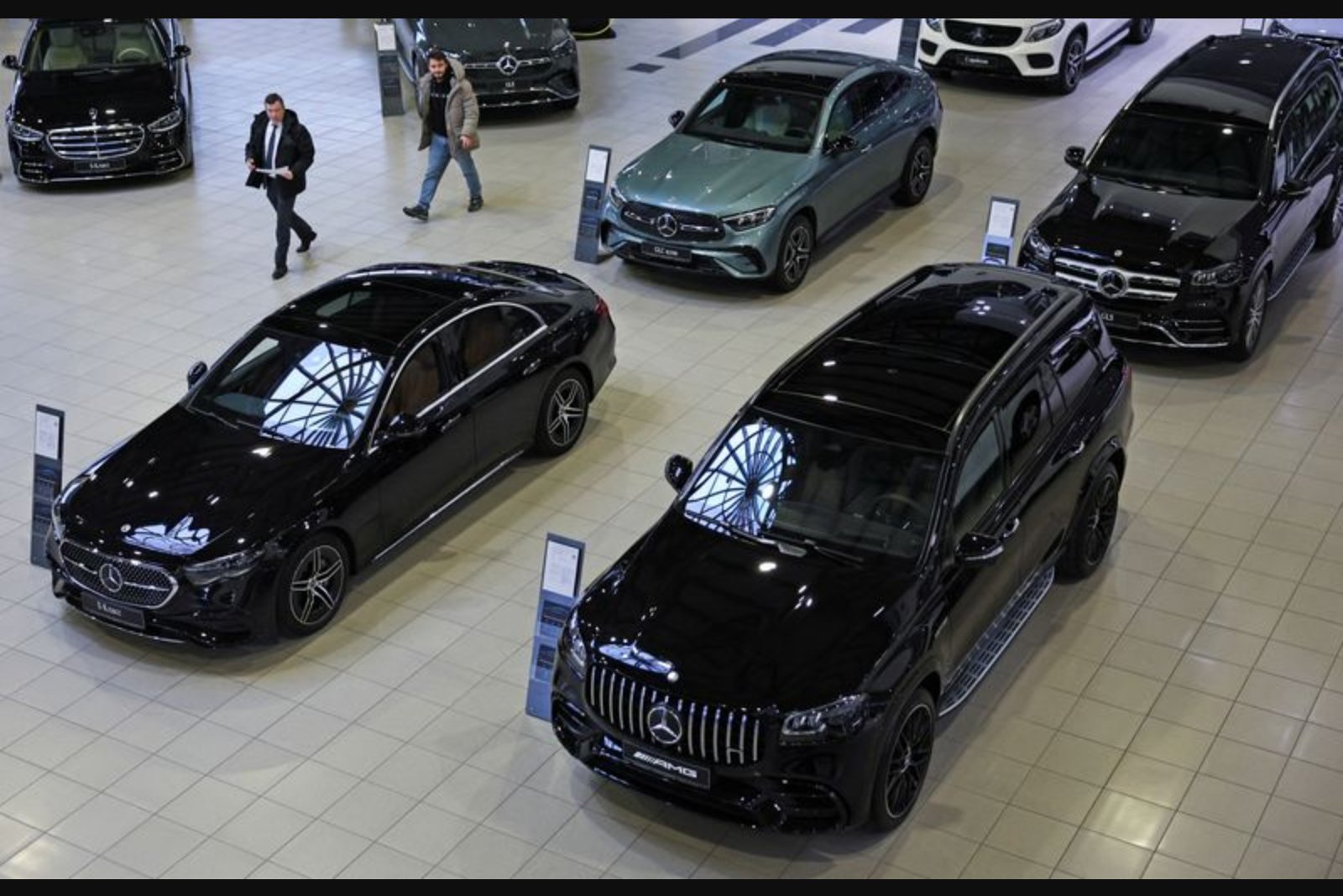
Tens of thousands of foreign-brand automobiles are finding their way into Russia through channels centered on China, according to registration data reviewed by Autostat and interviews with five participants in the trade. These flows often rely on gray-market mechanisms that sidestep both government sanctions introduced after Russia’s 2022 invasion of Ukraine and commitments by many global automakers to withdraw or limit operations in Russia.
Across multiple interviews and in Autostat’s registration records, the dominant pattern is clear: vehicles bearing Western, Japanese and South Korean brands, including models from Toyota, Mazda, BMW and Mercedes, are either produced in China or routed through Chinese territory before landing in Russia. A sizable share are described as zero-mileage "used" vehicles - cars that were recorded as sold within China and then reclassified and exported as used to avoid the need for automaker approval for sales to Russia.
Participants in the trade say the mechanism is practical in China’s intensely competitive and heavily subsidized car market, where dealers and traders can register vehicles as sold, capture incentives or inflate sales figures, and then move surplus units abroad. "This way is to export more easily," said Zhang Ai Jun, a former exporter at a Sichuan-based car trader, describing how traders reclassify new cars as used to simplify export procedures.
The price dynamics make the practice profitable: zero-mileage used cars can be sold at a steep discount in China but command prices in Russia comparable to never-registered new cars, according to a Russian dealer and documents showing vehicle shipment details.
Automakers from the regions imposing sanctions have publicly said they prohibit sales to Russia and are taking measures to block unauthorized exports. Mercedes-Benz, BMW and Volkswagen Group, among others, told Reuters they restrict sales and use contractual provisions and dealer training to discourage breaches. But they also noted investigating and proving violations is often "time-consuming and complex" and can require assistance from third parties, Mercedes said in a statement. BMW added that it had instructed its China retail operation to "strictly oppose any potential vehicle exports to Russia," and said that if such cars nevertheless reach Russia it is "outside our sphere of influence - and also expressly against our will."
Dealers on the ground in Russia describe a network of intermediaries linking buyers, Chinese traders and local showrooms. One dealer in Vladivostok who agreed to speak only under the name Vladimir said his dealership does not stock the restricted foreign models but sources them one by one from Chinese traders to meet customer orders. "There are lots of middlemen: This one knows that one; that one knows another, and that one can reach the dealer," he said.
Data paints scale and trends
Autostat’s registration figures show substantial volumes of vehicles imported from China and registered in Russia. The data indicate a growing share of Western or Japanese brand cars in Russia are either made in China or passed through China en route to Russia, and that South Korean brands continue to register steady volumes.
According to Autostat, the number of vehicles manufactured in China that were registered in Russia has more than doubled since 2023. These China-made cars now represent nearly half of the nearly 130,000 total vehicles sold in Russia in 2025 that are made by automakers from countries imposing sanctions.
Since the start of Russia’s invasion of Ukraine in early 2022, Autostat’s figures show more than 700,000 vehicles from automakers in sanctioning countries have been sold in Russia. In absolute terms, nearly 30,000 Toyotas were purchased in Russia last year, and almost 24,000 of those cars were made in China. Nearly 7,000 Mazdas were sold in the same period, and almost all of those were China-made.
Autostat’s registration-based methodology captures these imports because Russia treats imported vehicles with zero mileage as new when they are registered locally, even if they were previously recorded as sold inside China. That distinction helps explain disparities between Autostat’s tallies and other industry datasets: some research firms report no official new-car sales for certain German brands in Russia this year, while Autostat shows thousands of registrations.
Hybrids from Japanese brands, including Toyota, are reportedly among the most popular Japanese models on the Russian market, according to two China auto-retail sources who spoke about demand patterns.
German luxury models and high-end demand
German luxury brands also feature prominently in the Autostat data. Nearly 47,000 new vehicles from BMW, Mercedes and Volkswagen Group brands - encompassing Audi, Porsche and Skoda - were registered in Russia last year. More than 20,000 of those were manufactured in China, the data show.
Industry analysts and one of the people involved in shipping cars to Russia say many vehicles made in Europe may still transit China before being exported to Russia. Dozens of shipping documents examined by Reuters include examples of German luxury sport utility vehicles exported from China to Russia, such as the Mercedes GLC 300 and the BMW X1 xDrive25i.
Analysts point to particular demand from wealthier buyers for certain premium models. Felipe Munoz, an analyst who runs the Car Industry Analysis platform, cited the Mercedes G-class as a popular choice among Russia’s elite. The G-class is produced only in Austria and can sell for about 120,000 euros, or about $142,700, he said.
"Given the trade between Russia and China - which has grown significantly in recent years in terms of cars - it is obvious to conclude that many of those cars imported into China from Germany end up in Russia," Munoz added.
Regulatory responses and enforcement challenges
Governments in sanctioning regions have put in place rules limiting the sale to Russia of certain high-priced vehicles, cars with larger engines, and all electric vehicles and hybrids, according to public announcements every automaker must follow. The European Union, the United States, South Korea and Japan have aligned on broadly similar automotive sanctions.
National authorities say they take enforcement seriously. Germany’s economy ministry said customs officials routinely probe for sanctions breaches and coordinate with counterparts across the EU. Japan’s Ministry of Economy Trade and Industry reiterated exporters and dealers are subject to sanction rules but declined to comment specifically on the trade of Japanese cars between China and Russia. South Korea’s trade ministry said it has been acting to prevent circumvention of export controls and has tightened scrutiny of indirect exports of used cars to Russia.
China’s commerce ministry and Russia’s industry and trade ministry did not respond to requests for comment. Both governments have stated they oppose unilateral sanctions and regard them as illegal, public statements that reflect their official positions but do not directly address the registration data or gray-market practices described here.
Industry and sanctions expert observations
Sanctions specialists and industry players underscore the difficulty of fully blocking restricted products from reaching Russia even when manufacturers and governments attempt to prevent it. Sebastiaan Bennink, a sanctions expert at European law firm Bennink Dunin-Wasowicz, said restricted goods often still "trickle into Russia" despite efforts to stop them. He added there are so many methods to get around controls that it is "almost impossible to prevent certain cars from ending up in Russia."
Automakers that publicly maintain they have ceased direct exports to Russia say the appearance of their models in Russian registrations results from third-party resale or gray-market channels. Toyota, while stating it stopped sending cars to Russia in 2022, did not directly address the Autostat figures. Mazda also said any new Mazdas sold in Russia "have been resold through third parties that are outside of Mazda’s control."
Where the evidence leaves open questions
Autostat’s statistics make China the principal conduit visible in registration records, but Reuters and the interviewees could not trace all possible routes vehicles take before reaching Russia. The data demonstrate scale and trends in registrations, and documents reviewed by journalists and dealers provide illustrative examples, but the full set of intermediaries and the precise mechanics of every shipment remain only partially documented by the available evidence.
Dealers, traders and analysts who described the networks emphasized that a mix of manufacturer-built China production, transits through Chinese ports, and reclassification of zero-mileage vehicles combine to create the volumes seen in the registration data. The picture that emerges is of a marketplace where policy and manufacturer intentions confront complex trade practices and highly flexible commercial intermediaries.
For markets and investors focused on the automotive sector, the developments touch on demand for foreign-branded vehicles in Russia, enforcement of export controls and the economic interactions between China and Russia that enable these flows. For policymakers, the data underline enforcement challenges and the limits of controls where third-party re-export and reclassification are available.
Conclusion
Registration records and interviews show a substantial channel of foreign-brand vehicles into Russia that runs largely through China. A mix of China-made production, transits, zero-mileage reclassifications and informal networks of dealers and traders enable these sales despite automaker restrictions and government sanctions. Autostat’s data quantify much of this movement and show that China-made cars now represent a significant share of sanctioned-region brand registrations in Russia, while government agencies and manufacturers cite difficulties in preventing every unauthorized export.