
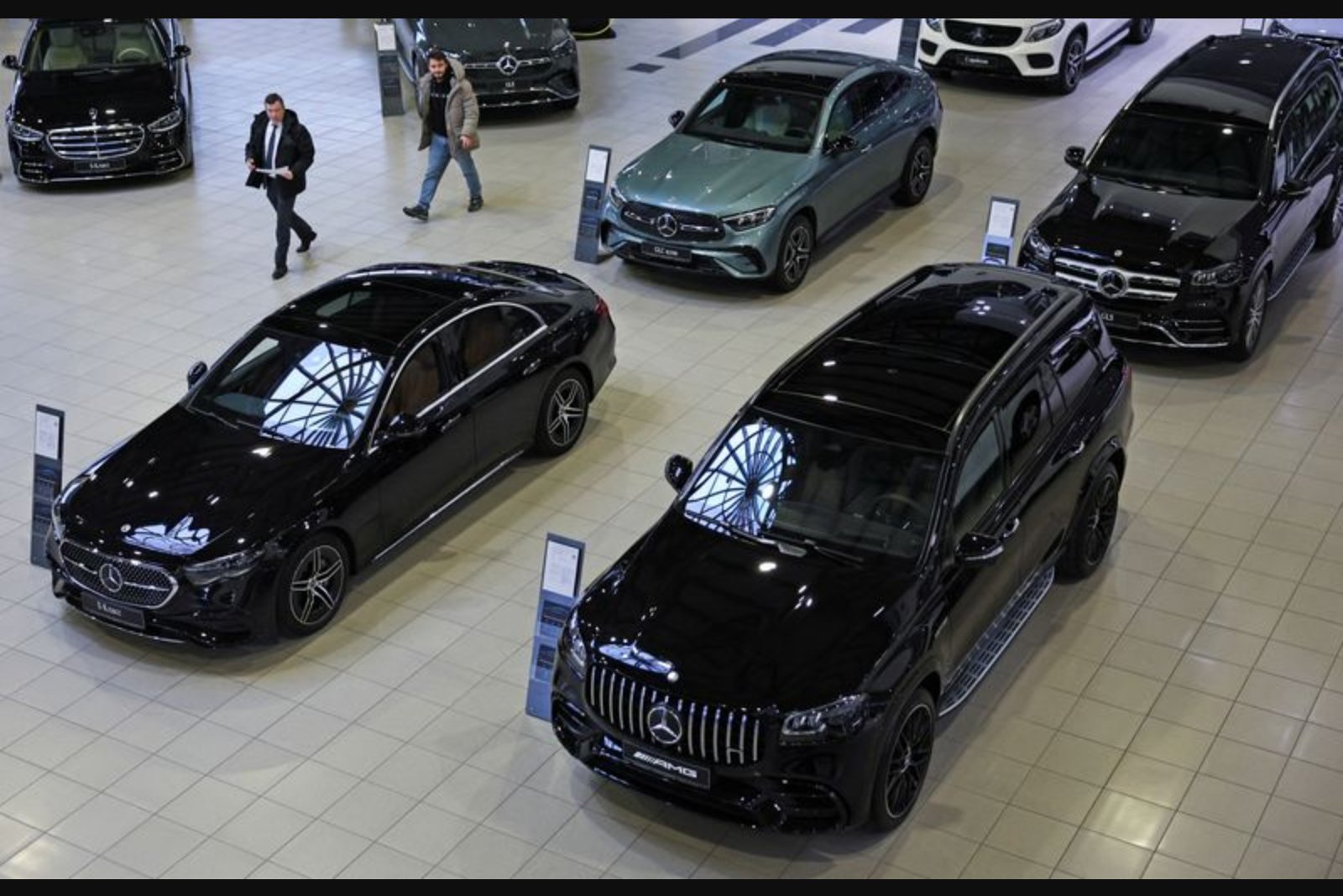
Registration records and interviews with industry participants indicate that tens of thousands of foreign-brand vehicles are moving from China to Russia through gray-market channels that appear to sidestep sanctions and automakers' commitments to curtail Russian sales enacted after Russia's 2022 invasion of Ukraine.
Data compiled by Russian research firm Autostat and conversations with five people involved in the trade point to a robust flow of cars - from mainstream Japanese and Korean marques to German luxury models - that arrive in Russia either as China-made vehicles or after transiting through China. A rising share of these imports are zero-mileage cars initially sold in China as new, then reclassified as used before export.
How intermediaries facilitate the flow
Interviews with dealers, former exporters and traders describe informal networks that enable Russian buyers to acquire Western, Japanese and South Korean brands through Chinese intermediaries. A former exporter at a Sichuan-based car trader, Zhang Ai Jun, explained why some traders label new vehicles as used for export: "This way is to export more easily."
According to participants in the trade, the practice reduces the need to obtain automaker approval for exports to Russia. In China’s highly subsidized and intensely competitive market, dealers and automakers can inflate sales metrics, claim subsidies and move surplus inventory - factors that have made the zero-mileage used car workflow feasible, participants said.
A Russia-based dealer who spoke on condition of using only his first name, Vladimir, described how his dealership in Vladivostok sources restricted foreign models. He said the dealership does not hold such brands in stock but procures them one-by-one from Chinese traders to meet customer requests. "There are lots of middlemen: This one knows that one; that one knows another, and that one can reach the dealer," he said.
Automakers' stance and challenges enforcing restrictions
Automakers from regions that imposed sanctions - including Mercedes-Benz, BMW and Volkswagen Group brands - say they have rules and contractual measures prohibiting sales to Russia and that they are taking steps to prevent unauthorized exports. But these companies emphasize the practical difficulty of investigating and policing potential breaches.
Mercedes-Benz warned that such probes are "time-consuming and complex" and often require outside assistance. BMW said it has instructed its China retail operation to "strictly oppose any potential vehicle exports to Russia," adding that if cars do appear in Russia as gray-market imports, "this happens outside our sphere of influence - and also expressly against our will."
Dmitry Zazulin, sales director at Moscow dealership Panavto-Zapad, said customers still seek Western-brand vehicles: "Many customers want to buy and drive cars exclusively from Western brands, such as Mercedes. However, at present, we can only bring them in through parallel channels."
Autostat data illustrates scale and shifting origins
Autostat registration data shows imports from China make up an increasing share of all Western and Japanese brand vehicles registered in Russia, with sustained volumes from South Korean brands as well. The number of such vehicles manufactured in China has more than doubled since 2023, the data indicate.
According to Autostat, China-made cars now represent nearly half of the nearly 130,000 total vehicles sold in Russia in 2025 that were made by automakers from countries imposing sanctions. Since the start of the conflict in early 2022, more than 700,000 vehicles from all such foreign brands have been sold in Russia, Autostat’s figures show.
Autostat’s statistics also show that Russians purchased nearly 30,000 Toyotas last year, with almost 24,000 of those cars manufactured in China. Nearly 7,000 Mazdas were sold during the same period, almost all China-made. Hybrids from brands including Toyota are reported by two China auto-retail sources as among the most popular Japanese models in Russia.
German luxury models flow through the same channels
German vehicles remain sought-after. Autostat recorded nearly 47,000 new BMW, Mercedes and Volkswagen Group vehicles - including Audi, Porsche and Skoda - registered in Russia last year, and more than 20,000 of those had been manufactured in China. Industry analysts and an importer involved in moving cars to Russia said many vehicles built in Europe also pass through China en route to Russia.
One high-end example singled out by analysts is the Mercedes G-class, a model produced only in Austria that can sell for about 120,000 euros, or about $142,700. Felipe Munoz, an analyst who runs the Car Industry Analysis platform, said this model is especially popular among Russia’s elite.
Dozens of shipping documents reviewed by industry participants show German luxury SUVs such as the Mercedes GLC 300 and the BMW X1 xDrive25i being imported to Russia from China.
Regulatory responses and limitations
Authorities in countries imposing sanctions - including the European Union, the United States, South Korea and Japan - have implemented automotive measures that generally prohibit Russian sales of vehicles above certain price thresholds or those with larger engines, and they also ban EVs and hybrids. Automakers from these jurisdictions pledged to end or severely curtail their Russia operations.
These combined steps reduced Russian sales of vehicles from the sanctioning regions from more than one million in 2021 to about one-eighth of that level, Autostat’s data shows. Nonetheless, sales of Chinese-made German and Japanese cars are on the rise, with some analysts linking the trend to growing exports of zero-mileage used cars that escape some industry reporting methods.
Research firms that rely on official new-car sales tallies may miss vehicles reclassified as used; for instance, GlobalData produced no official new-car sales for German brands in Russia this year, while Autostat captures these imports because its data is based on Russian new-car registrations. In Russia, imported vehicles with zero mileage are considered new regardless of prior registration in China.
Responses from governments and trade bodies
Germany’s economy ministry said customs authorities regularly investigate potential sanctions violations and coordinate with counterparts in other EU countries to apply measures. Japan’s Ministry of Economy, Trade and Industry noted that automakers, exporters and dealers are bound by its sanction rules but declined to comment on the trade of Japanese cars between China and Russia.
South Korea’s trade ministry said it has been working to prevent circumvention of export controls and that authorities have stepped up efforts to crack down on indirect exports of used cars to Russia. China’s commerce ministry and Russia’s industry and trade ministry did not provide comment when asked. Both countries have stated positions opposing unilateral sanctions and regard them as illegal.
Expert view on enforcement challenges
Sanctions specialists caution that even with active efforts to block restricted items, some goods will still find their way into Russia. Sebastiaan Bennink, a sanctions expert at the European law firm Bennink Dunin-Wasowicz, said the variety of mechanisms to skirt restrictions makes it "almost impossible to prevent certain cars from ending up in Russia."
While Autostat’s statistics point to China as the primary conduit for these vehicles, the precise pathways through which every car reaches Russia cannot be fully determined from the available data.
Summary
Registration data from Autostat and interviews with market participants indicate a substantial gray-market flow of foreign-brand vehicles into Russia via China. Many such cars are made in China under international joint ventures or are exported after being reclassified from new to used, a practice that reduces the need for automaker approval and appears to help circumvent sanctions and voluntary sales restrictions put in place after 2022.
Key points
- Autostat data shows China-made foreign-brand cars now account for nearly half of the nearly 130,000 vehicles sold in Russia in 2025 that originated with automakers from sanctioning countries.
- A growing number of imports are zero-mileage vehicles first sold in China and then reclassified as used before export, allowing traders to bypass automaker controls.
- Sectors affected include automotive manufacturing, international trade compliance, and freight/logistics, with implications for automakers, dealers and customs enforcement agencies.
Risks and uncertainties
- Enforcement gaps - It is difficult for automakers and national authorities to trace and prevent gray-market exports, creating uncertainty for sanctions enforcement and complicating compliance for manufacturers and dealers.
- Data limitations - Different industry data sets may not capture reclassified zero-mileage imports, making it harder to assess true market dynamics and to monitor sanction circumvention accurately. This affects market analysts and policy makers relying on official sales numbers.
- Policy divergence - Divergent positions and limited cooperation across jurisdictions may hinder efforts to stop indirect exports, posing risks to trade policy and customs operations.