
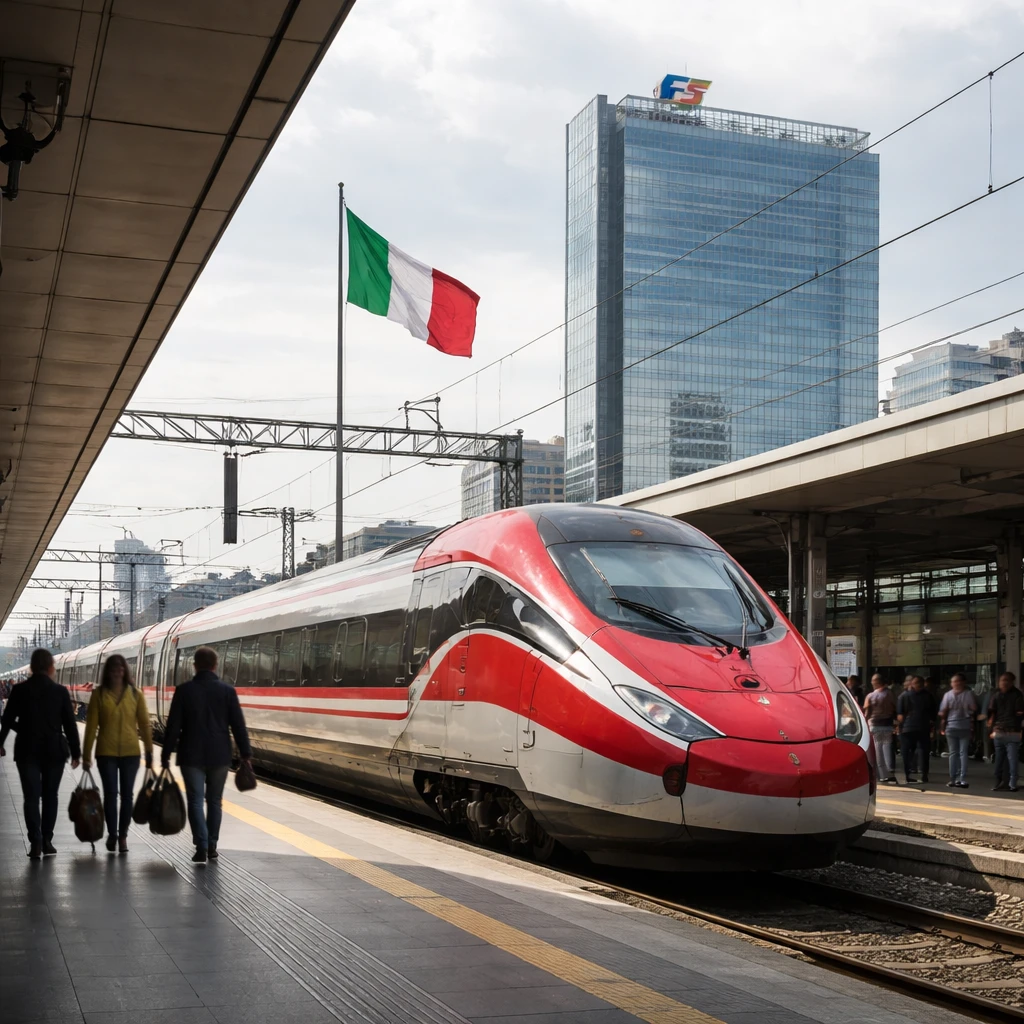
Italy’s state-owned rail operator has announced the resignation of its chief executive, following several months of discord with government officials over performance and strategic decisions.
Ferrovie dello Stato said on Tuesday that Stefano Donnarumma had stepped down. The move comes after persistent tensions with Prime Minister Giorgia Meloni’s administration, which had raised concerns about recurring disruptions and delays on the national rail network that were primarily connected to maintenance and upgrade activities.
Government sources had objected to a number of measures taken under Donnarumma’s leadership. Among the contested decisions were moves toward integrating two companies within the rail sector, as well as his proposal to pursue foreign funding for investments in the group’s high-speed rail operations. These items were cited as points of disagreement between the CEO and government officials.
Ferrovie dello Stato did not provide a detailed explanation for Donnarumma’s departure in its public statement on Tuesday. The company reiterated its broader commitments in a formal release, stating: "The FS Group confirms its commitment to implementing the industrial plan, ensuring operational continuity, management efficiency and the full execution of investment programs serving the country’s mobility needs."
Sources familiar with the matter identified Gianpiero Strisciuglio, the head of FS’s train operator unit Trenitalia, as the frontrunner to succeed Donnarumma.
Donnarumma had taken the helm of the rail group in June 2024. Prior to that appointment, he served as the head of power grid operator Terna (BIT:TRN).
Context and immediate implications
The announcement ends a period of visible strain between the rail company and the national government over operational reliability and strategic direction. While the company has signalled continuity of its industrial and investment programs, the specifics of leadership succession and any subsequent changes in strategic priorities remain a focal point for observers.
What is known
- Stefano Donnarumma has resigned as CEO of Ferrovie dello Stato.
- Tensions with the government were linked to recurring network disruptions attributed mainly to maintenance and upgrade works.
- Disputes also involved proposed corporate integrations and Donnarumma’s plan to seek foreign funds for high-speed rail investment.
- Gianpiero Strisciuglio of Trenitalia is reported as the leading candidate to replace him.
- Donnarumma became CEO in June 2024 and previously led Terna (BIT:TRN).