
(Corrects paragraph 13 to show that Calley Means no longer owns Truemed)
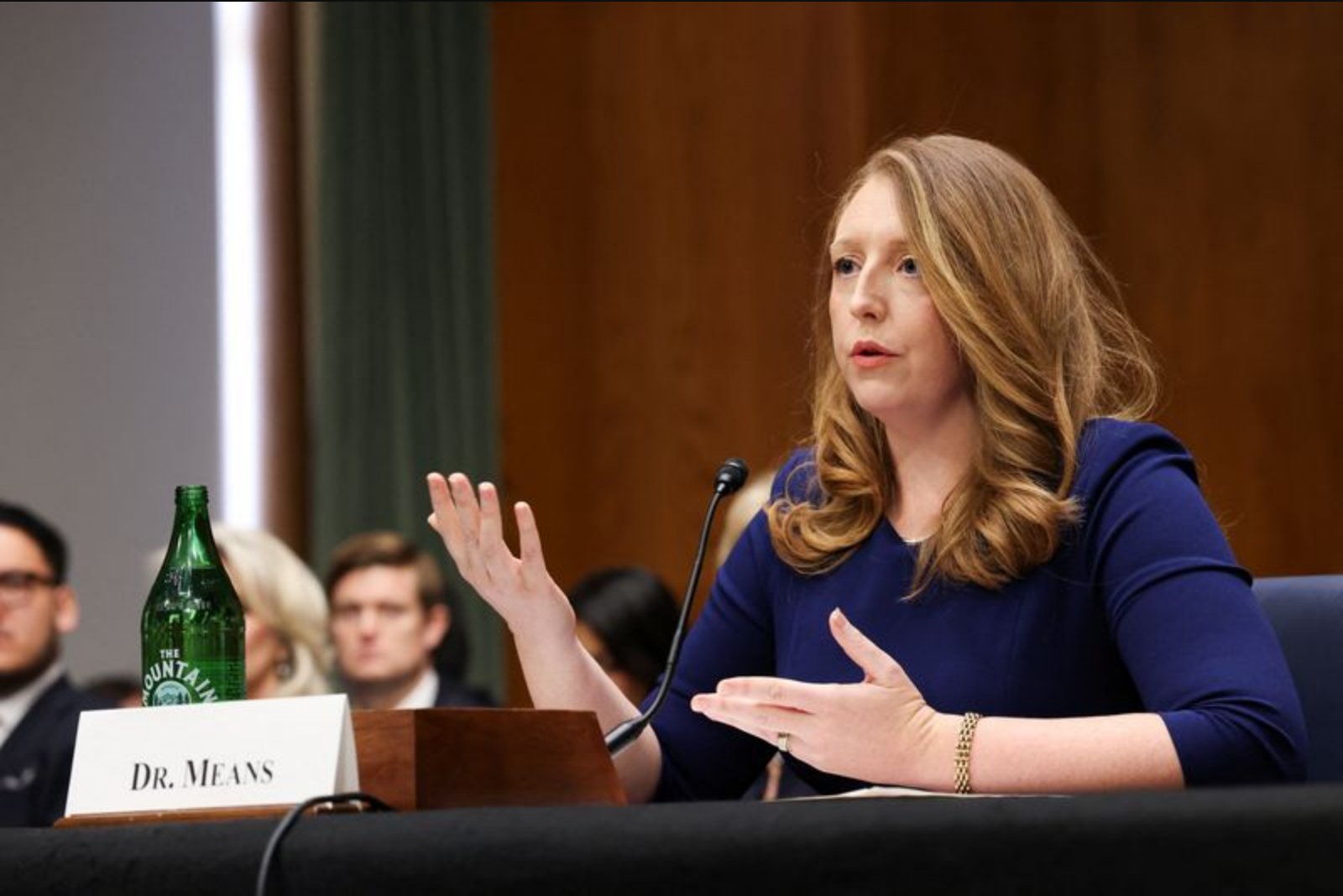
Casey Means, a health influencer allied with Health Secretary Robert F. Kennedy Jr., advanced toward confirmation as the next U.S. surgeon general after a contentious session before the Senate health committee. President Donald Trump nominated Means to be the nation's top public-health official, and the Republican-controlled committee signaled it will move her nomination to the full Senate, where confirmation is expected.
During the hearing, Republican committee Chairman Bill Cassidy, a physician who has criticized Kennedy's positions on vaccines, pressed the 38-year-old Means on prior expressions of vaccine skepticism. Cassidy urged her to endorse broad childhood immunization programs; Means stopped short of explicitly endorsing such a program but stressed that vaccines are a central tool in infectious disease public-health strategies and said anti-vaccine rhetoric has never been part of her message.
Means affirmed support for vaccination against measles and other infectious diseases as cases have risen across the United States. When asked about debunked theories linking vaccines to autism - a position associated with Secretary Kennedy - Means declined to repudiate the assertion fully. She said that individual vaccines have not been scientifically shown to cause autism, but she added that science evolves and that studying cumulative vaccine exposure could be warranted.
Senator Bernie Sanders, the committee's top Democrat, sharply criticized Means and the administration's posture on vaccines during the hearing, saying continued promotion of such theories undermines public health and questioning how the nominee's views would improve national health outcomes.
Committee Democrats also examined Means's past statements about birth control, including comments that contraceptives are overused. Means replied that contraceptives should remain accessible to all women and emphasized that patients should consult their physicians to weigh the risks of hormonal medications.
The hearing had originally been scheduled for October but was postponed after Means went into labor at 40 weeks. Her infant son accompanied her to the Wednesday session.
Financial relationships and product promotion
Democratic members raised concerns about potential financial conflicts tied to Means's promotion of wellness products through her newsletter, The Good Energy Newsletter, and her business interests. Consumer advocacy group Public Citizen reviewed Means's social media, website and newsletter and concluded that she failed to disclose financial relationships with promoted companies in a majority of instances.
Means is a co-founder of the health-technology company Levels and holds shares in Truemed, which the record shows was once owned by her brother Calley Means, an adviser on food policy in the Trump administration. She has committed to resigning from Levels and divesting her holdings in both Levels and Truemed if she is confirmed.
Policy focus: chronic disease and upstream drivers
In her testimony, Means laid out a public-health agenda focused on the upstream drivers of chronic disease. She identified diet, overuse of medication, insufficient physical activity, industrial chemical exposure, chronic stress and social isolation as root causes she intends to target. Means highlighted sugar consumption as a major contributor to the nation's health crisis, asserting that the sweetener underlies many of the leading causes of death in the United States.
Means is the second nominee for the surgeon general role under the current administration. President Trump previously nominated Janette Nesheiwat but withdrew that nomination in May. Both nominees have encountered opposition from far-right activists, including Laura Loomer.
Means earned her medical degree from Stanford University School of Medicine but left her surgical residency before completion. Her Oregon medical license is listed as inactive, a status Means said she chose voluntarily.
The committee’s vote to advance Means will move her nomination to the full Senate, where Republican control makes confirmation likely. Her testimony and the questions she faced underscore the policy and ethical debates surrounding public-health leadership amid rising infectious disease concerns and heightened public scrutiny of the intersections between public service and private wellness ventures.