
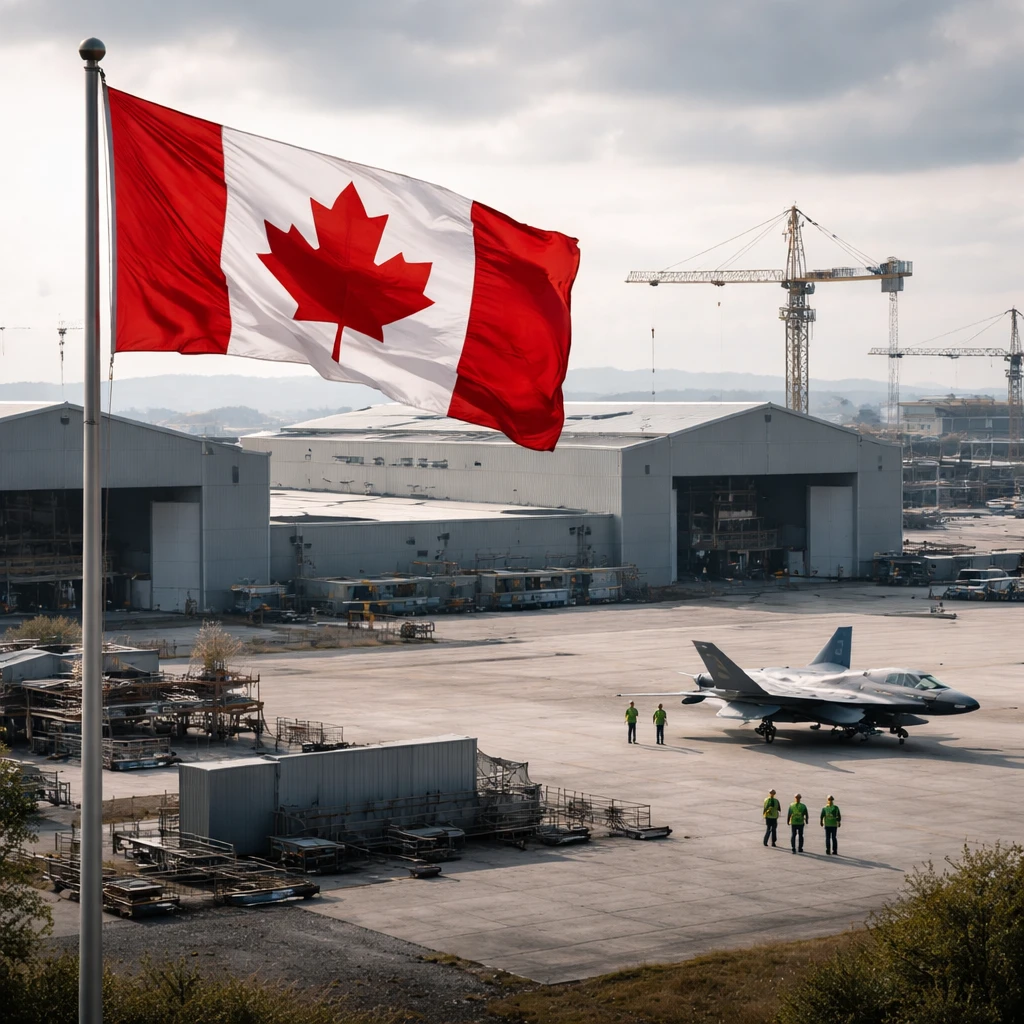
Canada has unveiled a defense strategy that aims to shift a large portion of its military procurement to Canadian companies, according to a government document published Tuesday. The plan targets a reversal of the country’s present sourcing pattern, under which 70% of weapons spending goes to U.S. suppliers.
Prime Minister Mark Carney is quoted in the document as saying the current level of U.S. reliance is excessive and the strategy sets out to change that balance so that 70% of weapons purchases will come from Canadian firms.
"In this uncertain world, it is more important than ever that Canada possess the capacity to sustain its own defense and safeguard its own sovereignty," the document stated.
The strategy lays out measurable objectives for the coming decade. It calls for an 85% increase in government spending on defense-related research and development, a 240% rise in defense industry revenues, a 50% growth in defense exports, and the potential creation of up to 125,000 new jobs.
Officials framed the shift as a response to recent trade frictions between Ottawa and Washington. After U.S. President Donald Trump imposed tariffs on key Canadian imports last year, the government signaled it was rethinking a proposed acquisition of Lockheed Martin F-35 fighters and looking at other aircraft options.
That review of the F-35 transaction, which had been expected to conclude several months ago, remains delayed, the document notes.
The strategy sets out an explicit industrial policy objective for the defense sector, emphasizing domestic capacity, expanded R&D investment and export growth as central pillars. It also connects procurement decisions to broader economic outcomes by projecting a large increase in industry revenue and job creation if targets are met.
While the document specifies the numerical goals, it does not provide further detail in this release about implementation timelines or procurement schedules beyond the stated ambition to alter the current sourcing ratio and complete outstanding reviews.
Sectors affected: defense manufacturing, research and development, exports and employment in related industrial supply chains.