
Stock Markets March 12, 2026

ByteDance Builds Offshore Cloud Using Nvidia Blackwell Servers in Malaysia

Deal involves at least 500 Blackwell servers assembled by Aivres for Aolani Cloud as the company expands AI offerings globally

By Leila Farooq NVDA
ByteDance Builds Offshore Cloud Using Nvidia Blackwell Servers in Malaysia
NVDA

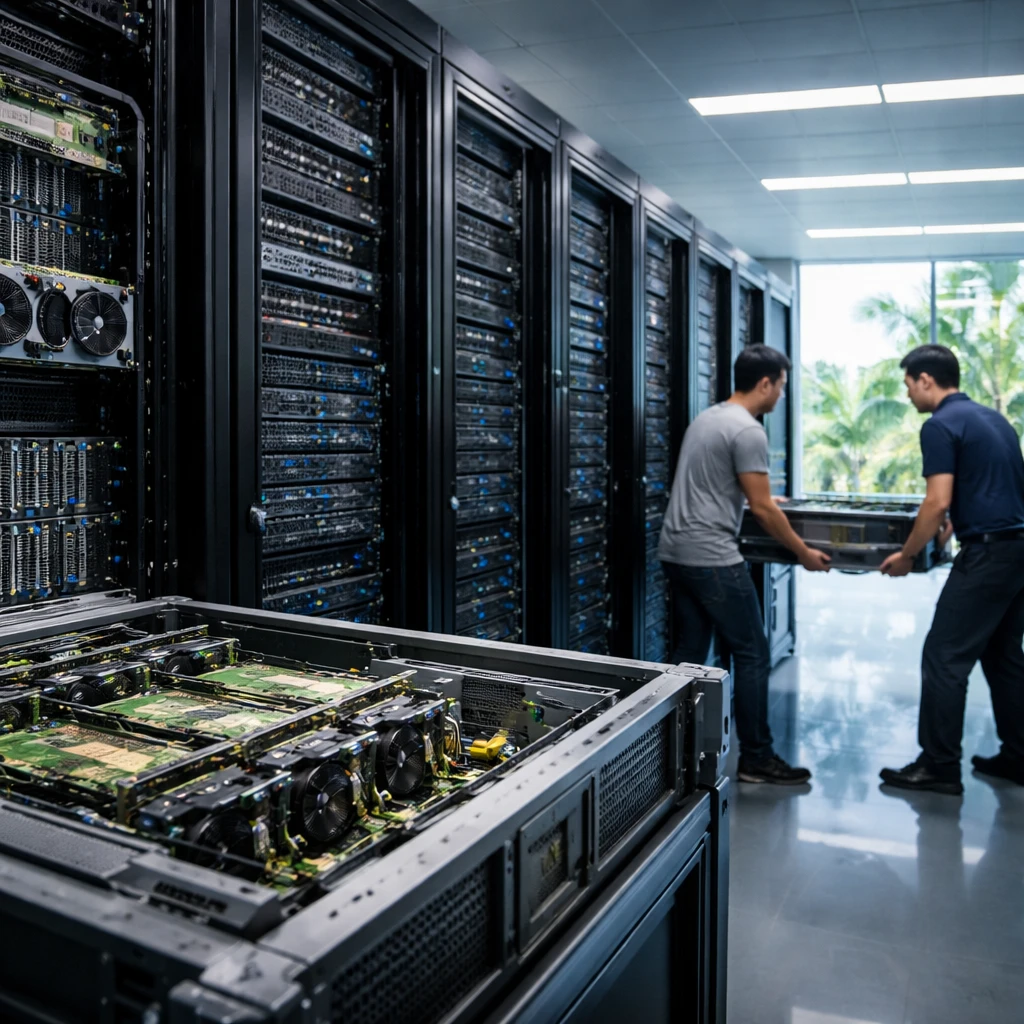
ByteDance is erecting cloud infrastructure outside China that will employ Nvidia’s top-tier Blackwell processors. The effort, executed with Southeast Asian partner Aolani Cloud, involves at least 500 servers in Malaysia containing roughly 36,000 B200 chips assembled by Aivres. The move comes amid U.S. restrictions on sales of advanced AI chips to China and follows earlier use of B200 hardware in Indonesia as ByteDance broadens its AI product slate.

Key Points

  • ByteDance is deploying at least 500 Nvidia Blackwell servers in Malaysia, totaling about 36,000 B200 chips.
  • Aolani Cloud is purchasing the servers from Aivres, which assembles processors using Nvidia chips.
  • The build-out is part of ByteDance’s broader push to scale AI products globally, including recent attention for its Seedance video-generation model.

ByteDance is moving to establish cloud capacity beyond China that makes use of Nvidia’s highest-end Blackwell chips, according to people familiar with the arrangement. The project is being developed with Aolani Cloud and will be hosted in Malaysia.

The setup calls for at least 500 Nvidia Blackwell servers to be deployed in Malaysia, which the parties say will contain about 36,000 B200 accelerator chips in total. Aolani Cloud is acquiring those servers from Aivres, a firm that assembles processors using Nvidia components for customers seeking ready-to-deploy systems.

U.S. export rules currently bar Nvidia from directly selling advanced artificial intelligence chips into China. In response to that constraint, some Chinese technology companies have sought to locate data centres and related infrastructure outside the country so they can gain access to the chips effectively. Earlier reporting indicated ByteDance had already used B200 Nvidia chips in a data centre in Indonesia as part of that pattern.

The company that owns TikTok has been accelerating its development of AI-driven products with an explicit aim of competing internationally in the AI sector. It has rolled out multiple artificial intelligence applications both domestically and abroad, and its AI video-generation model, Seedance, recently attracted viral attention.


Context and mechanics - The Malaysia deployment is structured through a partnership model: ByteDance is partnering with a regional cloud operator, Aolani Cloud, which is purchasing fully assembled servers from Aivres. Those servers incorporate Nvidia Blackwell B200 chips.

Strategic goal - The infrastructure expansion supports ByteDance’s push to scale AI capabilities and deliver AI applications internationally. The firm has introduced AI apps in multiple markets and has marketed generative video tools that have drawn widespread user interest.

Limitations - Public details on the operational timeline, specific product rollouts tied to the Malaysia site, and contractual terms among the parties were not provided in the reporting available.

Risks

  • U.S. export controls block direct sales of advanced Nvidia AI chips to China - affects semiconductor suppliers and cloud infrastructure vendors.
  • Chinese companies have sought to access advanced chips by locating data centres outside China, which introduces legal and geopolitical uncertainty for cloud and AI service markets.
  • Public information lacks details on implementation timelines and contractual arrangements, creating operational uncertainty for cloud service capacity and AI deployment plans.

More from Stock Markets

Glencore Sees Coal Rally as a Path Back to Rio Tinto Merger Talks Mar 13, 2026 Honda warns of first annual loss in decades as shares drop nearly 7% Mar 13, 2026 Asian Equities Slip as Iran Conflict Keeps Energy and Rate Fears Front and Center Mar 12, 2026 One in Five Australian Teens Continued Using Banned Social Platforms Two Months After Rule Change Mar 12, 2026 Global Electric Vehicle Registrations Slip Again in February as Policy Support Eases Mar 12, 2026