
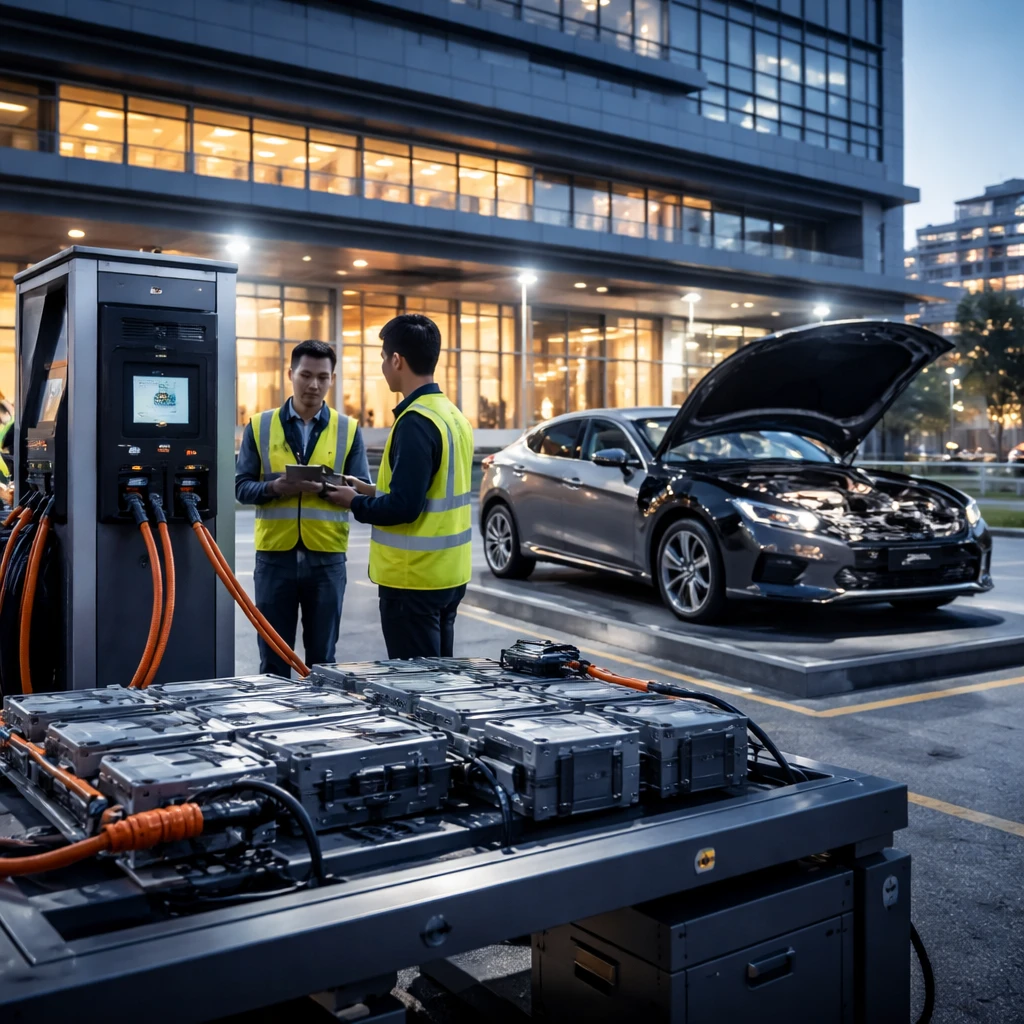
BYD staged a technology demonstration at its Shenzhen headquarters in early March where it presented a Flash Charging system alongside its second-generation Blade battery technology, according to analysts from Macquarie who attended the event.
Company management identified two principal challenges that persist even as electric vehicle penetration surpasses 50%: achieving ultra-fast charging and ensuring reliable performance in cold-weather conditions. BYD stated that delivering charging experiences comparable in time to refueling internal combustion engine vehicles - while preserving battery safety and long-term durability - could broaden its addressable market. The company highlighted prospective gains among consumers who have not yet adopted EVs and among buyers in northern regions where low temperatures are a concern.
BYD described the Flash Charging capability as the product of an integrated engineering effort that ties together the second-generation Blade battery, the drivetrain, platform architecture and the charging infrastructure itself. This system-level approach is intended to let BYD scale advanced 800-volt-plus technology into lower-priced vehicle segments over time, the company said.
On infrastructure deployment, BYD announced plans to construct 16,000 Flash Charging stations within the year. Macquarie estimated the capital expenditure for that network could be in the range of Rmb6-8bn, with the company noting that costs will be shared with charging infrastructure partners. BYD framed the planned buildout as a strategic enhancement to its vehicle products rather than a standalone infrastructure venture.
BYD is positioning the expansion of its charging network as a competitive lever linked directly to its vehicle offerings, implying that the charging footprint and integrated vehicle-technology package are intended to reinforce one another.