
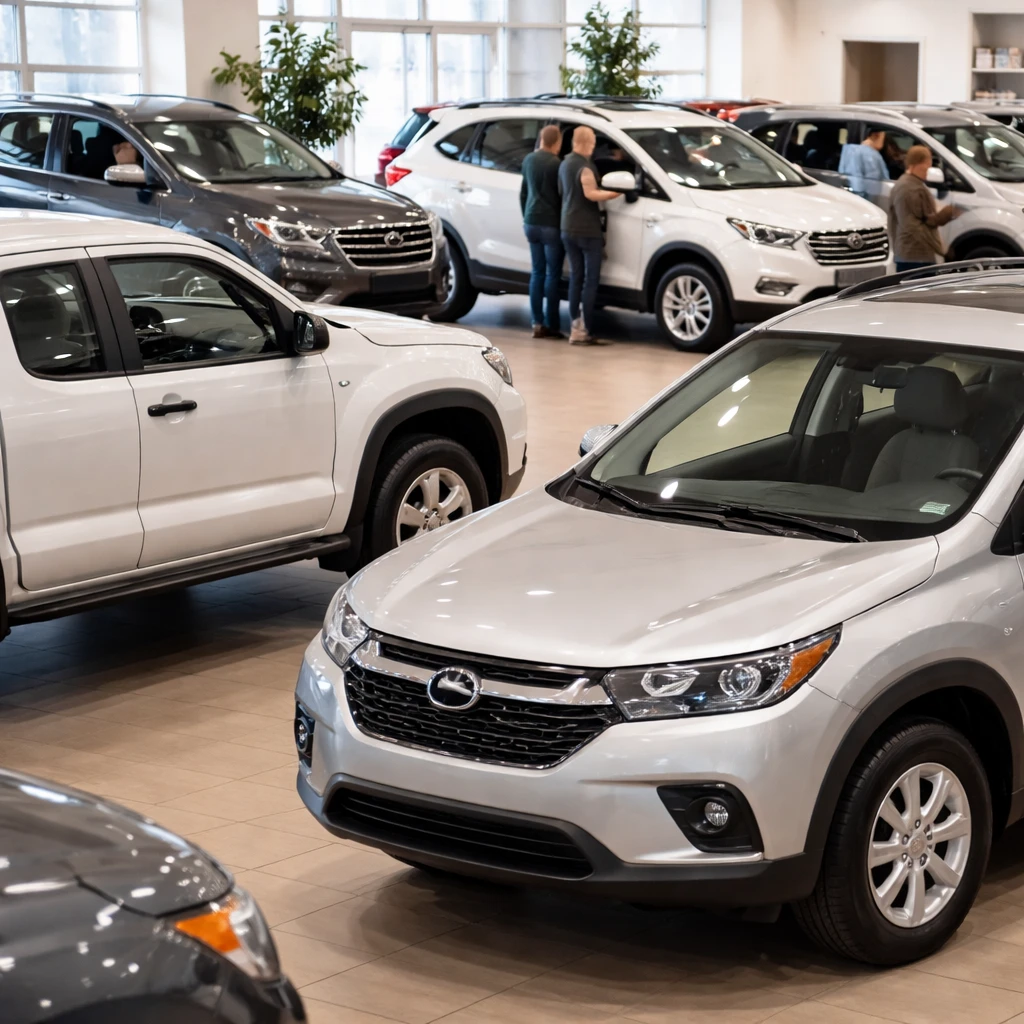
U.S. vehicle shoppers are increasingly choosing stripped-down versions of cars and trucks as soaring sticker prices and broader household cost pressures make premium options less attainable. The shift toward entry-level trims - a phenomenon not seen at this scale since periods of high fuel prices decades ago - is changing sales patterns and prompting some manufacturers to rework production and pricing strategies.
Average transaction prices for new vehicles have been near $50,000 for almost a year, according to Cox Automotive, keeping many fully equipped models beyond the financial reach of many buyers. That sticker shock is coinciding with a wider squeeze on household budgets: an expanding wealth gap, rising costs for housing, insurance and healthcare, and additional cost pressure from tariffs imposed under President Donald Trump, the article said.
"If you want to keep a car for a decade, shouldn’t you get the bare minimum of options that you will use? No need to get the most powerful engine if the plan is just to commute to work," said Sam Fiorani, vice president of research firm at AutoForecast Solutions. Fiorani framed the practical calculation behind the shift: when buyers plan long ownership lives and face higher total costs, the rationale for paying extra for top-tier options weakens.
From the manufacturers' perspective, the move to base-spec models is not necessarily negative. Basic trims are generally quicker and less costly to assemble. Although the gross margin per vehicle is often lower than on premium variants, higher sales volumes of cheaper models can help offset that gap as consumers constrain discretionary spending.
Automakers are reporting signs of the trend in their sales data. Ford said overall U.S. sales fell in January, but deliveries of the basic trim of its compact Maverick pickup rose 33.5%. Honda also reported a noticeable shift in January toward sales of more affordable trims. Toyota experienced stronger demand for mainstream, lower-cost models such as the Corolla and Camry in January, while its premium brand Lexus saw sales of comparable models decline.
Stellantis pointed to actions it has taken to improve affordability, saying it has reduced prices over the past two years. The company cited lower starting prices on some Jeep SUVs, Ram pickups priced below $50,000 in base configurations, and less expensive entry-level models from Dodge and Chrysler.
A Reuters calculation based on data from marketplace and automotive data provider CarEdge found that, across several top-selling nameplates, the average price gap between the lowest and highest trim levels is about $5,000. That narrower differential may make the base trims an easier sell for buyers managing constrained budgets.
Many consumers also cite reliability and lower ongoing ownership costs as reasons to choose simpler specifications. "I always buy the most base interior," said Chris Smith, 30, from Colorado, who owns a 2020 Toyota Tacoma SR5. Citing reliability and lower ownership costs, he asked rhetorically, "Why pay extra for less reliability?"
At the same time, the capabilities of most base trims have advanced. Even basic models now commonly include a modern infotainment system and core driver assistance technologies. As Fiorani observed, "There was a time when lower-trim vehicles targeted fleets like police or taxi buyers, or for salespeople... Today, even base models are relatively well-equipped. It’s difficult to find the items that typically defined base models such as a manual transmission, roll-up windows, and vinyl seats." That equipment baseline reduces the perceived sacrifice of choosing an entry-level model.
The article highlights that pickup trucks and crossovers remain dominant best-sellers despite their generally higher price tags. However, within those segments consumers are showing a preference for the more affordable trims of those body styles rather than the most expensive configurations.
Implications for industry and markets
The movement toward entry-level trims touches multiple areas of the U.S. economy. It affects automakers' product mix and factory throughput, dealership inventory strategies, and the consumer spending profile in the broader retail and durable goods sectors. It also interacts with macroeconomic pressures facing lower-income households, notably housing, insurance and healthcare cost inflation.