
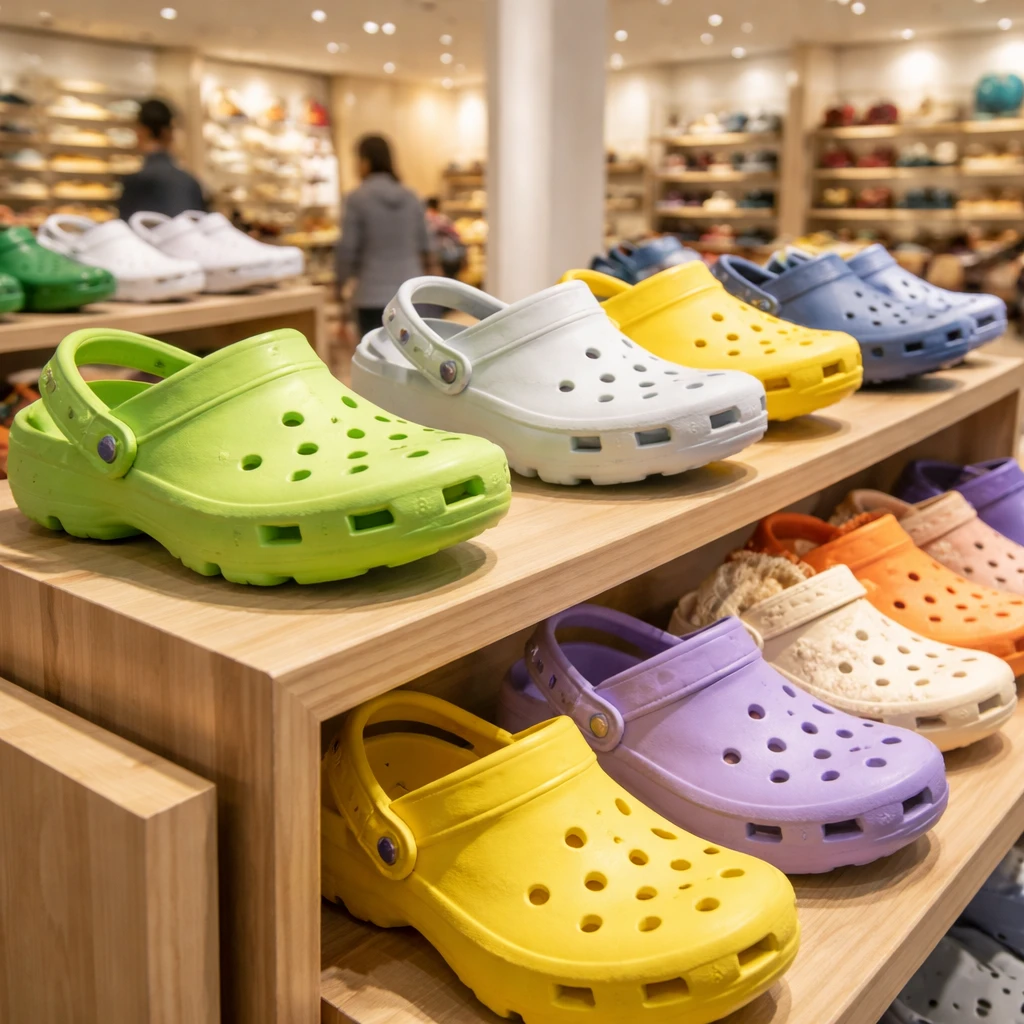
BTIG began coverage of Crocs Inc with a Neutral rating, highlighting that the company has taken steps to right-size inventory and strengthen its direct-to-consumer momentum but faces uncertain timing for a recovery in its core North American business.
The brokerage emphasized that the Crocs brand - which represents more than 40% of company sales and about 82% of overall revenue - remains the central focus for investors. BTIG expects Crocs brand sales to stabilize around the second quarter, yet it projects North American sales will continue to decline in 2026 after a roughly 7% drop in 2025, with a likely return to growth in early 2027.
Analysts at BTIG attributed part of the short-term weakness to conscious decisions by Crocs’ management to scale back wholesale shipments and curb promotional intensity in its direct-to-consumer channel. Those moves are intended to improve product positioning and reduce excess inventory over time, but BTIG warned they may depress sales until at least the second half of 2026.
The firm also cited competitive pressures from athletic and fashion footwear rivals and said there is limited visibility into underlying demand trends. BTIG noted that the brand is already broadly distributed across North America, which could limit growth opportunities unless Crocs expands into product categories beyond its core clog franchise.
BTIG drew attention to the strategic reset underway at HEYDUDE, the casual footwear label owned by Crocs. The analysts described HEYDUDE as being in the later phases of a restructuring that has included reductions in wholesale inventory and cuts to marketing spend. Revenue for HEYDUDE is expected to fall 7% to 9% in 2026 following three consecutive years of decline, with a return to modest growth anticipated in the second half of 2026.
Despite the sales uncertainty, BTIG emphasized that Crocs retains one of retail’s stronger profit profiles. The firm forecasts operating margins to remain in the low-20% range and noted that robust free cash flow generation has enabled the company to repurchase shares.
On valuation, BTIG said Crocs trades at about 6x earnings and roughly 5x enterprise value to EBITDA based on its 2027 estimates, levels below both the company’s historical averages and peer multiples. The brokerage added that it does not publish price targets for stocks it rates Neutral.
Sectors impacted: Consumer discretionary, retail and footwear manufacturing and distribution are the primary sectors affected by Crocs’ performance and strategic choices.