
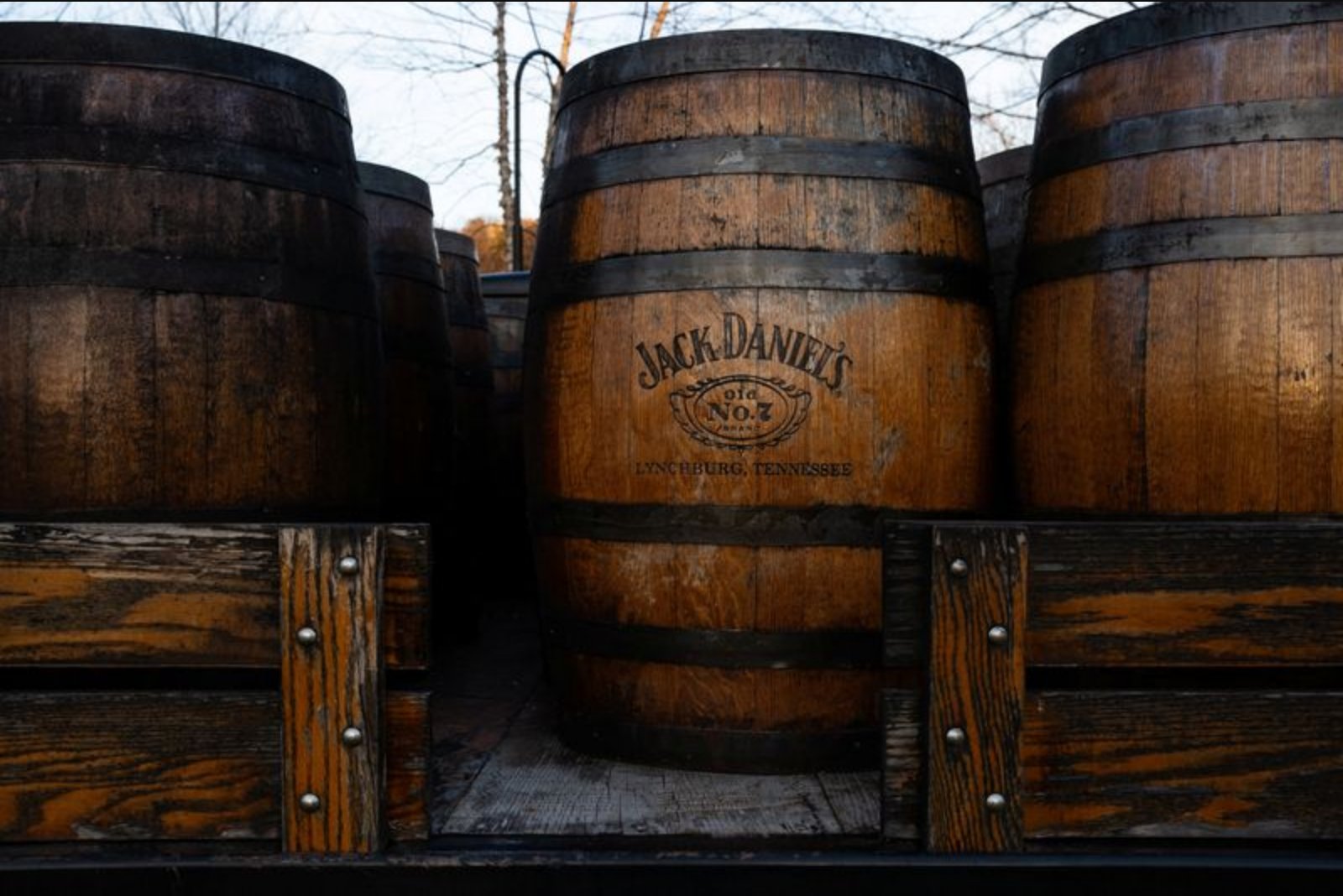
Brown-Forman, the maker of Jack Daniel's, reported third-quarter sales and profit that surpassed analysts' estimates, helped by resilient demand for its whiskey portfolio and ready-to-drink products despite an uncertain economic environment. The company also held to its annual forecasts, and its shares rose about 3% in early trading following the results.
For the quarter ended January 31, Brown-Forman recorded net sales of $1.06 billion, a 2% increase from a year earlier and above the consensus estimate of $998.5 million compiled by LSEG. Reported profit per share was 58 cents, beating the 47 cents analysts had expected.
The company attributed its outperformance in part to initiatives undertaken over the past year, including product innovation, tighter cost controls, and streamlined operations. Management has also accelerated expansion into emerging markets to counter softness in the company's core U.S. spirits business.
Premium whiskey offerings, including Jack Daniel's Blackberry, remained popular with higher-income consumers, with particularly resilient demand in markets such as Brazil and Mexico. At the same time, Brown-Forman continues to face distribution disruptions in Canada, where retailers have kept American-made alcohol off shelves after a trade dispute last year, a dynamic that has weighed on U.S. spirits makers.
Domestically, net sales in the United States fell 8% in the quarter. The company cited shifts in consumer preferences toward non-alcoholic options and energy drinks, trends that have been amplified by the rapid uptake of GLP-1 weight-loss medications. Younger consumers, especially members of Generation Z, are also reported to be reducing consumption of spirits and beer.
Brown-Forman reaffirmed its outlook, reiterating that it expects full-year organic net sales to decline in the low-single-digit range and that organic operating income will also be in the low-single-digit decline range. At the same time, the company warned that the operating environment for fiscal 2026 is likely to be challenging due to macroeconomic volatility and ongoing consumer uncertainty.
Industry peers have signaled similar pressures. The company noted that Diageo recently cut its annual sales forecast, citing heightened pressure on consumer wallets as a principal headwind.
Summary of results and outlook:
- Quarterly net sales: $1.06 billion, up 2% year-over-year, above analyst estimates of $998.5 million.
- Earnings per share: 58 cents, versus estimates of 47 cents.
- U.S. net sales declined 8% amid changing consumer preferences and related factors.
- Company reaffirmed guidance for full-year organic net sales and organic operating income to be down in the low-single-digit range.
- Management expects fiscal 2026 to be challenging because of macroeconomic volatility and consumer uncertainty.