
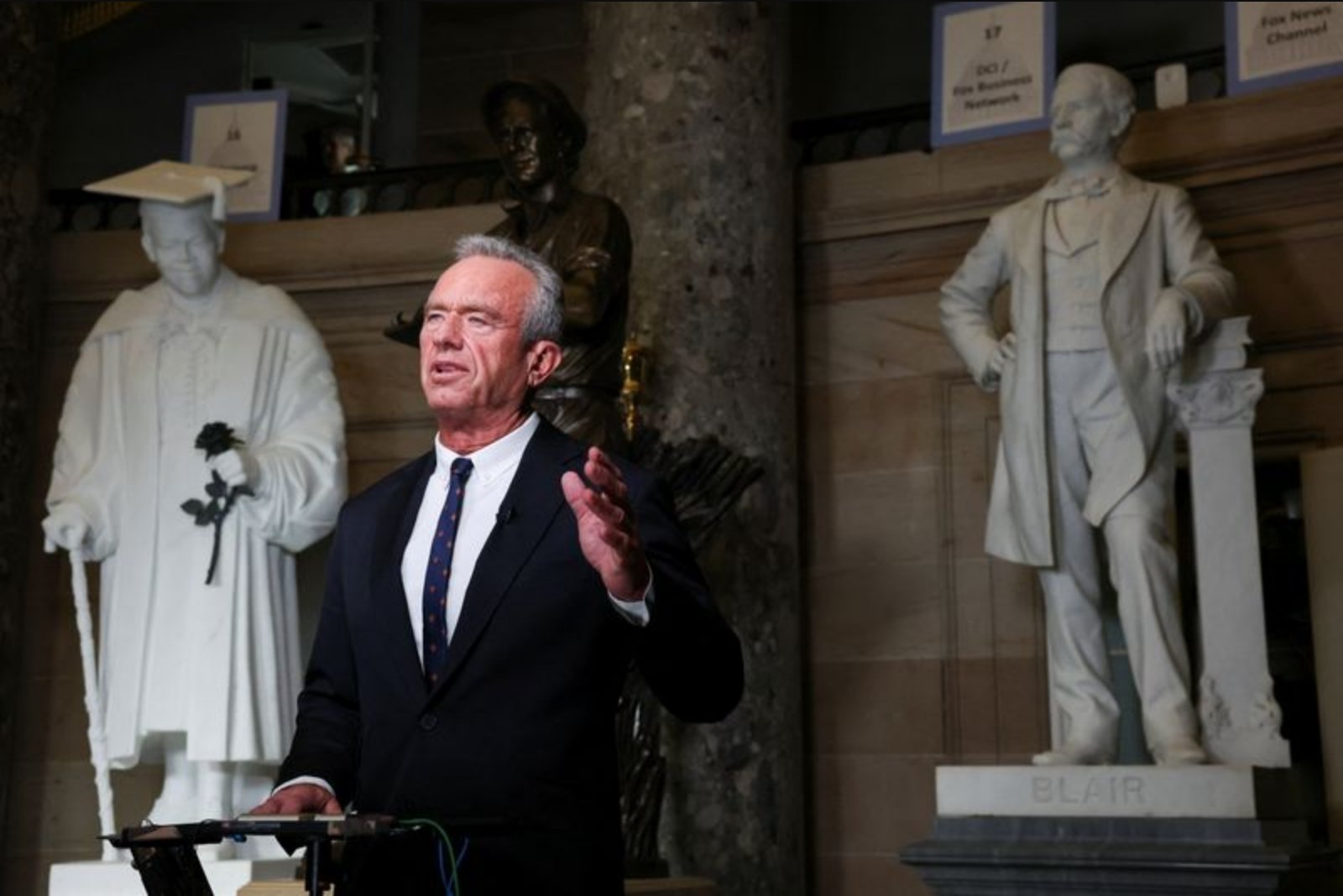
A federal judge in Boston has intervened to stop significant elements of Health and Human Services Secretary Robert F. Kennedy Jr.'s proposed changes to U.S. immunization policy, siding with medical organizations that said the actions were implemented unlawfully and risked increasing obstacles to vaccination.
U.S. District Judge Brian Murphy on Monday ruled in favor of public health groups that had challenged a revised childhood immunization schedule and the wholesale replacement of a key federal vaccine advisory committee. The court order prevents the U.S. Centers for Disease Control and Prevention from putting into effect a shortened list of routine childhood vaccinations and halts the reconstituted Advisory Committee on Immunization Practices from convening as planned.
The Plaintiffs, led by the American Academy of Pediatrics, argued that the CDC unlawfully reduced the number of routinely recommended childhood vaccines to 11 and downgraded recommendations for six diseases, including influenza and hepatitis A. They also challenged Secretary Kennedy's decision to dismiss and replace all 17 members of the Advisory Committee on Immunization Practices, contending the new panel is dominated by vaccine skeptics and therefore in violation of statutory rules governing the composition of federal advisory bodies.
After Murphy's order, the committee postponed a meeting that had been scheduled to begin on March 18. The reconstituted panel had already taken steps to roll back broad federal recommendations for COVID-19 and hepatitis B vaccines prior to the judge's ruling.
Judicial and appointment background
Murphy was appointed to the federal bench in Massachusetts by Democratic President Joe Biden, was confirmed by the U.S. Senate, and joined the court in December 2024, the month before President Donald Trump returned to the presidency. The judge is a former public defender who ran a small criminal defense law firm in Worcester, Massachusetts. At an event in February, Murphy told lawyers that he "had not anticipated some of the more nationwide cases that have been a part of the practice, here in Massachusetts especially."
Several nationally significant cases have been routed to judges based in Massachusetts in recent months, as litigation with broad implications has been concentrated in federal courts there. Murphy's docket has featured multiple high-profile disputes involving actions by the Trump administration.
Legal arguments and government response
Justice Department attorneys argued that the plaintiffs were seeking improper judicial oversight of federal health policy. They contended that statutory requirements for advisory committee "balance" address members' professional backgrounds rather than their individual views. Plaintiffs countered that the abrupt dismissal and replacement of the advisory committee's 17 members produced a panel that does not meet congressional expectations for balanced expertise.
The court's decision, in siding with the medical groups, emphasized the risk that the agencies' changes would create hurdles to vaccination and could erode public confidence in immunization programs, potentially lowering overall immunization rates.
Other major rulings by Judge Murphy
The vaccine case is among several rulings in which Murphy has checked core elements of the Trump administration's policies. In a separate matter, Murphy issued and enforced an order restricting the administration's practice of rapidly deporting migrants to countries other than their nation of origin without providing an opportunity to raise concerns about persecution or torture. That litigation involved the administration's "third country" deportation policy and led to a contested series of orders and appeals. President Trump publicly criticized Murphy's handling of that case, calling him "out of control," while a White House adviser labeled the judge a "lunatic."
The Supreme Court intervened at early stages of the immigration litigation, lifting Murphy's injunction and permitting several deportations to proceed. Murphy later ruled again against the third-country deportation policy on February 25 in a final ruling, which a federal appeals court put on hold on Monday while the administration pursues an appeal. The administration has signaled its readiness to take the matter back to the Supreme Court.
Murphy has also ruled that steep Pentagon cuts to federal research funding for universities were unlawful, and in January he permitted the Vineyard Wind joint venture to resume a Massachusetts offshore wind project. That decision was among five judicial orders nationwide that blocked the administration from halting wind projects on national security grounds. Shortly after, Murphy issued an order temporarily blocking the administration from ending temporary deportation protections for more than 5,000 Ethiopians living in the United States.
Context and immediate effects
The recent order in the vaccine dispute has immediate administrative consequences: the CDC cannot move forward with the shortened childhood vaccine schedule, and the reconstituted advisory committee's meeting was postponed. The plaintiffs' success in court underscores the legal friction that can arise when executive branch officials reorganize advisory bodies or alter agency guidance in ways challengers argue are procedurally deficient or contrary to statutory requirements.
The judge's string of decisions has drawn sharp criticism from the administration for impeding its policy agenda across immigration, energy and research funding, while supporters point to his rulings as upholding legal and procedural safeguards. As cases of broad national consequence continue to be litigated in Massachusetts federal court, Murphy's docket is likely to remain a focal point for disputes over administrative actions.
What to watch next
Following Murphy's ruling, the government may continue its appeals of the vaccine-related order. The administration's previous responses in other Murphy cases—seeking review by higher courts, including the Supreme Court—indicate an established pattern of pursuing appellate review in nationally significant disputes. The immediate legal landscape for federal immunization policy remains unsettled while courts consider the proper scope of agency action and statutory constraints on advisory committee composition.