
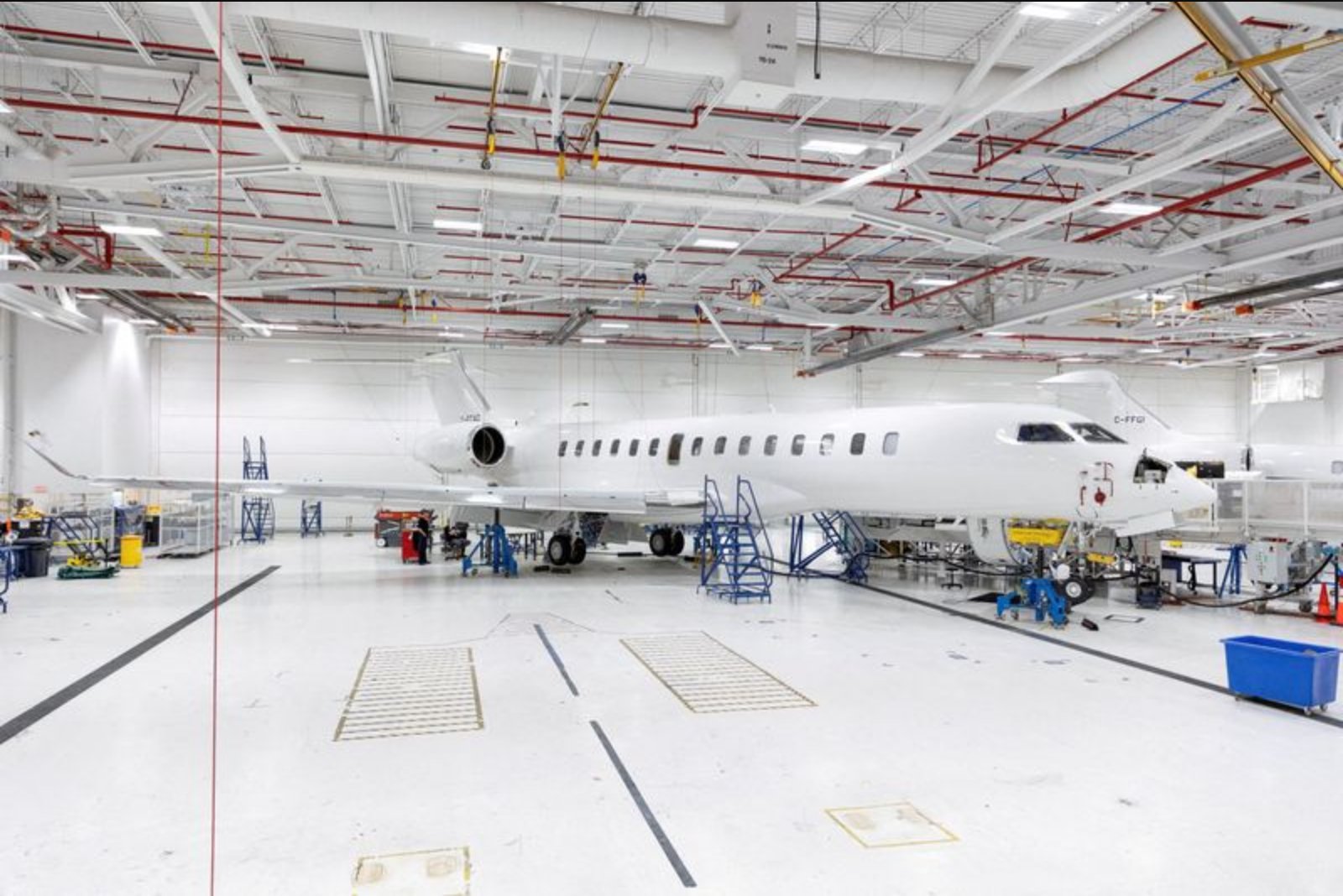
Bombardier said on Thursday that revenue for the fourth quarter increased to $3.69 billion, up almost 19% from the same period a year earlier, as the Montreal-based business jet manufacturer delivered more aircraft in the final three months of 2025.
The company attributed part of its performance to robust demand from high-net-worth buyers and to the tariff-free movement of its aircraft into the United States under the United States-Mexico-Canada Agreement (USMCA) - an important factor given the U.S. is the world’s largest market for private aviation. Bombardier also flagged that U.S.-Canada trade tensions persist, which could affect that dynamic going forward.
For fiscal 2026, Bombardier put forward a target of more than $10 billion in revenue and projected free cash flow in a range between $600 million and $1 billion. Management also expects to deliver in excess of 157 aircraft during the year.
Despite the upbeat operational and financial outlook, the company faces potential tariff exposure tied to the status of the USMCA. The trade agreement is scheduled for review later this year, and U.S. President Donald Trump has recently described the pact as "irrelevant" for the United States, injecting uncertainty into the negotiations among the three North American parties.
Reports indicate that Trump has privately contemplated withdrawing from the USMCA, a development that could complicate ongoing renegotiations between the U.S., Canada and Mexico. Earlier in the year, the U.S. President threatened to decertify Bombardier’s large-cabin Global jets and impose 50% import tariffs on Canadian-made aircraft until Transport Canada certified several planes built by U.S. rival Gulfstream.
Bombardier manufactures its business jets in Canada but maintains a defense unit in Wichita, Kansas. The company’s cross-border manufacturing footprint and its reliance on tariff-free access to U.S. customers make its operations sensitive to changes in trade policy.
On the regulatory front, the head of the U.S. Federal Aviation Administration said on Tuesday that he expects the certification issue will be resolved soon, noting that Transport Canada is set to certify Gulfstream jets. That development could reduce one source of trade friction if it proceeds as indicated.
On an adjusted basis, Bombardier reported quarterly earnings of $4.80 per share, compared with $3.01 per share in the prior-year quarter.
Contextual note - The company’s operational strength in deliveries and guidance for 2026 underline demand resilience among affluent purchasers and the commercial significance of tariff-free U.S. access. However, the company is exposed to political and regulatory developments that could alter its cost structure or market access.