
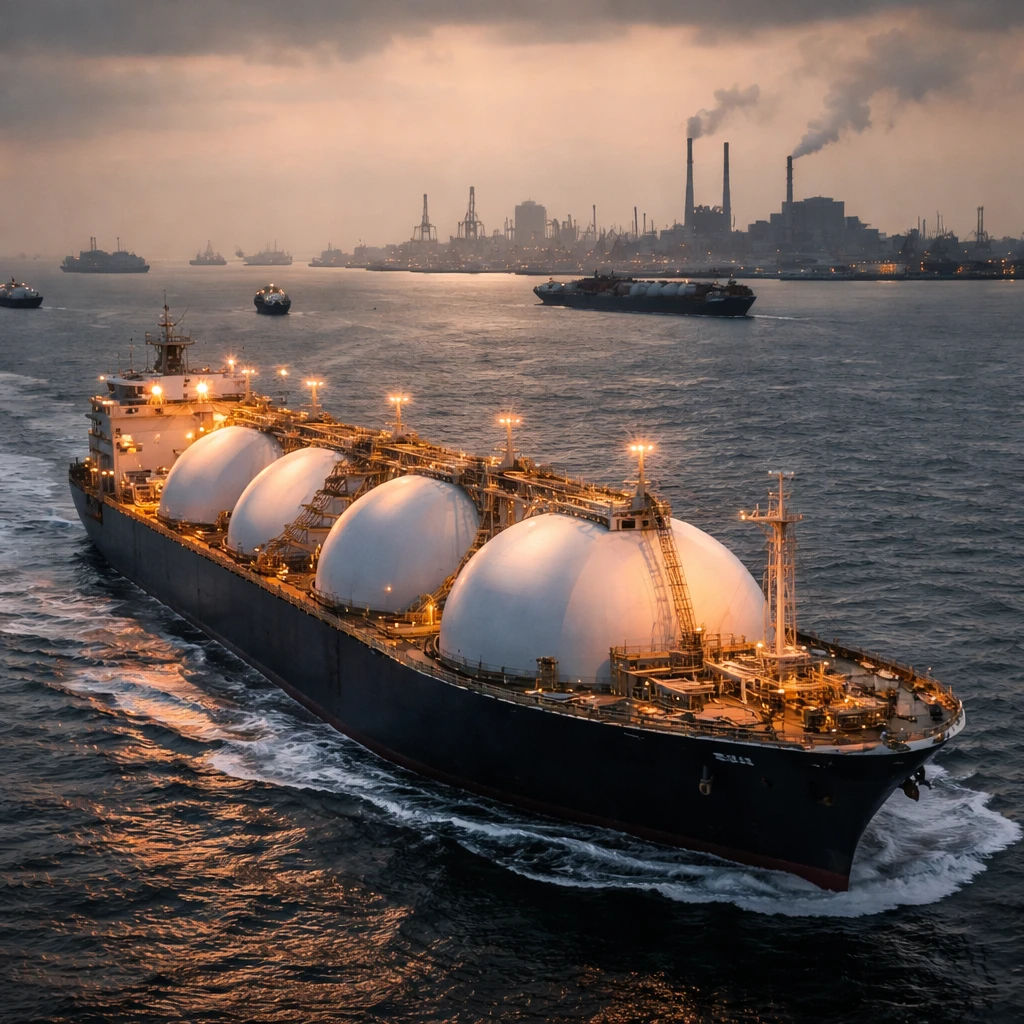
Bank of America analysts have raised the alarm that Asia could confront a significant liquefied natural gas (LNG) shortfall with implications for global technology and manufacturing supply chains if disruptions around the Strait of Hormuz and possible stoppages in Qatar extend beyond the near term.
The bank highlighted that roughly 85% of LNG transiting the Strait of Hormuz is destined for Asian markets. Alternative sea routes for those cargoes are limited, the analysts said, leaving the region exposed to physical supply interruptions. Unlike crude oil, LNG is not readily stockpiled at scale; inventories in regional systems typically cover only several weeks of demand, which constrains time to respond if shipments are interrupted.
BofA's commodities team pointed to rising LNG spot prices and growing shipping costs as early market signals that underscore the potential severity of supply disruptions. Those price signals could intensify if inventories are drawn down.
Among Asian economies, Taiwan, Japan, and Korea were identified as the most vulnerable to a prolonged LNG shortage. Each of these countries has limited domestically available natural gas, relies heavily on the fuel for electricity generation, and maintains reserve levels sufficient for only a few weeks of domestic consumption.
The analysts emphasized that an Asian LNG shortfall would be distinct from the 2022 Russia-Ukraine gas disruption. The difference lies in the root cause: in this scenario the constraint would be physical disruption to supplies rather than a primarily geopolitical squeeze. That distinction matters for how buyers and policymakers respond because regional purchasers would be competing for a limited pool of supply that is usually allocated through long-term contracts.
Regulatory frameworks in many Asian markets could result in industrial users facing rationing ahead of residential consumers, the bank said. If industrial electricity supplies were curtailed, that would create direct risks for manufacturing output and the complex supply chains supporting the technology sector.
Asia's use of LNG for power generation has risen since 2022, the analysts noted, driven by a combination of nuclear and coal plant retirements and increased electrification. That increased dependence reduces the margin for error if physical deliveries are interrupted.
For policymakers, BofA outlined a menu of short-term measures that can be deployed. These include aggressive bidding for spot cargoes, fuel switching where technically and politically feasible, and accelerating the restart of coal or nuclear plants where governments deem it possible. If constraints become severe, authorities could also implement efficiency measures and demand reduction programs.
On a longer horizon, the bank recommended steps to build resilience: expanding storage capacity, diversifying supply contracts away from Middle Eastern sources, and increasing investment in renewables and nuclear generation.
BofA expects Asian central banks to watch carefully for inflationary fallout from any energy shock. The bank's base case assumes tensions in the Middle East will be short-lived and that central banks will tolerate temporary energy-driven price moves. However, it warned that if oil prices were to stay above $100 per barrel for several quarters and those higher costs translated into increased long-term natural gas contract prices, consumer price inflation in most Asian economies could exceed policy targets and prompt central banks to resume interest rate increases.