
Stock Markets June 4, 2026 05:23 PM

Boeing Examining Faster 737 Output, Evaluating Supplier Capacity to Approach Airbus Levels

Company drafting scenarios to lift narrowbody production to roughly 70 jets per month as studies remain preliminary

By Hana Yamamoto BA AIR

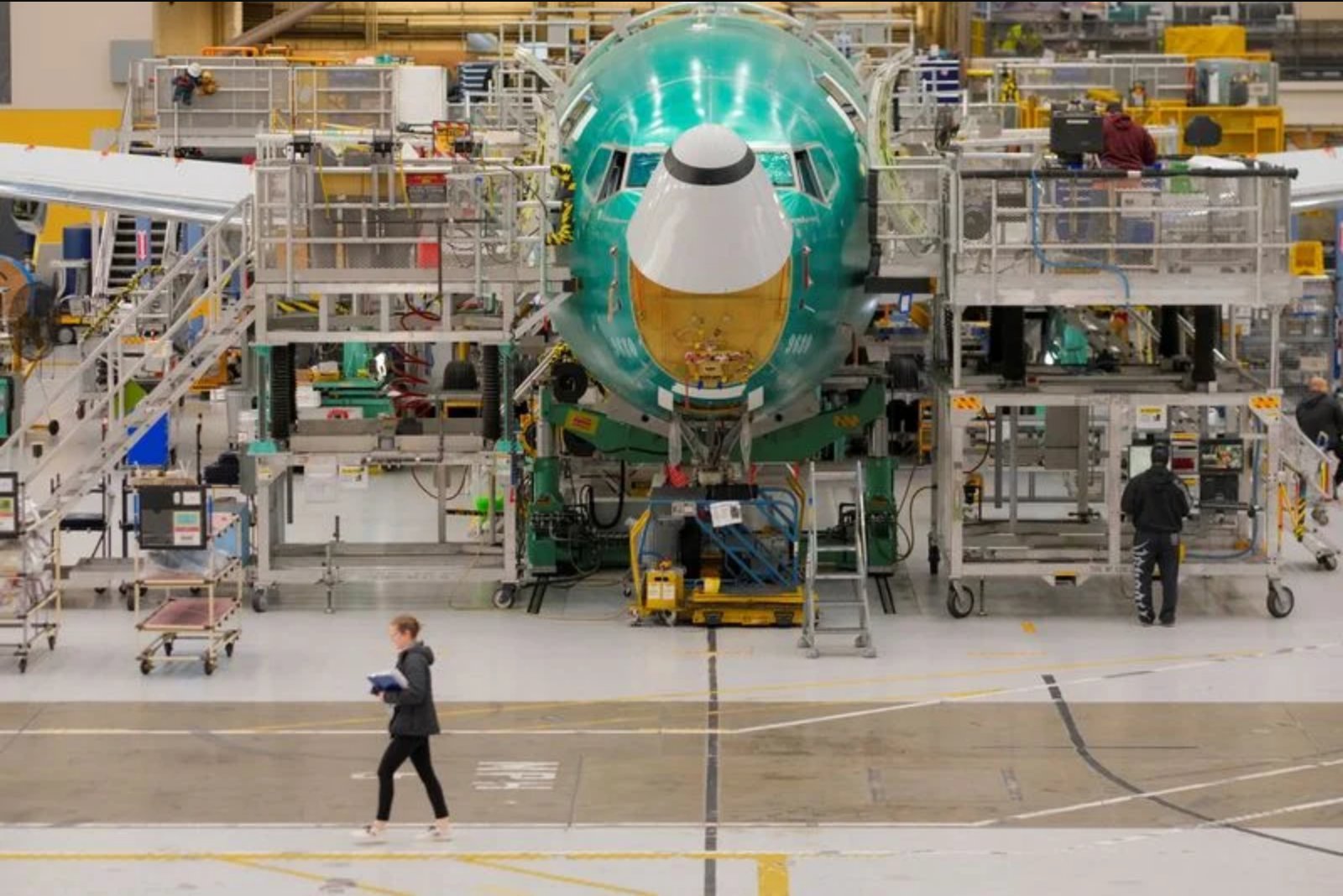
Boeing is studying whether it can boost monthly 737 production above its public target of 63 aircraft to about 70, assessing supplier readiness and supply-chain resilience. The work is in early stages and may not result in a higher cadence. Boeing last announced a rise in 737 MAX output to 47 per month, up from 42, after discussions with regulators. Airbus continues to pursue a target near 75 A320neo-family jets per month and expects to reach 70-75 per month by the end of 2027.

Boeing Examining Faster 737 Output, Evaluating Supplier Capacity to Approach Airbus Levels
BA AIR

Key Points

  • Boeing is drafting plans to evaluate whether 737 production can be raised above 63 aircraft per month to about 70, contingent on supplier capacity - sectors impacted include aerospace manufacturing and supply-chain vendors.
  • The studies are in an early stage and a higher production cadence may not be implemented - this uncertainty affects aircraft manufacturers, parts suppliers, and airline fleet planning.
  • Airbus aims to reach 70-75 A320neo-family jets per month by the end of 2027 and currently averages about 60 narrowbody jets per month - this establishes a benchmark for industry production targets and competitive positioning.

Boeing is evaluating plans to push production of its top-selling 737 narrowbody jet beyond the company's stated objective of 63 aircraft per month, according to people familiar with the matter. Executives are preparing proposals and testing whether the company's supplier base could sustain an increase to roughly 70 jets monthly.

The contemplated uplift would bring Boeing's narrowbody output closer to the targets set by Airbus for its competing A320neo family. Those targets have been a focal point of industry discussion given the stresses they place on global supply chains and component vendors.

Company studies are described as preliminary and the higher production cadence may ultimately not be pursued. Boeing has not issued a comment on the work in progress.

Earlier this year, Boeing disclosed a planned step-up in 737 MAX production to 47 aircraft per month from 42, following consultations with the U.S. Federal Aviation Administration. CEO Kelly Ortberg noted at a May conference that the 47-per-month rate was underway and that the company expected to be producing at that pace within the next couple of months.

Airbus has long set out an ambition to reach a monthly output of 75 jets in the A320neo family but has repeatedly delayed that aim because of supply-chain limits. The European planemaker now anticipates achieving between 70 and 75 narrowbodies per month by the end of 2027 and then stabilizing production at 75 per month. At present, Airbus is producing roughly 60 narrowbody jets per month on average.

Raising Boeing's monthly 737 rate toward the mid-to-high 60s would test the resilience of the broader aerospace supply chain and narrow the gap between the two major planemakers' production plans. The outcome of Boeing's internal reviews and supplier assessments will determine whether a formal plan to accelerate production is adopted.


Context and near-term status

The company has moved recently to increase output to 47 per month for the 737 MAX and is conducting early-stage studies into a further increase to about 70 per month for its narrowbody family. Any change beyond the recently announced 47-per-month rate remains tentative.

Risks

  • Supply-chain resilience is untested at the higher production pace; supplier constraints could prevent a ramp-up - this risk impacts aerospace suppliers and production-oriented service providers.
  • The internal studies are preliminary and may not lead to adoption of the higher cadence, leaving plans uncertain - this uncertainty affects capital allocation and production planning across the aerospace sector.
  • Airbus has previously delayed its higher output target because of supply constraints, indicating persistent industry-level limits that could also affect Boeing's ability to increase rates - this uncertainty impacts both planemakers and airline delivery schedules.

More from Stock Markets

S&P Global Upholds Fast-Entry Rules Ahead of SpaceX Public Debut Jun 4, 2026 Insperity Shares Climb After CEO Buys 233,000 Shares Jun 4, 2026 SpaceX Signals Firmness on $135 IPO Price as Roadshow Begins Jun 4, 2026 CME Chief Warns CFTC Approval of Perpetual Crypto Futures Could Create Systemic Risk Jun 4, 2026 AmperCap Raises $125 Million in NASDAQ Listing as It Targets U.S.-Mexico Middle-Market Deals Jun 4, 2026