
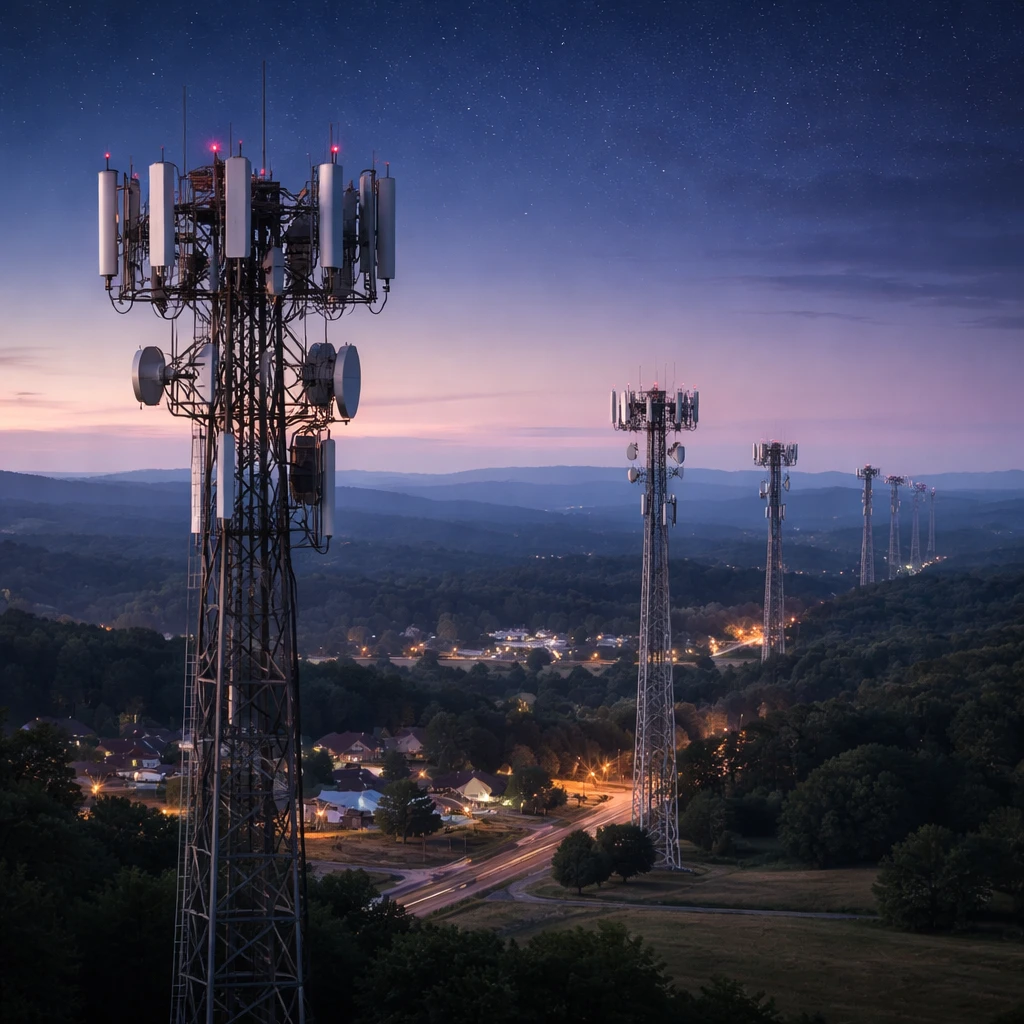
Bernstein analysts led by Douglas Harned have produced a detailed cost assessment for a standalone terrestrial mobile network to support SpaceX’s planned direct-to-device mobile business, and the numbers are large. Including spectrum acquisition, Bernstein’s estimates range from $50 billion to $130 billion, a span the team says reflects sharply different network design choices and levels of competitiveness versus incumbent carriers.
Scope of the estimate
The analysts reported an estimate range of roughly $15 billion to $80 billion when excluding spectrum costs. Including spectrum pushes the overall figure to the $50 billion to $130 billion bracket. In practical terms, those estimates translate into an expected build of approximately 30,000 to 120,000 macro sites depending on the technical and commercial design decisions SpaceX would pursue.
Drivers of the wide range
- Network ambition: Bernstein modeled scenarios from a more limited "Metro" build that would cover about 70% of the population, to a fully competitive "Premium" network intended to rival existing terrestrial carriers.
- Low-band spectrum: Whether SpaceX acquires low-band spectrum such as Grain’s holdings matters materially. The analysts estimate that obtaining even a small amount of low-band spectrum could cut the required site count by roughly 30%, since Grain represents what Bernstein calls the only obviously available low-band option in the market.
Bernstein developed six scenarios combining those two variables. They highlighted a middle "National" configuration - likened to Sprint’s historical footprint - as a potentially credible option at the right price. The firm’s base case is that National build and assumes acquisition of Grain’s spectrum, resulting in a projected cost near $70 billion and an estimated 57,000 macro sites built over about an eight-year period.
Market and firm context
The analysts said they retain an overall positive view of SpaceX’s combined opportunities across launch services, orbital data centers, and Starlink broadband for consumer, enterprise, and government customers, describing that combination as the foundation for a "positive outlook for SpaceX stock." Yet they singled out the direct-to-device mobile business as "the one business that we have viewed as the most difficult."
In public comments, Elon Musk replied "not true" on X to a Bloomberg report suggesting SpaceX was eyeing the Grain spectrum. Bernstein noted that a Grain spectrum acquisition is not off the table. AST Spacemobile has also shown interest in the Grain holdings and in August received a 30-day special temporary FCC approval to test supplementary coverage on that spectrum.
Likely commercial paths
Despite the detailed build-cost analysis, Bernstein said it still considers a partnership for the mobile business to be the most probable outcome. At the same time, the analysts acknowledged that SpaceX continues to indicate a terrestrial buildout remains possible, a stance that encouraged Bernstein to publish the granular assessment given investor focus on the substantial potential costs for telecom operators and tower owners.