
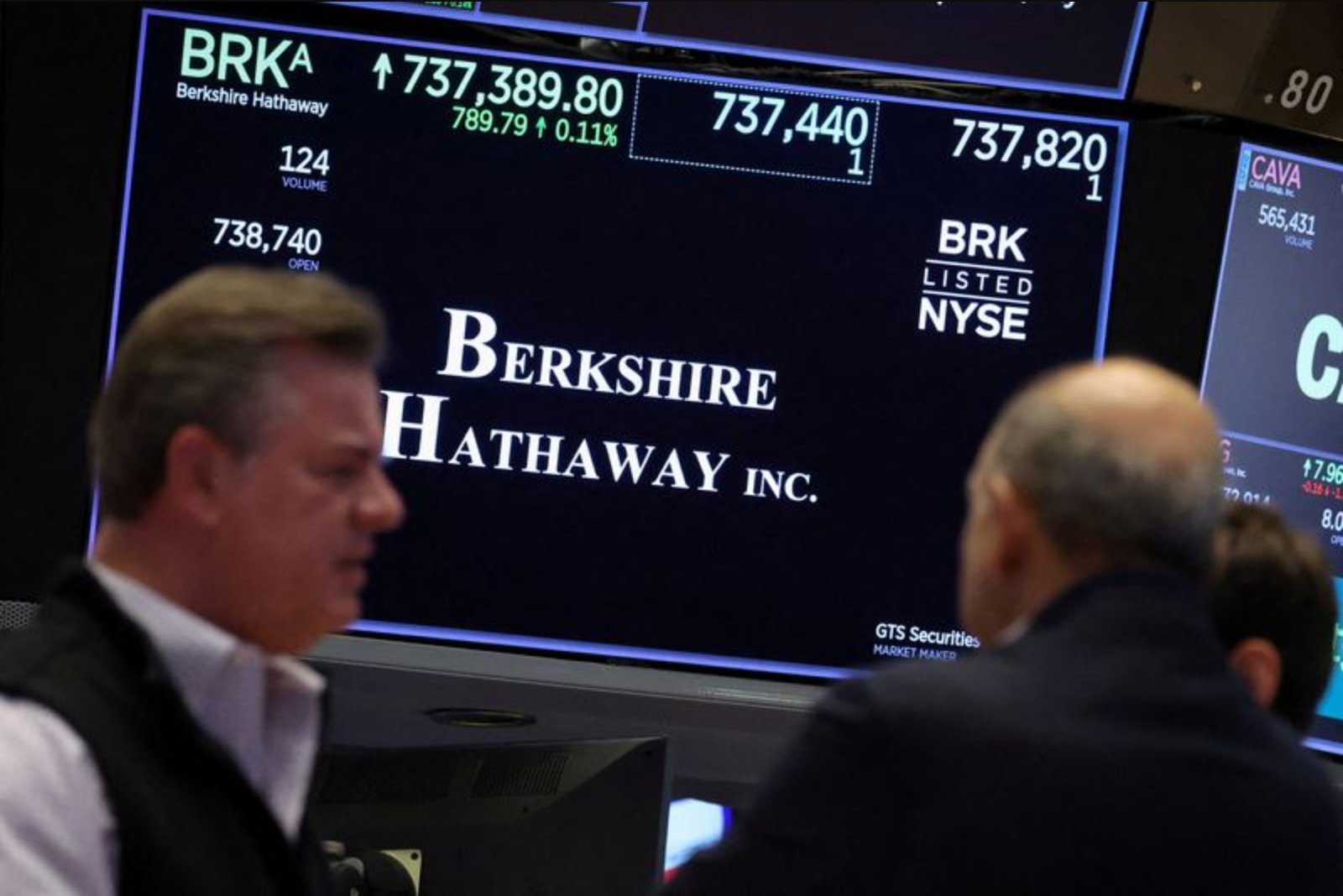
Berkshire Hathaway's stock fell sharply Monday, suffering its largest one-day percentage drop since the announcement that Warren Buffett would relinquish the chief executive role. Class A shares slid as much as 5.3% by early afternoon, while the more affordable Class B shares, valued at roughly 1/1,500th of a Class A share, recorded a comparable decline.
Investors compared the movement to a prior sharp decline last May 5, when shares plunged as much as 6.8% after Buffett unexpectedly named Greg Abel to assume leadership beginning in 2026. Buffett, who has led the conglomerate since 1965, continues to serve as chairman.
On Saturday, Berkshire reported fourth-quarter operating profit of $10.2 billion, a 30% drop from the prior period when excluding gains and losses on common stocks led by Apple. The figure included an overall 38% decline at Geico and other insurance businesses, highlighting material weakness in the company’s core underwriting operations.
In his first annual letter to shareholders as the incoming CEO, Abel warned that Geico could encounter ongoing challenges retaining policyholders as competitors lower car insurance premiums. He added that other insurance and reinsurance units are confronting pricing pressure as additional capital flows into those markets.
Abel addressed Berkshire’s cash position as well, noting the company holds $373 billion in cash. While he said that level of liquidity should not be interpreted as a withdrawal from investing, he did not indicate any plans to restart stock buybacks after a 1 1/2-year pause or to initiate a shareholder dividend.
"We will assess value carefully, act patiently, and hold for the long term - preferably forever," he wrote.
Analyst Meyer Shields of Keefe, Bruyette & Woods, who maintains an "underperform" rating on the stock, said Monday that Berkshire’s results "broadly" missed expectations. Shields pointed to additional weaknesses at the BNSF railroad and within the company's energy, manufacturing and retailing divisions, and he trimmed his 2026 earnings forecast by 5%.
The company’s performance and Abel’s cautionary tone appear to have heightened investor concern about near-term growth and capital allocation decisions. Market commentary included a promotional segment from an investment service that evaluates BRKb using automated models and financial metrics to identify potential opportunities, noting the AI has highlighted other stocks in the past.
Overall, the combination of softer operating earnings, insurance-related pricing pressures, continued uncertainty about capital deployment, and weakness across multiple operating units contributed to the downward pressure on Berkshire shares.