
Overview
Berenberg has moved E.ON SE (ETR:EONGn) from a "buy" recommendation to "hold," citing two primary considerations: the company's significant share-price appreciation that has nearly reached the firm's revised target, and persistent ambiguity over how Germany will set regulatory returns and cost allowances for network operators.
Share performance and price target
On February 9, E.ON's shares closed at 17.99, approaching Berenberg's newly raised price target of 18.10. The broker said the proximity to that target, together with a pronounced rally from a 52-week low of 11.37 - a 58% increase - means investors may wish to crystallise gains after the recent run-up.
Analysts' view on investment capacity and regulatory dependency
"E.ON remains financially equipped to step-up network capex in Germany, enhancing its already attractive opportunity for sustained growth," Berenberg analysts wrote. They added a cautionary note: "However, it needs a sufficiently supportive regulatory framework to do so."
The bank projects a temporary reduction in EBITDA and net income in 2026 as network costs rise, an expectation that aligns with consensus. Berenberg's forecast calls for EBITDA of 9.54 billion in 2026, down 1.9% from 9.72 billion in 2025, with earnings per share slipping to 1.06 from 1.15.
Market position and infrastructure role
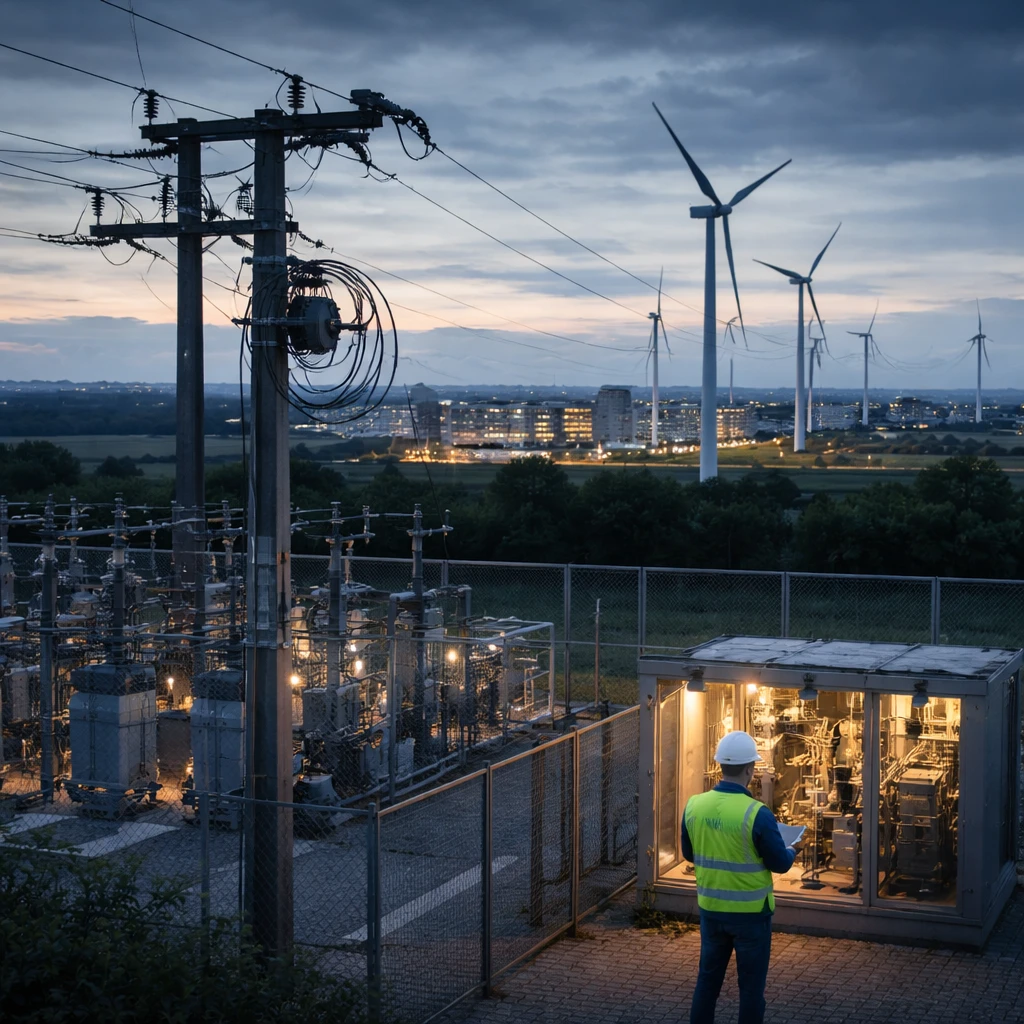
E.ON controls roughly 36% of Germany's fragmented distribution system operator market, which comprises about 860 mostly smaller municipal or regional electricity providers. The company already connects an estimated 80% of new onshore wind capacity in the country. With federal regulator BNetzA forecasting that data centres could account for up to 10% of Germany's electricity consumption by 2037 - up from about 4% today - and with over 90% of decentralised renewable power expected to join distribution grids, E.ON sits at the core of distribution-grid infrastructure planning.
Balance sheet flexibility and investment plans
Berenberg notes E.ON has between 5 billion and 10 billion of balance-sheet headroom to step up network investments above its current target of 35 billion for networks across 2024-28, which includes 22 billion earmarked for Germany. Despite that capacity, the analysts said clearer regulatory terms would be preferable before E.ON commits the additional capital.
Regulatory timeline and potential improvements
BNetzA's December publications pointed to possible regulatory improvements, including a shorter five-year measurement period for the risk-free rate used in cost-of-equity calculations and a capex-weighted seven-year measurement period for cost-of-debt for existing assets - changes that could uplift regulatory returns. Yet the bank cautioned that "the regulator's final determination of the costs of debt and equity is not expected until 2026-28, and cost and efficiency factors will not be known until later in the regulatory process (potentially 2028)." That timetable implies E.ON and other market participants may have to wait to see whether the eventual regulatory package yields internationally competitive remuneration.
Forecast revisions and business mix
Berenberg left its 2025 earnings forecast unchanged but trimmed 2026 and 2027 estimates by 1.6% and 0.1%, respectively, driven by modest adjustments to retail-division assumptions. The broker models regulated asset base growth of 8.3% in 2026 and 8.2% in 2027.
About 75% of E.ON's core EBITDA is generated by regulated networks, 18% by Energy Retail activities and the remainder by Energy Infrastructure Solutions. The company's regulated networks are concentrated in Germany, which represents roughly 65% of its regulated asset base.
Implications for investors
Berenberg's downgrade reflects a mix of market- and policy-driven considerations: shares have risen substantially and now sit close to the analyst house's target, while decisive regulatory clarity - particularly on the cost of debt and equity and on capex-related measurement periods - remains pending and unlikely to be fully resolved until the latter half of the decade. For investors weighing fresh commitments to E.ON, the broker's stance signals prudence until the regulatory framework is finalised and cost-of-capital details are confirmed.