
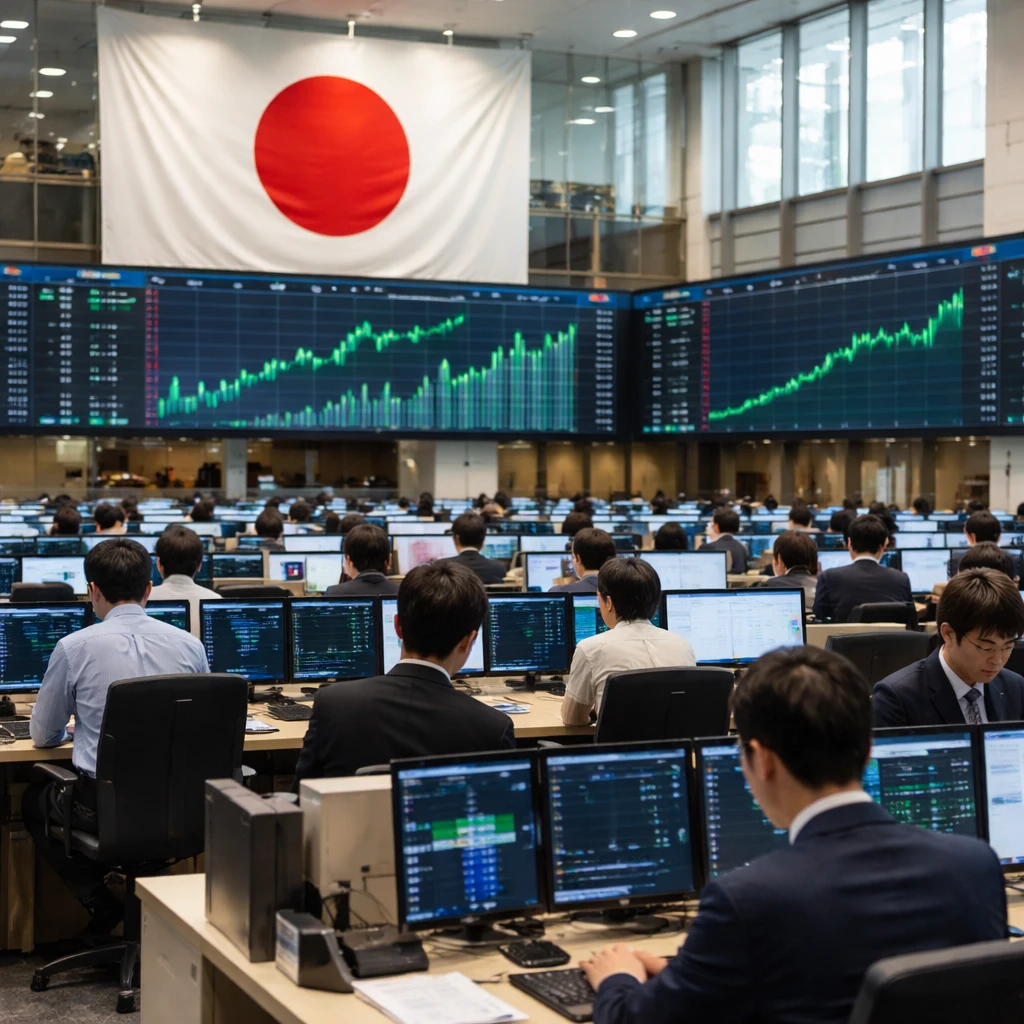
Bank of America analysts anticipate that Japanese equities will attract renewed buying once the outcome of a weekend lower house election is confirmed, with political certainty removing a near-term drag on investor appetite.
Recent polls over the weekend showed Prime Minister Sanae Takaichi appearing likely to clinch a decisive victory in the snap Sunday election, potentially giving her party a supermajority in parliament.
BofA analysts noted that they "cannot rule out the possibility of securing an absolute stable majority or two-thirds of the seats," adding that such a result would strongly indicate public endorsement of Prime Minister Sanae Takaichi and could underpin an extended rally in share prices as investors priced in the prospect of a long-term administration.
Takaichi has pledged to increase fiscal spending and deliver additional tax breaks to consumers. Those policy intentions have been broadly welcomed by local investors, according to the bank.
Japan's Nikkei 225 index has risen by around 5% so far in 2026, following substantial gains in the prior year. Bank of America said the market had generally responded positively to the potential for looser fiscal policy under Takaichi, but that the election itself acted as a temporary overhang on risk appetite. That uncertainty prompted some investors to postpone fresh allocations despite supportive fundamentals, the analysts said.
Once election results become clear, BofA expects portfolio flows to normalize as political risk premiums decline. The bank highlighted that the positives supporting the equity case are largely structural and would remain in place irrespective of the electoral outcome.
Key structural drivers cited by BofA include ongoing corporate governance reforms, higher shareholder returns and improved capital discipline. These factors, the analysts said, have strengthened earnings quality and supported valuation re-ratings over the past year.
The broker also pointed out that some near-term catalysts that propelled markets earlier in the year - notably yen weakness and strong foreign inflows - were fading. However, BofA argued this did not invalidate the medium-term equity case; rather, the market was transitioning from momentum-led gains to performance more firmly grounded in fundamentals.
In terms of where flows are likely to reappear, the bank expects both domestic institutional investors and foreign funds to raise exposure once political uncertainty abates. Areas likely to benefit first include large-cap exporters, financials and companies positioned to gain from governance improvements.
Clear summary: Bank of America says political clarity from the weekend lower house election should lift a short-term overhang on Japanese equities, enabling normalisation of portfolio flows and allowing structural supports - such as governance reforms and improved shareholder returns - to drive medium-term performance.
- Key point 1: Political clarity is expected to reduce risk premiums and resume investor allocations, particularly into large-cap exporters, financials and governance beneficiaries.
- Key point 2: Structural improvements - corporate governance reforms, stronger shareholder returns and better capital discipline - underpin earnings quality and valuation gains irrespective of the election result.
- Key point 3: Near-term market catalysts like yen weakness and earlier strong foreign inflows have faded, indicating a shift from momentum-driven to fundamentals-driven market dynamics.
- Risk 1: Political outcomes and the timing of confirmed results remain a source of short-term uncertainty that can delay investor allocations and affect sectors sensitive to policy changes, such as financials and consumer-facing industries.
- Risk 2: The fading of earlier catalysts, including yen weakness and strong foreign inflows, could reduce near-term market momentum even if structural improvements persist.
- Risk 3: If expectations for sustained fiscal loosening do not materialize as projected by market participants, sectors that have priced in policy support could face renewed volatility.