
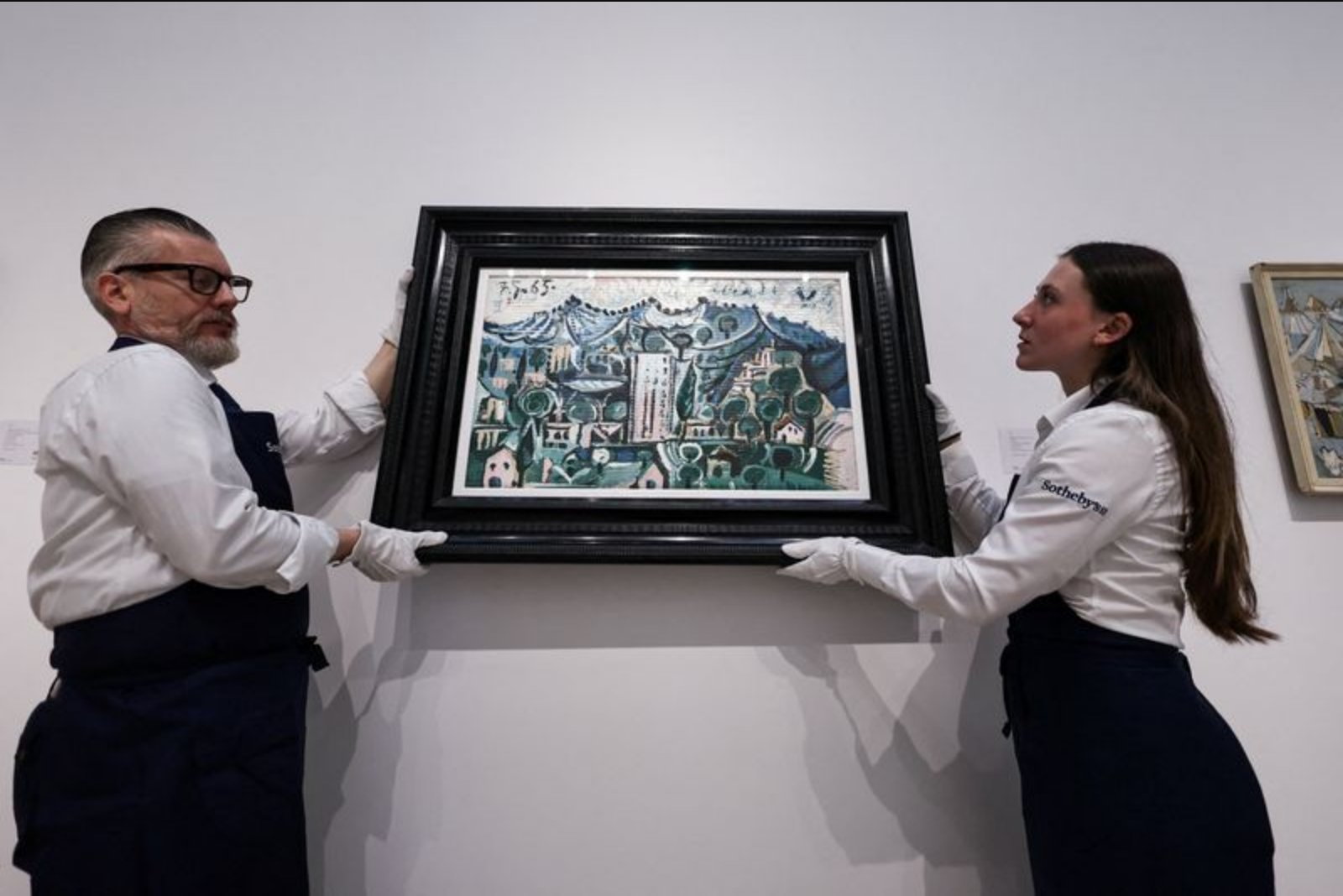
Bank of America is introducing a dedicated art consulting offering for its affluent clientele, reflecting evolving patterns among collectors and a growing tendency for wealthy individuals to leverage art holdings for credit.
The bank said the advisory will be available to clients of both Bank of America and Merrill Lynch, with consultants working directly with collectors to align acquisitions with personal tastes as well as potential future value, according to Drew Watson, Bank of America’s head of art services.
Watson pointed to generational change in the market as a key factor in the move. He said changing tastes and the emergence of new collectors - whether heirs or new investors - are heightening demand for guidance from financial institutions.
"It’s a very interesting moment to look for new long-term trends in the art market with all the recent change."
Institutional interest in art is sizable. Consulting firm Deloitte estimated in its most recent annual art market report that ultra-high net worth clients held about US$2.56 trillion in art in 2024, and that total could rise to $3.5 trillion by 2030. Deloitte also expects that roughly one third of those works may pass to younger generations over the next decade.
That transfer of ownership, together with shifting preferences among incoming collectors, is one reason Bank of America is positioning itself to advise on purchases as well as to support clients who want to avoid selling pieces to meet liquidity needs. Watson said art is typically treated as property that can secure loans rather than as a line item in an investment portfolio.
BofA already maintains one of the largest portfolios of art-backed loans, and the new consulting service is intended to help clients choose works that suit their tastes while also considering potential appreciation.
Demand for art-based credit has risen. Deloitte reported that around 70% of wealth managers saw higher interest in art-backed lending last year, and that this category of credit generates about $2.3 billion in revenue.
Clients frequently use art as collateral to obtain liquidity for other investments, including business ventures, rather than selling items from their collections.
Separately, marketing materials referenced by the bank highlight third-party services evaluating Bank of America stock. One such service, ProPicks AI, is described as assessing BAC using more than 100 financial metrics, identifying stocks with attractive risk-reward profiles and citing past winners. The material poses the question: Should you be buying BAC right now?