
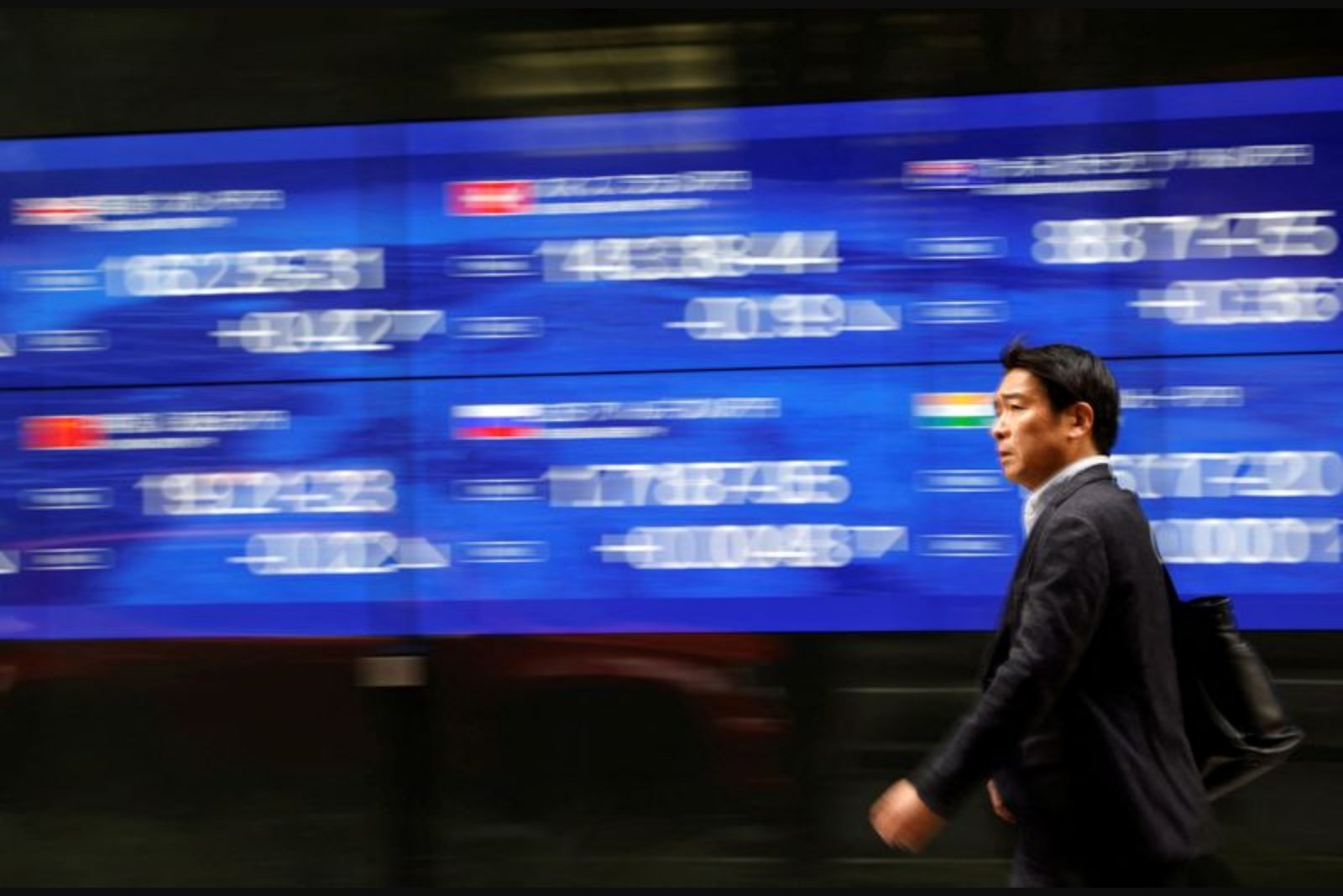
Asian markets adopted a cautious tone on Tuesday in sessions marked by reduced liquidity because several regional exchanges were closed for Lunar New Year. China, Hong Kong, Singapore, Taiwan and South Korea did not trade, while U.S. markets had been closed on Monday for Presidents' Day, contributing to thinner global activity ahead of scheduled nuclear negotiations between the United States and Iran in Geneva later in the day.
Equities movements reflected the subdued backdrop. Japan's Nikkei slid 0.9%, while Australia's S&P/ASX200 edged up 0.24%. Futures in the United States showed modest weakness, with Nasdaq futures down 0.8% and S&P 500 futures off 0.4% during Asian hours.
Fixed income markets saw small declines in yields during the session. The U.S. 10-year Treasury yield fell 2.5 basis points to 4.029% on Tuesday. In Japan, longer-dated government bond yields fell more noticeably - the 20-year JGB yield was lower by 5.5 basis points to 3.025% and the 30-year yield dropped 6 basis points to 3.025%. Yields move inversely to prices.
A domestic auction affected shorter-dated Japanese debt - a 5-year bond auction held earlier produced a weak outcome, and the 5-year JGB yield eased 4.5 basis points to 1.625%.
Currency markets were also active amid concerns about Japan's economic momentum. The dollar index, which tracks the U.S. currency versus a basket of major peers, was largely steady at 97.12 after a modest 0.2% gain overnight. The Japanese yen weakened 0.3% on the day to 153.05 per dollar.
The yen reaction followed the release of softer-than-expected Japanese GDP figures for the fourth quarter. On Monday, authorities reported annualised growth of 0.2% for Q4, well below the 1.6% gain that had been forecast, with government spending identified as a drag on activity. The weak outturn has implications for domestic policy discussions and is likely to influence the case for additional fiscal support.
Economists noted the data increases the pressure on Prime Minister Sanae Takaichi to consider more aggressive fiscal measures. Market pricing for Bank of Japan rate moves softened slightly after the GDP data - NAB analysts observed that markets had pared back the odds of near-term BOJ tightening, with "only 4 basis points priced for the March meeting and 16 basis points priced for April." Traders and economists polled previously had expected the BOJ to delay further tightening until July.
Across the Tasman, Australia's central bank said on Tuesday it believed inflation would have remained stubbornly high had it not raised rates this month, and indicated uncertainty about whether additional tightening would be required.
Oil and geopolitical backdrop
Oil markets were mixed in Asian trade as investors awaited the U.S.-Iran nuclear discussions in Geneva and monitored possible OPEC+ supply increases. U.S. West Texas Intermediate crude was up 0.95% but that move included Monday's price action because the contract did not settle on the U.S. holiday. Brent crude futures were down 0.5% in Asian trade following a 1.33% gain on Monday.
Heightened regional naval activity was also noted ahead of the talks. Iran's Revolutionary Guards navy conducted a drill in the Strait of Hormuz on Monday, according to the semi-official Tasnim news agency. The Strait of Hormuz is a critical conduit for global energy flows, accounting for roughly 20% of global oil shipments.
ANZ analysts highlighted the sensitivity of oil markets to geopolitical developments and other broader geopolitical negotiations scheduled this week, including Ukraine-related discussions. They warned that growing speculative positions had increased vulnerability in oil pricing and that any easing of Middle East tensions or meaningful progress on the Ukraine negotiations could prompt a rapid unwinding of the risk premium currently embedded in prices.
Precious metals slipped as well. Gold fell 0.82% to $4950 per ounce, pressured by a stronger dollar on Monday that made dollar-priced bullion more expensive for holders of other currencies. Spot silver declined about 1.6%.
Context for investors
With several major Asian markets closed for holidays and U.S. markets previously paused for a public holiday, participants noted thinner trading conditions and heightened sensitivity to geopolitical headlines and domestic macro data. The combination of mixed oil signals, soft Japanese growth numbers and modest declines in global yields kept investors cautious as they awaited the Geneva talks and additional economic updates later in the week.