
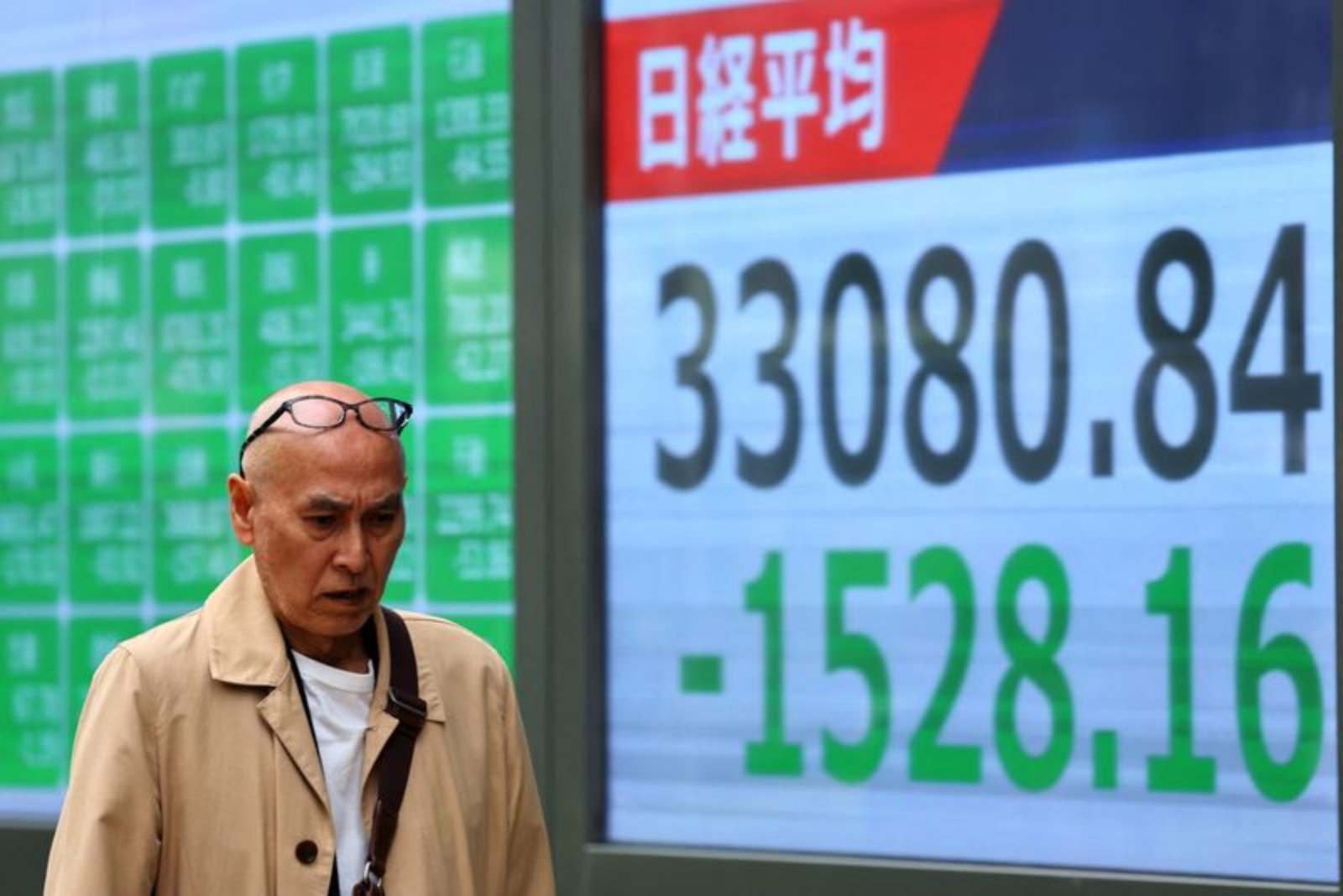
Asian stock indices fell on Friday as market participants reacted to two clusters of unsettling news: a sharp sell-off in listed private equity names and a surge in tensions between the United States and Iran. The combined developments pushed some investors toward safety, lifting crude prices and strengthening the U.S. dollar.
Japan's Nikkei index declined about 1% on the day, while Hong Kong's Hang Seng eased roughly 0.3% as trading resumed following the Lunar New Year break. The negative tone came after U.S.-listed private equity shares were hit overnight when one manager moved to sell assets and permanently halt quarterly redemptions from one of its funds, raising broader concerns about valuation and liquidity conditions in the sector.
That firm, Blue Owl, closed the session about 6% lower. Larger peers also suffered notable losses, with Apollo Global Management and Blackstone shares each dropping by more than 5%.
Commodities and geopolitics
Brent crude futures rose to levels not seen in about six and a half months, trading above $72 a barrel, after U.S. President Donald Trump set a 10 to 15 day deadline for Iran to reach an agreement on its nuclear program or "really bad things" would happen. The prospect of a U.S. military buildup in the Middle East added to the supply-risk premium on oil and contributed to the broader retreat from risky assets.
Market commentary and positioning
Market strategists said the mix of the private equity episode and geopolitical headlines discouraged investors from taking on risk. Kenji Abe, chief strategist at Daiwa Securities in Tokyo, said the combined news flow left investors withdrawing from risk positions and also prompted caution ahead of an upcoming earnings report from Nvidia.
Separately, reports surfaced that Nvidia is close to finalising a $30 billion investment into OpenAI that would supplant a previously agreed long-term $100 billion commitment between the companies, according to a media report cited Thursday.
Corporate and macroeconomic moves
Walmart shares fell around 1.4% after new CEO John Furner provided a cautious assessment of the U.S. consumer. At the same time, U.S. trade data showed the deficit widened sharply in December, and the goods trade shortfall for 2025 was the largest on record, a development that the article noted suggested tariffs implemented under the Trump administration have had limited impact.
Foreign exchange and fixed income
The U.S. dollar was on track for its biggest weekly advance in four months, helped by a collection of slightly stronger U.S. data and the Federal Reserve minutes that indicated officials see no hurry to cut interest rates. For the week the dollar gained roughly 0.9% against the euro, pushing the common currency to $1.1762. Moves on Friday morning were described as modest.
Japan's yen weakened after data showed core inflation in January was 2%, the slowest pace in two years, a development that could complicate the Bank of Japan's potential policy path. Over the week the dollar strengthened about 1.6% to 155.2 yen.
The Australian dollar was trading around $0.7047, supported in part by a widening yield premium, while the New Zealand dollar was under pressure amid fading expectations of early rate hikes and was set to record its largest weekly drop so far in 2026.
In U.S. government debt, 10-year Treasury yields were steady near 4.06%. The Federal Reserve minutes revealed divisions over the timing and pace of rate cuts, a debate that has pushed two-year yields up by five basis points over the week to around 3.46%.
"There does not seem to be much point in adding risk ahead of this weekend's uncertainty surrounding the Middle East," said Brent Donnelly, president of Spectra Markets, capturing the caution many traders expressed as the market awaited developments on both the geopolitical and corporate fronts.
With headline risk elevated and important corporate reports due, market participants appeared to prefer holding back from fresh risk-taking decisions, leaving equities softer and safe-haven assets firmer as the regional trading day progressed.