
Most Asian stock markets weakened on Friday as investors moved away from risk assets amid renewed uncertainty about the trajectory of U.S. interest rates and intensifying tensions with Iran.
Regional trading also followed a cautious tone from Wall Street, which slipped in overnight trade. S&P 500 Futures were up 0.16% by 22:37 ET (03:37 GMT), while market attention remained focused on upcoming inflation and growth data due later in the day.
Chinese markets were closed for the Lunar New Year holiday, leaving trading activity concentrated elsewhere across the region.
Japan and Hong Kong among the laggards
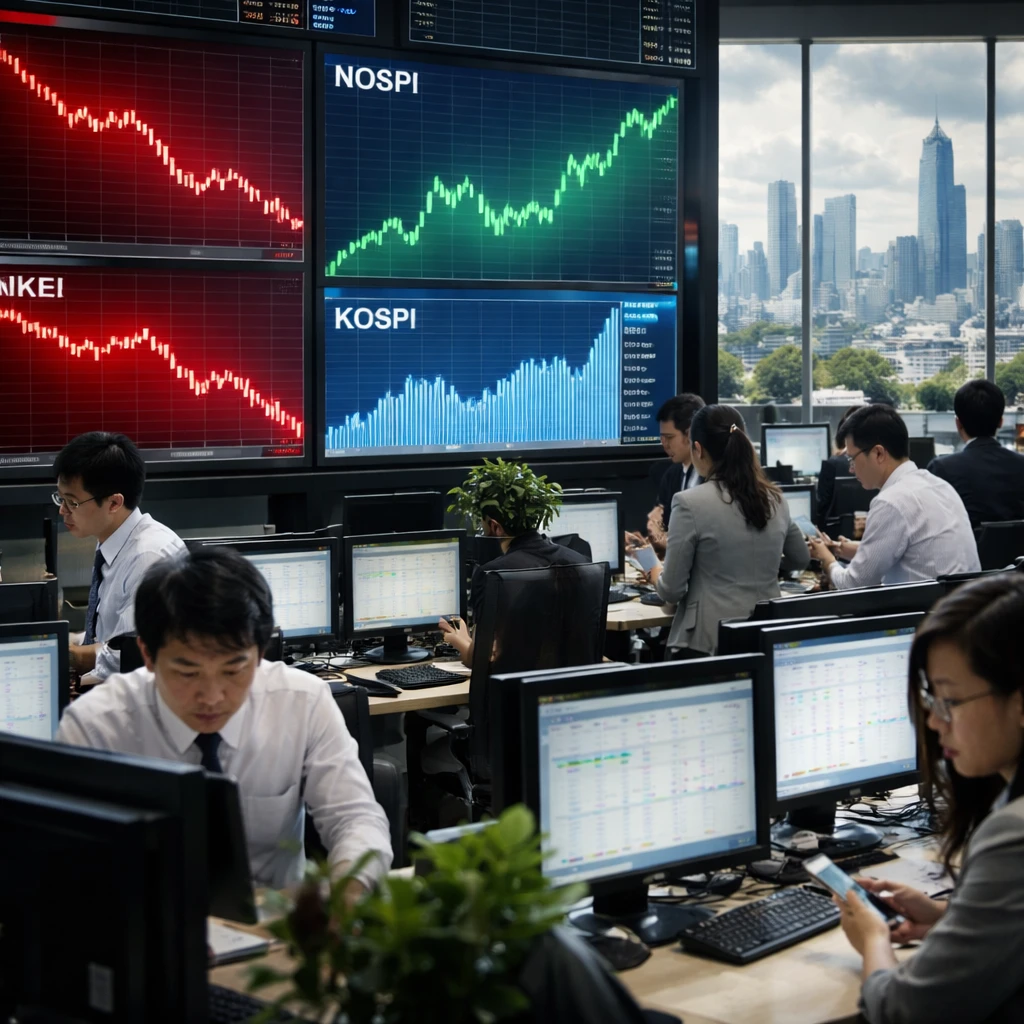
Japan recorded some of the largest declines in the region. The Nikkei 225 dropped 1.4% and the TOPIX fell 1.2% after a batch of mixed domestic economic releases. Headline consumer price index inflation eased to a near four-year low in January, while core inflation, although lower, remained above the Bank of Japan's 2% annual target.
Separately, purchasing managers index data indicated factory activity rose to a four-year high in February, supported by strong overseas demand. The combination of cooling domestic inflation and firmer industrial activity produced a mixed backdrop for Japanese equities.
Hong Kong's Hang Seng index declined 0.6% as trade resumed after a three-day break. Local technology names tracked earlier losses seen among global peers. Alibaba Group (HK:9988) and Baidu Inc (HK:9888) were among the biggest decliners on the Hang Seng, sliding between 4% and 6% after both were briefly included on a U.S. government list alleging ties to the Chinese military. BYD Co (HK:1211), which was also mentioned in the list, fell 1.6%.
Other markets: mixed moves
Across the rest of the region, movements were relatively muted. Australia's ASX 200 eased 0.2%, Singapore's Straits Times gained 0.1%, and India's Nifty 50 was broadly flat despite reports of several new artificial intelligence ventures in the country that left local tech names jittery.
Geopolitical and policy uncertainty weighs on risk appetite
Risk sentiment was dented by renewed geopolitical pressure related to Iran. U.S. President Donald Trump set a deadline of 10 to 15 days for Iran to reach a deal on its nuclear program, warning of potential U.S. action if no agreement is reached. Multiple reports suggested the U.S. administration is considering additional strikes against the country. Those developments contributed to a generally weaker risk appetite across markets.
South Korea outperforms, KOSPI hits fresh record
South Korea's market diverged from the regional trend. The KOSPI rallied more than 1.6% to reach a record closing level of 5,768.61 points, marking a second consecutive session at a fresh high. While an earlier technology-led surge helped lift the index, Friday's advance was driven by sharp gains in brokerage, defense and insurance stocks.
Local media reports pointed to a flurry of retail buying that helped underpin the rally, even as foreign investors were net sellers.
South Korea's top court on Thursday convicted former President Yoon Suk-Yeol to life in prison on charges related to an attempted insurrection in late-2024. The conviction is part of the developing local political backdrop but did not prevent the KOSPI from extending its recent gains.
Overall, Asian equities entered the weekend with a cautious tone as a mix of policy uncertainty, geopolitical risk and uneven economic data kept investors on edge. Market participants remain focused on forthcoming inflation and growth releases that could influence expectations for U.S. interest rates and broader global risk sentiment.