
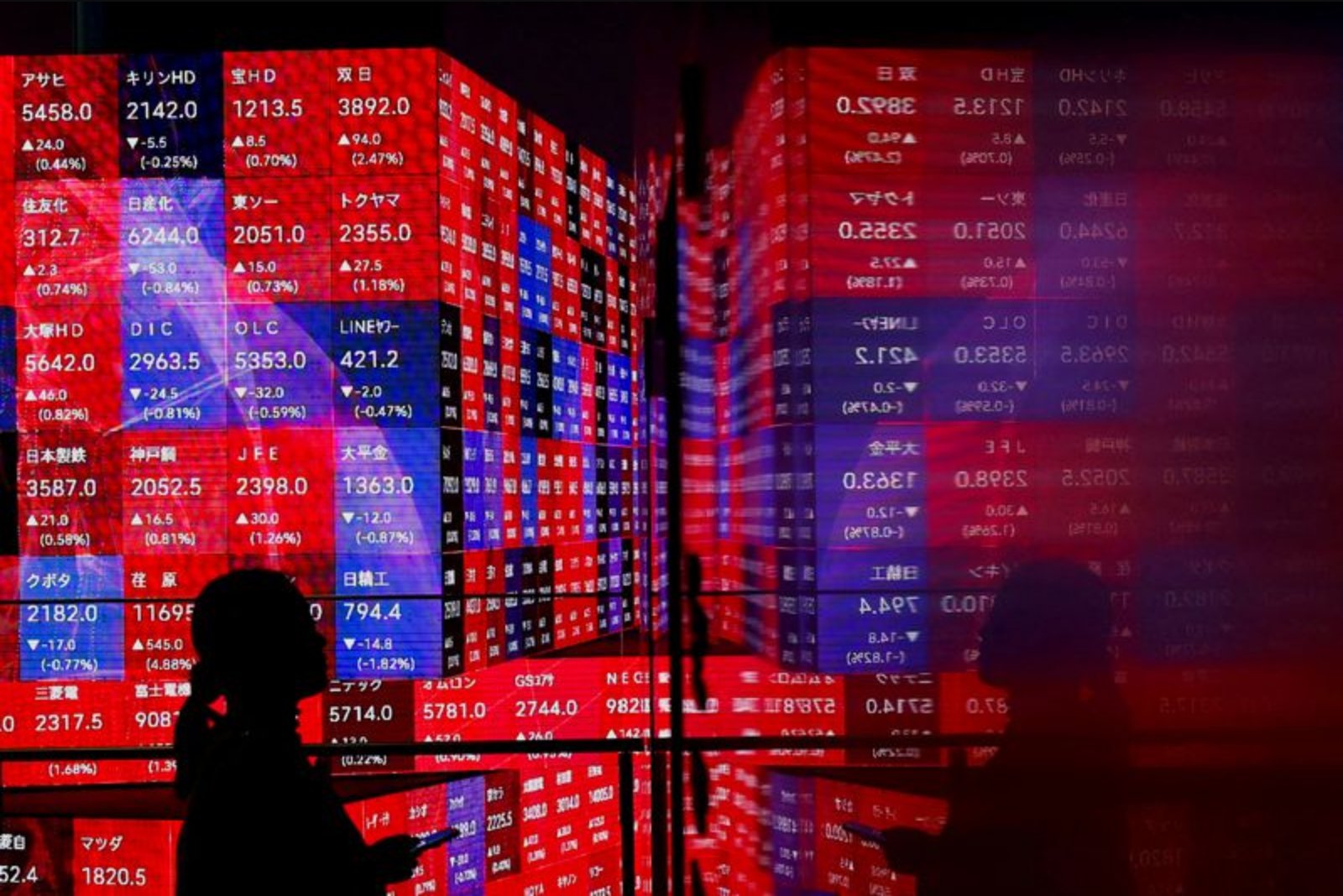
Asian equity markets advanced on Thursday after Nvidia’s stronger-than-expected outlook calmed investor anxiety over the scale and sustainability of AI-related capital expenditures. The chipmaker’s forecast for first-quarter revenue above market estimates helped investors temper fears about the surge in corporate spending on AI processors and broader cost pressures.
The market reaction was broadly constructive: Japan’s Nikkei briefly hit a record high early in the session and South Korea’s KOSPI rose about 2%. MSCI’s broadest index of Asia-Pacific shares outside Japan increased 0.7%.
Nvidia and the AI capex debate
Nvidia’s earnings and forward guidance were central to the tone in markets. The company’s projection of stronger revenue for the next quarter was closely watched by investors concerned about the volume of AI investment and whether such spending could be sustained without eroding returns.
"Nvidia’s print was strong enough to keep the AI capex cycle alive. The immediate market reaction is relief, translating into a modest risk-on tone after the AI-driven volatility of recent weeks," said Charu Chanana, chief investment strategist at Saxo.
Market participants have oscillated between enthusiasm and caution on AI. Some worry about the technology’s potential to disrupt industries and the difficulty of monetising large AI investments. Others have been reluctant to step away from the trade entirely.
"The debate has been much less about stellar near-term results and more about the sustainability of AI capex spending given concerns around its quantum, monetisation and cashflow degradation," said Richard Clode, a portfolio manager at Janus Henderson Investors.
On the U.S. equity front, Nvidia shares initially jumped in extended trading following the results but later gave back those gains. As of Thursday, Nasdaq futures were down 0.25% and S&P 500 futures were 0.14% lower. EUROSTOXX 50 futures were up a marginal 0.06%.
Currencies and the Bank of Japan uncertainty
Currency markets were focused on the yen, which remained near the two-week low it reached after Japan’s government nominated two academics perceived by markets as proponents of economic stimulus to join the central bank’s board. The surprise nominations were viewed as an indication of Prime Minister Sanae Takaichi’s preference for easy monetary policy, casting doubt on the outlook for further Bank of Japan rate increases.
The yen was last quoted 0.2% stronger at 156.01 per dollar, supported by a generally softer U.S. dollar on Thursday, but it was about 0.6% weaker for the week so far.
"Dovish-leaning BOJ nominees have reignited concerns the central bank may lag policy normalisation, weakening the JPY and steepening JGB curve," strategists at OCBC said in a note. "Our end-2026 USD/JPY forecast stays at 149, as the currency is unlikely to transition from a funding currency to an investment currency unless the BOJ turns more hawkish than our baseline outlook of two rate hikes this year."
Adding nuance to the outlook, the Yomiuri newspaper reported that BOJ Governor Kazuo Ueda left the door open to a near-term rate increase, a comment that lent some support to the yen.
Elsewhere among major currencies, the euro was quoted up 0.12% at $1.1824 and sterling rose 0.08% to $1.3570.
Oil, geopolitics and safe havens
Oil prices remained elevated as market participants weighed the potential for supply disruptions amid rising tensions between the United States and Iran. The two countries were due to hold a third round of talks later on Thursday.
Brent crude futures were up 0.27% at $71.04 a barrel, while U.S. crude rose 0.24% to $65.55 per barrel. Senior Trump administration officials on Wednesday argued that Iran poses a significant threat to the United States ahead of the talks.
Precious metals benefited modestly from safe-haven flows, with spot gold up 0.27% at $5,184.66 an ounce.
Market summary
- Japan’s Nikkei reached a record high in early trading.
- South Korea’s KOSPI climbed roughly 2%.
- MSCI’s Asia-Pacific ex-Japan index rose 0.7%.
- Nasdaq futures were down 0.25% and S&P 500 futures were 0.14% lower.
- Brent crude traded at $71.04 a barrel, U.S. crude at $65.55 a barrel, and spot gold at $5,184.66 an ounce.
The market backdrop combined relief over Nvidia’s guidance with persistent uncertainties - particularly the BOJ’s policy path and geopolitical risks - that continue to influence currency, commodity and equity moves across the region.