
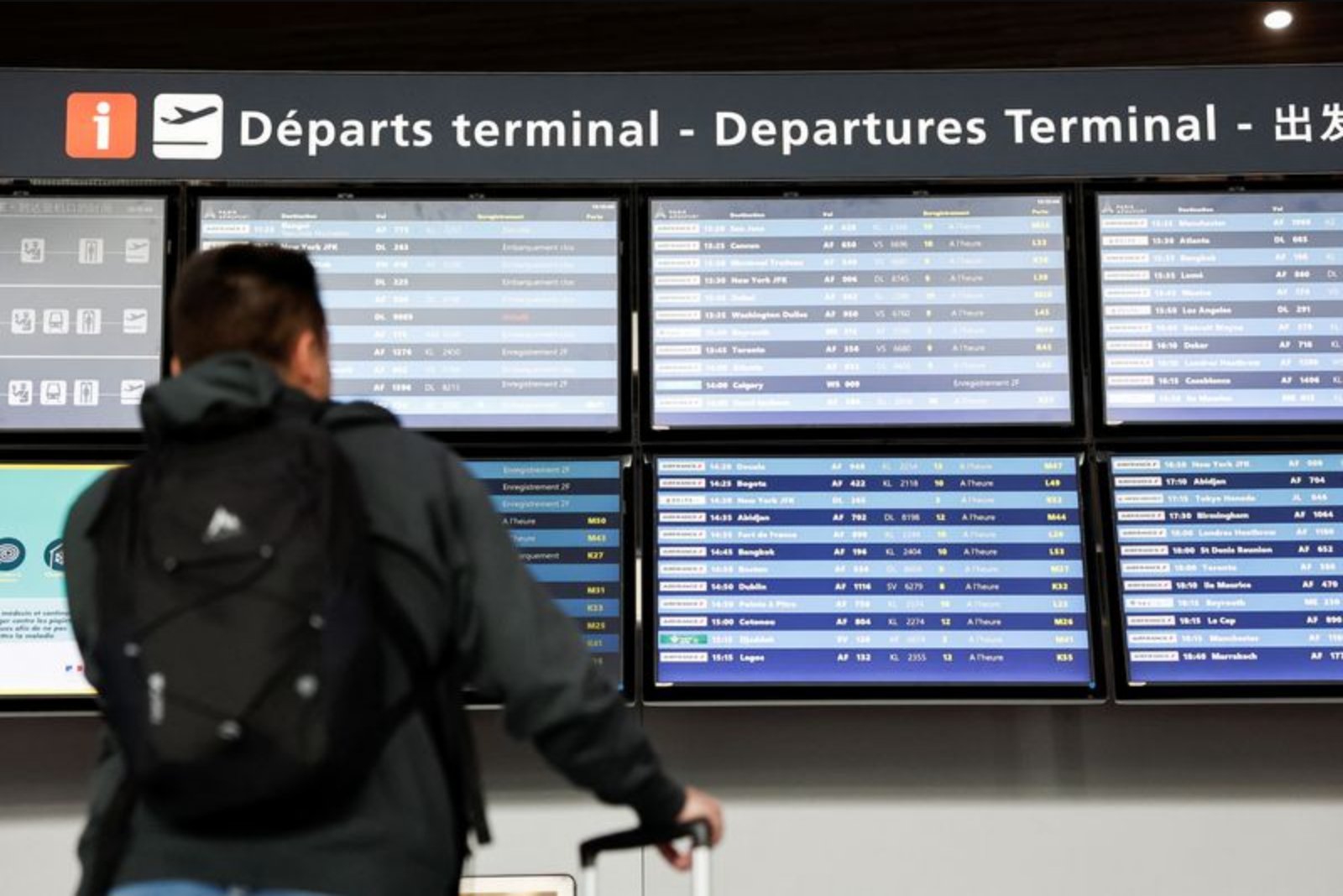
Air travel between Asia and Europe has been disrupted and significantly more expensive after the shutdown of key Middle Eastern hubs amid the U.S.-Israel war against Iran, with numerous popular services showing no availability for several days and higher ticket prices where seats remain. Major Gulf airports, including Dubai - normally handling more than 1,000 flights a day - were still closed for a fourth consecutive day on Tuesday, dramatically reducing capacity on routes where carriers such as Emirates and Qatar Airways typically hold large market shares.
Travel industry firms and airlines report a surge in demand for alternative routings as passengers scramble to reach Europe. Australia-based Flight Centre Travel Group said it has seen a 75% rise in calls to its stores and emergency help lines since the crisis began, and has dedicated staff working round the clock to assist disrupted travellers. Andrew Stark, the company's Global Managing Director, noted that many Australians are already rebooking travel to the UK and Europe via Asian hubs such as China and Singapore, or via North American gateways like Houston.
Reroute options and operational trade-offs
Some carriers that operate non-stop services between Asia and Europe can avoid the closed Middle Eastern airspace by flying either north - over the Caucasus and then Afghanistan - or south - via Egypt, Saudi Arabia and Oman. While these alternatives allow continued service, they typically lengthen sector flying times and increase fuel consumption. With oil prices elevated, the additional fuel burn is a material cost pressure that could translate into higher fares over time if operators are forced to absorb increased unit costs.
Subhas Menon, head of the Association of Asia Pacific Airlines, commented on the operational and commercial consequences, saying that the effective closure of the Middle East creates a costly environment for some airlines and that serving Europe at much higher expense will undermine profitability. He emphasized that connectivity comes at a price under the current conditions.
Who stands to gain in the short term
Advisers at Alton Aviation Consultancy pointed out that airlines running non-stop services between Asia and Europe or those routing through unaffected hubs may capture short-term demand displaced from Gulf carriers. Names cited as positioned to see increased bookings include Hong Kong's Cathay Pacific, Singapore Airlines and Turkish Airlines.
Checks of airline booking systems on Tuesday revealed scarce near-term availability and steep fares on Asia-London itineraries. Cathay Pacific showed no economy-class availability on the Hong Kong-London run until March 11; when seats do appear that day, one-way economy fares were listed at a minimum of HK$21,158 (about $2,705), before declining to more typical levels - HK$5,054 - later in the month.
From Sydney to London, Qantas had no economy seats available on its usual Perth and Singapore routings until March 17, at which point a one-way economy fare was shown at A$3,129 (about $2,220). For earlier travel dates the carrier was offering routes with unconventional stopovers, such as via Los Angeles or Johannesburg, at higher prices.
Regional carriers and market responses
Thailand's government reported that Thai Airways was operating with Europe-bound flights fully booked, as European visitors preferred direct or alternative routings rather than transiting through the Middle East. Searches on the Thai Airways website indicated sold-out inventory for Bangkok-London travel until late next week, after which fares remained elevated. For example, a one-way economy ticket was listed for 71,190 baht on March 15, later declining to 27,045 baht by March 18.
Taiwan's EVA Airways also reported a surge in bookings for its services to Europe, reflecting demand from both Asian and European passengers seeking other routing options. Mainland Chinese carriers' booking systems showed similar patterns: fares on China-UK routes had risen well above typical levels, with economy-class availability very thin for near-term departures.
As an illustration of the change, a typical return economy ticket from Beijing to London normally costs under 10,000 yuan. Yet on the day checked, Air China had no economy option for Wednesday and was only showing a one-way business-class ticket priced at 50,490 yuan.
Market signals and broader implications
The combined effects of capacity reduction through the Middle East, demand concentration on remaining routings, and higher fuel consumption on longer alternatives are creating an upward pressure on ticket prices for Asia-Europe travel. Travel agents and carriers handling displaced passenger flows are reporting heightened workloads and inventory stress as consumers adjust itineraries. While some airlines operating outside the affected airspace may benefit in the short term from redirected demand, the higher operating costs facing all carriers could weigh on unit economics if the situation persists.
Exchange rate references cited in pricing comparisons include: $1 = 7.8210 Hong Kong dollars, $1 = 1.4094 Australian dollars, and $1 = 6.8805 Chinese yuan renminbi.