
Asian markets started the week in a guarded mood as ongoing conflict in the Gulf continued to prop up oil prices, a development that is complicating the inflation outlook and likely to keep most major central banks on hold at policy meetings this week - with one notable exception that may tighten policy.
There was a sliver of possible optimism around maritime security after a Wall Street Journal report suggested the Trump administration could announce as soon as this week that several countries have agreed to form a coalition to escort ships through the Strait of Hormuz. In separate remarks, President Donald Trump told the Financial Times it would be very bad for the future of NATO if allies did not contribute to such efforts. European Union foreign ministers are due to discuss strengthening a small naval mission in the Middle East on Monday, though officials warn any operation in the Strait would carry substantial risk.
Oil markets were cautious in early trading. Brent crude inched up 0.1% to $103.27 a barrel, while U.S. crude declined 0.7% to $97.99 a barrel. Those price levels feed directly into the inflation component central bankers will need to assess as they hold their first full meetings since the outbreak of the war.
Policy forums across a broad set of economies - including the United States, the United Kingdom, the euro zone, Japan, Australia, Canada, Switzerland and Sweden - convene for their first substantive sessions since the conflict began, and energy costs are a prominent factor on every agenda. "Central bank forecasts will immediately bias towards higher inflation and lower growth," said Bruce Kasman, chief economist at JPMorgan. He added that, consistent with this view, his team has pushed back or removed planned policy action for most central banks that had been expected to move in March and April. "Developments on the ground highlight the potential for further price increases and the likelihood that the risk premium will remain elevated," he said.
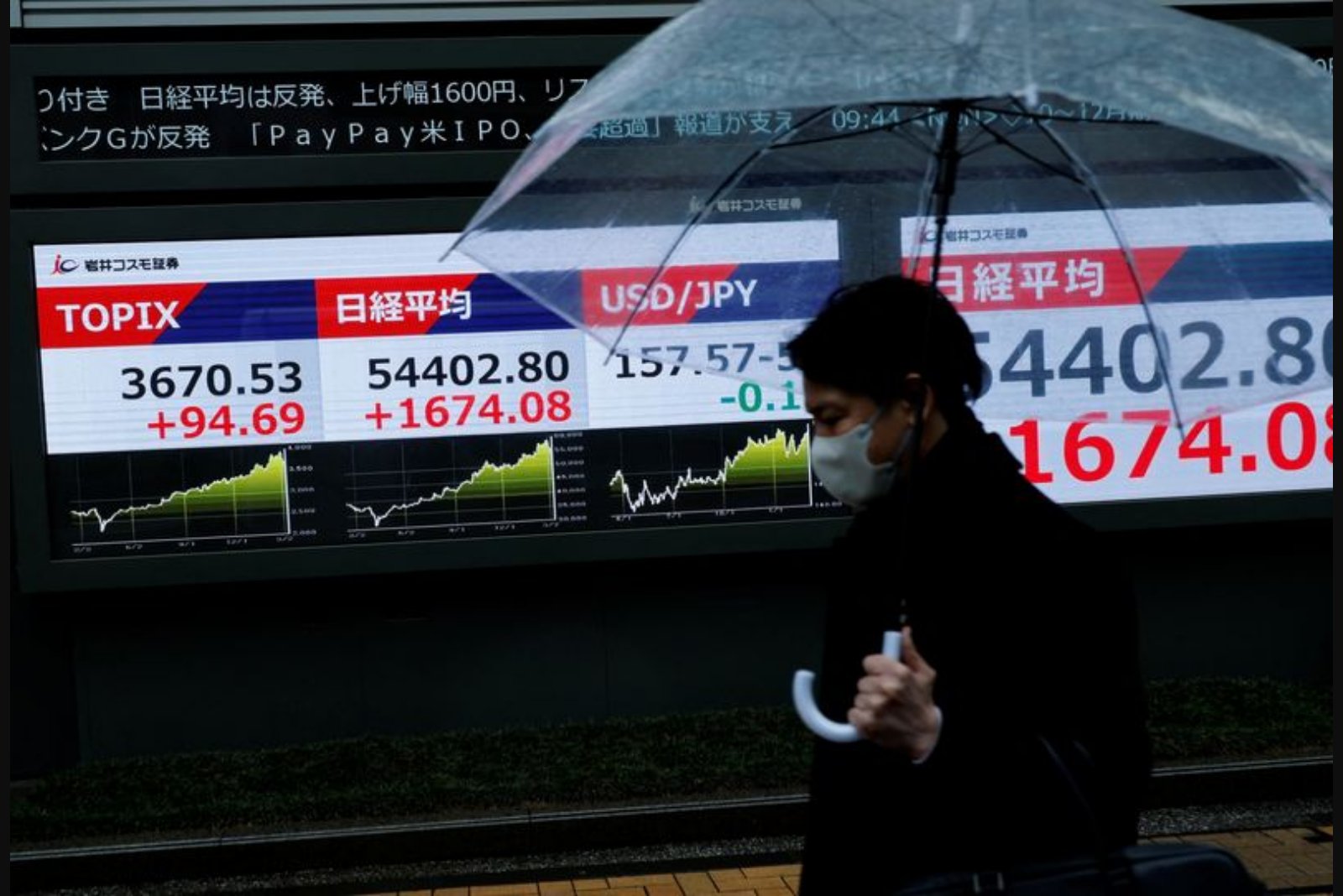
Regional equity moves were mixed. Japan’s Nikkei slipped 0.1%, while South Korean stocks rose 0.9% after both markets suffered losses last week. MSCI’s broadest index of Asia-Pacific shares outside Japan edged up 0.1%.
Investors will also focus on fresh Chinese economic data due on Monday, where retail sales are forecast to rebound in February following a weak start to the year, and industrial output growth is expected to remain around 5%. In parallel, senior U.S. and Chinese officials are meeting in Paris to discuss possible deals in agriculture, critical minerals and managed trade that could be presented to U.S. President Donald Trump and Chinese President Xi Jinping in Beijing.
U.S. equity futures reflected tentative strength, with S&P 500 futures and Nasdaq futures both bouncing 0.4% amid volatile trading. With corporate earnings season concluded, attention is shifting to technology and AI themes. Nvidia is hosting its GTC conference in Silicon Valley this week and is expected to highlight new developments in chips and AI infrastructure - an event that keeps AI-related risks and hopes prominent for markets.
The energy price shock, along with increased defence spending pressures on fiscal budgets, contributed to a sharp move higher in global bond yields last week. Benchmark 10-year Treasury yields stood at 4.26%, up 32 basis points since the start of the war, and futures markets have markedly reduced the probability of near-term rate cuts.
The Federal Reserve is regarded as certain to hold rates at its meeting on Wednesday, and the chance of an easing by June has dropped to 26% from 69% a month earlier. Market participants will scrutinise the wording of the policy statement, the press conference and the median dot plot to gauge whether policymakers have removed any further easing for the year. A cautious, steady policy outcome is widely expected across other central banks this week, with the Reserve Bank of Australia seen as the exception - markets price a likely 25 basis point hike to 4.1% as Australian officials confront resurgent domestic inflation.
Heightened market volatility has tended to lift the U.S. dollar as a store of liquidity. The U.S. also stands as a net energy exporter, giving it a relative advantage versus Europe and much of Asia, which are net energy importers. Early on Monday the dollar eased slightly, partly on the report that shipping through the Strait of Hormuz might be escorted. The currency traded at 159.47 yen, off a 20-month peak of 159.75, with investors vigilant that a move above 160.00 could provoke additional public warnings about intervention from Japan.
The euro remained close to a seven-month low around $1.1440, hovering above a key chart support at $1.1392 that, if breached, could open a path toward $1.1065 according to technical watchers. In commodity markets, gold showed little movement, trading around $5,022 an ounce and so far providing limited support as either a safe haven or an inflation hedge.
For market participants and policymakers alike, the coming days present multiple data points and central bank communications that will be read through the prism of elevated energy prices and geopolitical risk. The balance between growth and inflation expectations is fluid, and investors will be parsing central bank language and economic releases closely for guidance on the path of rates and risk premia.