
Overview
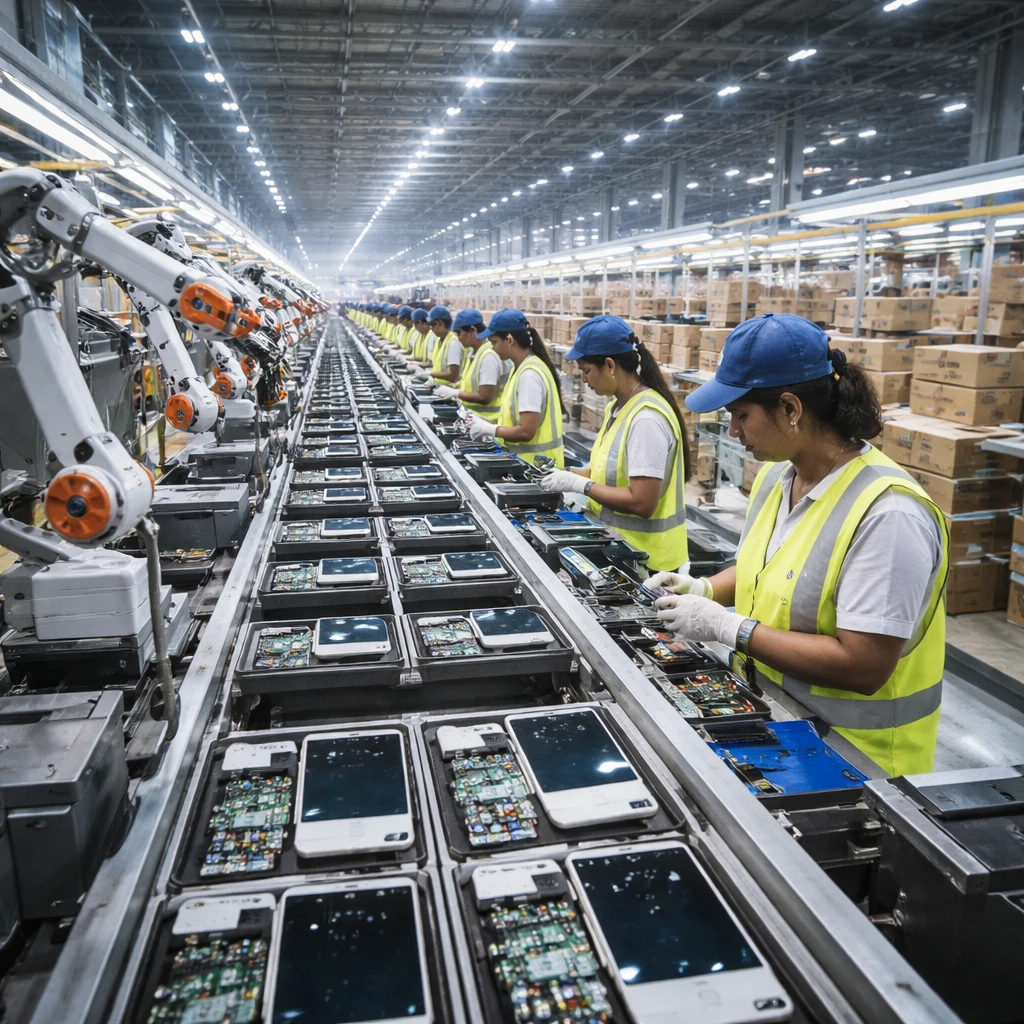
Apple Inc has substantially expanded its iPhone assembly operations in India, moving a significant share of output out of China as part of a broader manufacturing diversification strategy. Company assembly in India reached about 55 million iPhones in 2025, up roughly 53% from the approximately 36 million units assembled there a year earlier.
Scale and share
The increase places India as the source of about one quarter of Apple’s global iPhone production. Bloomberg reported that Apple’s total annual iPhone production runs in the range of about 220 million to 230 million devices, meaning the Indian output now represents roughly 25% of that total.
Strategic rationale
The push to grow manufacturing in India reflects Apple’s intent to reduce reliance on China amid ongoing trade tensions and tariff risks. The company has moved to diversify its supply chain and production footprint to mitigate exposure to trade-related disruptions and tariffs that have affected shipments tied to disputes between the United States and China.
Support from Indian policy
India’s role in Apple’s manufacturing expansion has been reinforced by production-linked incentives introduced by Prime Minister Narendra Modi to encourage domestic manufacturing and boost exports. Those incentives have supported the ramp-up of iPhone assembly capacity in India.
What this means for markets and sectors
The shift in manufacturing has implications for technology hardware supply chains, export-oriented manufacturing in India, and trade-sensitive sectors. Apple’s reallocation of assembly capacity is a notable development for companies and markets tracking supply chain resilience and geographic diversification strategies.
Key points
- Apple assembled about 55 million iPhones in India in 2025, a roughly 53% increase from about 36 million in 2024.
- India now accounts for roughly 25% of Apple’s global iPhone production, against a total annual production of about 220-230 million devices.
- The expansion has been aided by India’s production-linked incentives aimed at boosting domestic manufacturing and exports; the move reflects efforts to reduce reliance on China amid trade tensions and tariff risks.
Risks and uncertainties
- Tariff and trade tensions - Continued U.S.-China trade disputes and related tariffs have created headwinds for shipments, posing a risk to global supply chains and technology hardware markets.
- Policy dependence - The pace of India’s manufacturing growth has been supported by production-linked incentives; changes to those incentives could affect export-oriented manufacturing and investment in the country.