
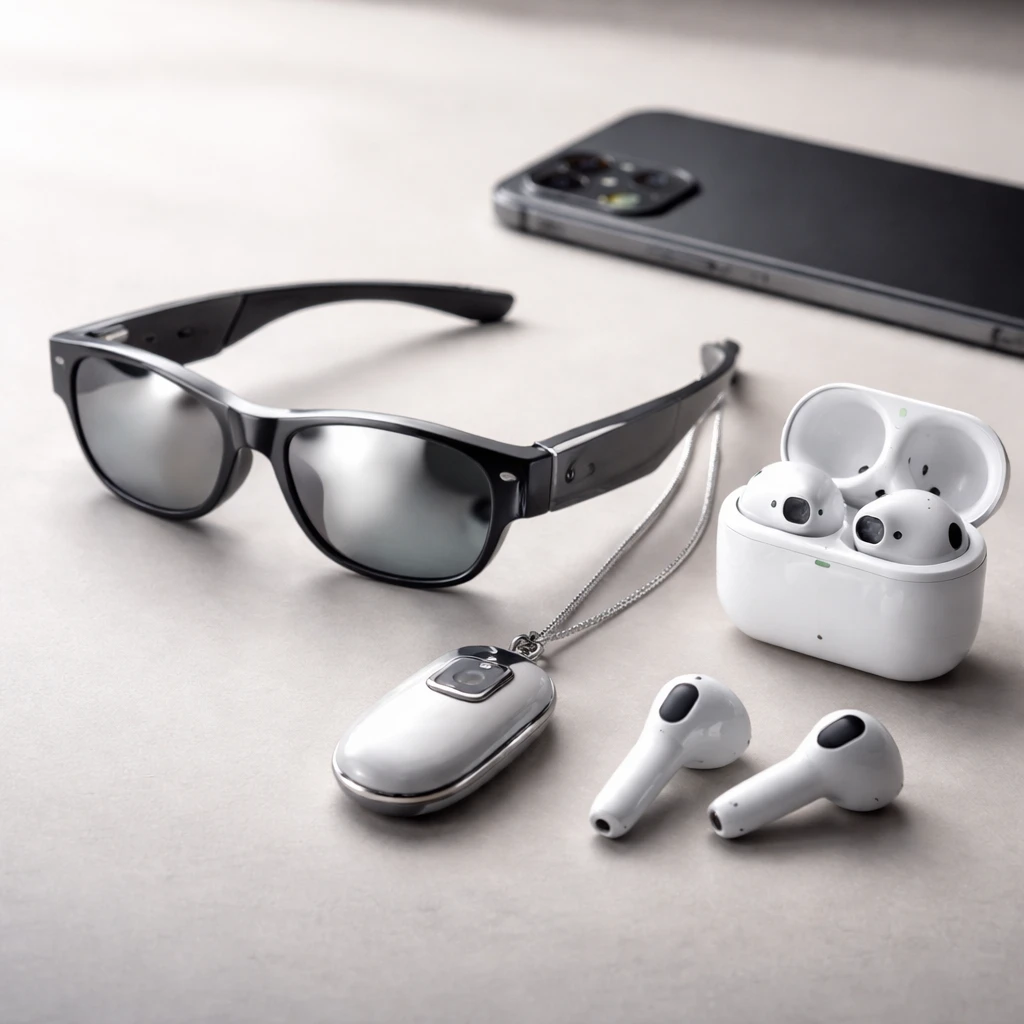
Apple Inc. has increased the pace of work on three new wearable products as part of a strategic move toward hardware that leverages artificial intelligence, according to a Bloomberg report. The initiatives encompass a set of smart glasses, a wearable pendant and a new generation of AirPods, all of which are being developed to extend Siri with visual-context capabilities.
All three devices are planned to operate in tandem with the iPhone and will incorporate camera systems, though those camera systems are intended to differ in capability among the products. The AirPods and the pendant are being treated as more modest, entry-level devices and will include lower-resolution cameras. Sources say those cameras are intended to enable AI-driven functions rather than to serve as primary cameras for traditional photo or video capture.
By contrast, Apple’s smart glasses are being positioned as a premium offering. The glasses are expected to feature more comprehensive capabilities than the other two devices, built around the same Siri-driven visual-context approach. While the report does not provide granular technical specifications, it describes the glasses as offering a broader set of features compared with the pendant and AirPods.
The broader development push signals Apple’s focus on embedding AI into consumer hardware. The company is advancing these wearable products at a time when other large tech firms are also pursuing AI-enabled devices and services. The account indicates Apple is prioritizing product integration with its existing iPhone ecosystem and a tiered product strategy across wearables, with different camera and feature sets aligned to each device’s intended positioning.
Summary
Apple is accelerating development of three AI-enabled wearables - smart glasses, a wearable pendant and upgraded AirPods - each designed to connect to the iPhone and leverage Siri with visual context. The pendant and AirPods will use lower-resolution cameras to support AI features rather than conventional photo or video capture, while the glasses are aimed at the premium segment with broader functionality.
Key points
- Apple is fast-tracking three wearables - smart glasses, a pendant and AirPods - built to expand Siri with visual-context capabilities; this impacts the consumer technology and wearables sectors.
- All devices will pair with the iPhone and include camera systems with varied capabilities; product tiers range from basic AI-supporting cameras to a premium glasses option.
- The move places Apple alongside other major technology firms pursuing AI-powered hardware, affecting markets tied to mobile devices, sensors and AI integration.
Risks and uncertainties
- Feature details and technical specifications are not disclosed in the report, leaving uncertainty about the exact capabilities of each device; this impacts consumer expectations and supply chain planning.
- Competition from other large technology companies pursuing AI hardware presents an execution and market-share uncertainty for Apple.
- The use of lower-resolution cameras in the AirPods and pendant may limit those devices to AI-support functions rather than traditional imaging, which could influence consumer reception.