
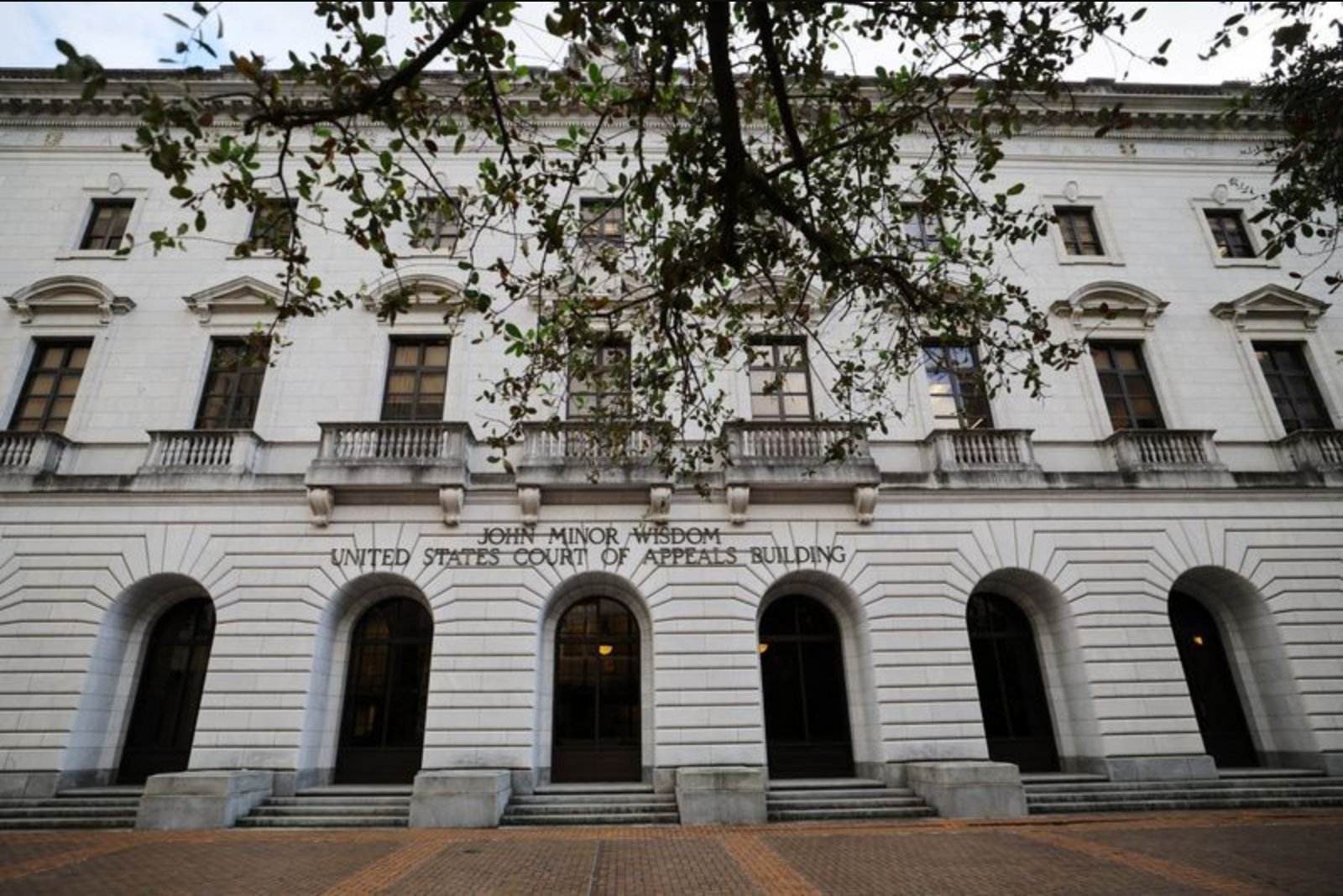
A split three-judge panel of the 5th U.S. Circuit Court of Appeals on Friday sided with the federal government in upholding a policy that places certain non-citizens in mandatory detention without the opportunity for a bond hearing.
The New Orleans-based appeals court ruled 2-1 to endorse the administration’s re-interpretation of federal immigration law, marking the first time an appeals court has upheld the policy. The decision stands in contrast to hundreds of lower-court judges nationwide who have previously found the approach unlawful.
The policy at issue springs from the statutory category of "applicants for admission," which, under federal immigration law, are subject to mandatory detention while their cases proceed in immigration courts and are generally ineligible for bond hearings. Departing from a long-standing reading of that language, the U.S. Department of Homeland Security last year advanced the view that the label applies not only to individuals who arrive at a port of entry but also to non-citizens already residing in the United States.
In September, the Board of Immigration Appeals - an arm of the U.S. Department of Justice - adopted that interpretation. Following the BIA decision, immigration judges employed by the department began issuing orders that mandated detention. That change prompted a wave of litigation from people contending they had been wrongfully held without access to bond hearings.
Two of the plaintiffs whose cases reached the 5th Circuit were Mexican nationals Victor Buenrostro-Mendez and Jose Padron Covarrubias. Both had persuaded lower-court judges that they were improperly denied bond hearings before the appeals court reversed those decisions.
Writing for the panel majority, U.S. Circuit Judge Edith Jones concluded the administration’s reinterpretation of the Illegal Immigration Reform and Immigrant Responsibility Act of 1996 was consistent with the statute’s text. "The text says what it says, regardless of the decisions of prior administrations," she wrote. The majority included two judges appointed by Republican presidents.
U.S. Circuit Judge Dana Douglas, a Biden appointee, dissented. In her separate opinion she cautioned that the congressional authors of the 1996 law "would be surprised to learn it had also required the detention without bond of two million people."
Officials hailed and criticized the decision along familiar partisan lines. U.S. Attorney General Pam Bondi posted on social media that the ruling delivered "a significant blow against activist judges who have been undermining our efforts to make America safe again at every turn."
The 5th Circuit’s jurisdiction covers Texas and Louisiana, states with numerous detention facilities and a high share of the nation’s immigration detainees, and the ruling is expected to affect thousands of people within that region. Additional appeals courts are set to review related cases in the coming weeks, and the dispute could ultimately reach the U.S. Supreme Court for a final resolution.
Contextual note: The ruling follows a cascade of conflicting lower-court decisions and a departmental policy shift that extended the "applicant for admission" classification to non-citizens already present in the United States, a legal interpretation accepted by the Board of Immigration Appeals in September and implemented by immigration judges employed by the Justice Department.