
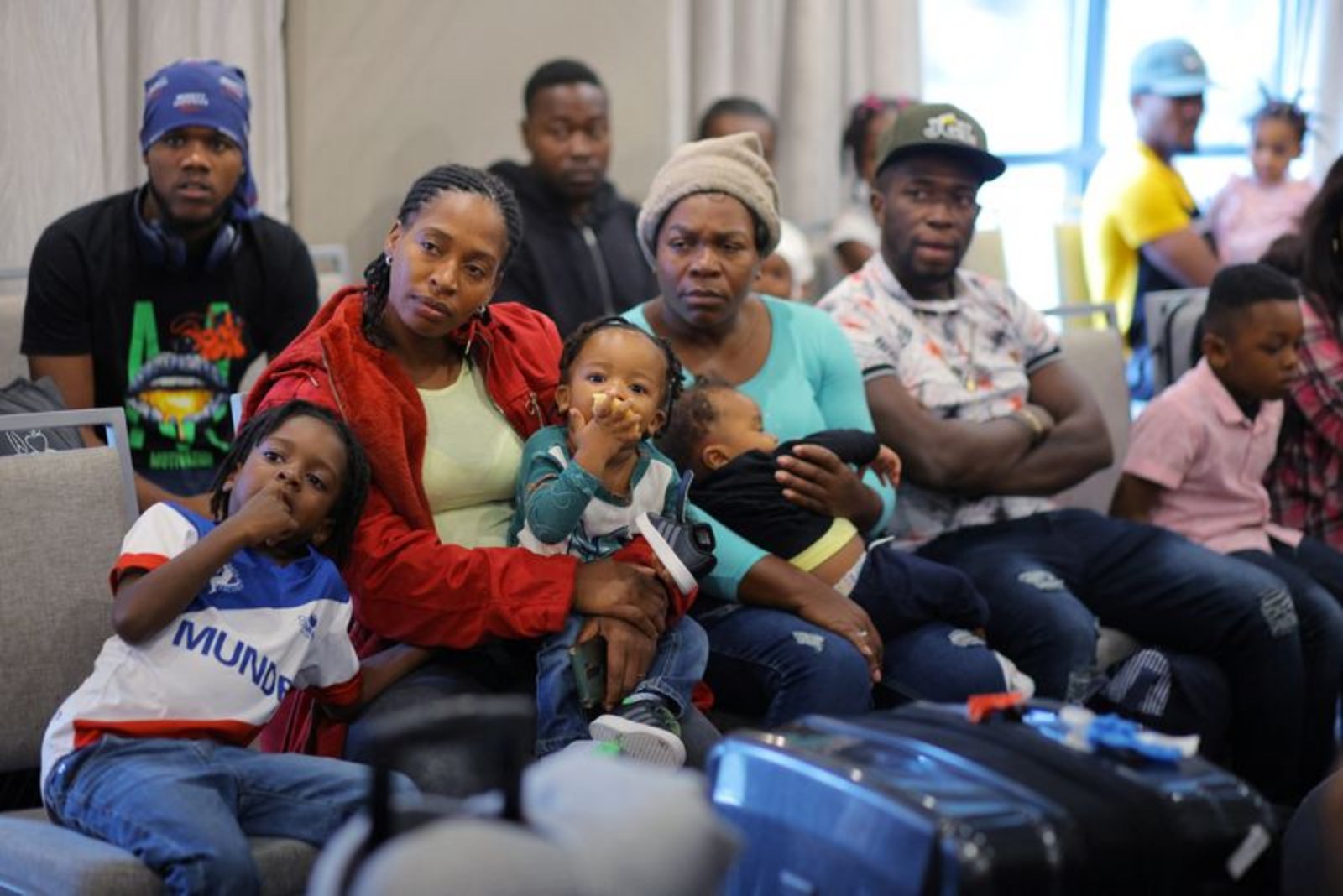
A divided U.S. Court of Appeals for the District of Columbia Circuit late on Friday denied the Trump administration's request to pause a February 2 ruling that blocks the Department of Homeland Security from ending Temporary Protected Status for Haitians currently living and working in the United States.
The appeals panel, sitting 2-1, refused to stay U.S. District Judge Ana Reyes' order. That February decision arose from a class-action suit brought by Haitians who sought to prevent the department from exposing them to deportation. Judge Reyes concluded that the November action by then-Homeland Security Secretary Kristi Noem to terminate Haiti's TPS protections likely ran afoul of the statutory procedures governing TPS termination and may have violated the Fifth Amendment guarantee of equal protection under the law.
TPS is a humanitarian designation that shields eligible migrants from removal and permits them to work in the United States. More than 350,000 Haitians benefit from the designation, which was first granted after the catastrophic earthquake in Haiti in 2010 and has been renewed repeatedly. The designation was most recently extended in July 2024, when DHS cited Haiti's "simultaneous economic, security, political, and health crises," attributing those conditions to gang activity and the absence of a functioning government.
The administration, under Secretary Noem, had taken steps to end TPS for a dozen countries as part of a broader immigration enforcement initiative, arguing that the program was not intended to operate as a "de facto amnesty." On appeal, the administration noted that the U.S. Supreme Court had twice permitted the government to terminate TPS for Venezuelans. The D.C. Circuit majority, however, distinguished those cases from the Haiti matter.
Judges Florence Pan and Brad Garcia, each appointed by President Joe Biden, wrote that Haitians returned to their home country would face heightened risk, saying they would "be vulnerable to violence amid a 'collapsing rule of law' and lack access to life-sustaining medical care." Their opinion supported leaving Judge Reyes' order in place while the government pursues its appeal.
U.S. Circuit Judge Justin Walker, a Trump appointee, dissented from the panel's decision. In his view, the case involving Haitians was legally akin to the prior litigation over TPS for Venezuelans, describing the matters as "the legal equivalent of fraternal, if not identical, twins." The dissent indicated that he would have granted the request to pause the district court's injunction pending appeal.
The Department of Homeland Security did not provide a comment in response to a request. The litigation keeps in force the temporary protections that allow hundreds of thousands of Haitians to remain and continue working in the United States as the appellate process unfolds.
Background
- Haiti was first designated for TPS in 2010 following a severe earthquake.
- DHS renewed Haiti's TPS most recently in July 2024, citing multiple overlapping crises driven by gangs and lack of effective government.
- The Trump administration has sought to end TPS for multiple countries as part of immigration policy changes, arguing the program should not amount to a de facto amnesty.
The appeals court decision leaves intact protections for those Haitians covered by the TPS designation while the legal challenge to DHS's November termination decision proceeds through the courts.