
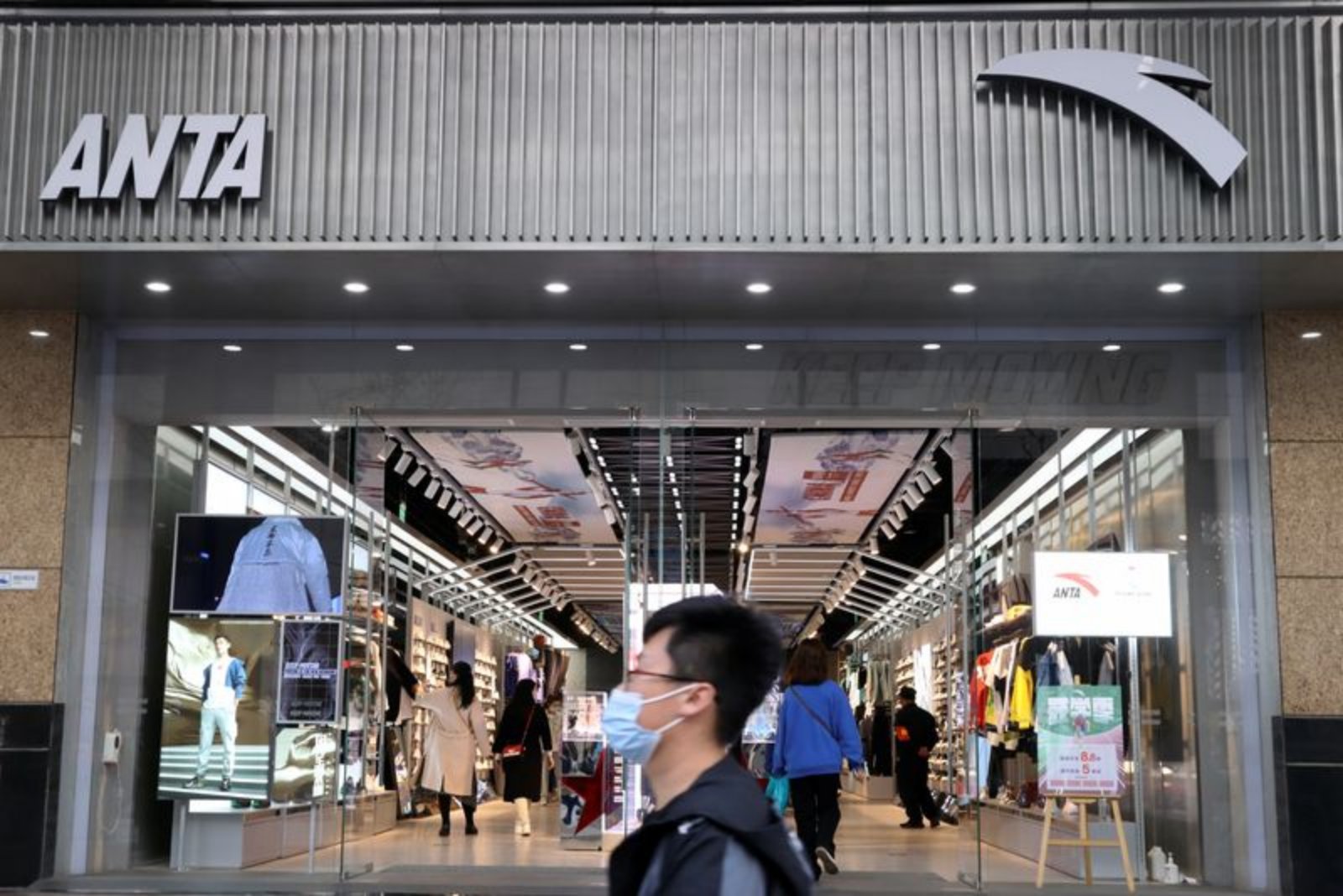
Anta Sports has stepped up its global ambitions with acquisition-led growth that culminated last week in a $1.8 billion purchase for a 29% stake in Germany’s Puma. The move adds a widely recognised mass-market label in the U.S. and Europe to a portfolio that for years has been expanded through targeted takeovers across price tiers and categories.
Headquartered in Fujian province, Anta has built a diverse brand stable across the premium outdoor, women’s activewear, and equipment segments, while maintaining a value-driven core Anta line that is typically priced at about one-third the level of Nike products. By 2025 the company held roughly 23% of China’s sportswear market, exceeding both Nike and Adidas in the domestic ranking, and it carries an estimated market valuation near $28 billion, making it the third-largest globally by that metric.
Morningstar analyst Ivan Su summed up founder Ding Shizong’s objective: "Mr Ding wants Anta to be the biggest sportswear conglomerate in the world and over the past decade he’s been taking step-by-step in that direction." Industry sources close to Anta’s acquisition strategy indicate the Puma transaction may not be the end of the company’s dealmaking. "Anta is quite aggressive for a Chinese company and quite ambitious," said a person with knowledge of Anta’s approach, who declined to be named because they were not authorised to speak publicly. "If opportunities arise, they won’t hesitate." Anta Sports did not respond to a request for comment.
From a small Fujian workshop to a global portfolio
The company’s origins are modest and well documented. In 1986 Ding, a high-school dropout from a small town in Fujian, borrowed 10,000 yuan from his father to buy 600 pairs of shoes from a relative’s factory and resold them in Beijing. He used the proceeds to start a workshop that initially produced contract-manufactured footwear for international brands, then shifted to building its own label in 1991 for higher margins.
Over the next decades Anta navigated a challenging period in the early 2000s when global sportswear giants expanded into China, placing pressure on domestic names. Rival Li Ning moved toward fashion-driven global positioning with runway shows and design investments, an approach that generated a brief surge but later faced headwinds as Chinese consumer discretionary spending weakened. Anta instead broadened its reach by acquiring an array of brands to cover multiple price points and market segments.
Its current portfolio includes its home-brand Anta, the China and parts of Southeast Asia franchise for Fila, and other acquired labels such as Descente, South Korea’s Kolon Sport, women’s activewear MAIA Active and Jack Wolfskin, which focuses on outdoor apparel.
The most transformational acquisition to date was Anta’s lead role in a 2018 consortium that bought Finland’s Amer Sports for $6.29 billion. Anta remains Amer’s largest shareholder following Amer’s re-listing in early 2024. Amer’s holdings - Arc’teryx, Salomon and Wilson among them - have grown in popularity globally and in China under the group structure.
Amer Sports provides a playbook for Puma
Amer’s experience in Greater China offers a model for what Anta may try to achieve with Puma. In recent years Amer has delivered consistent annual growth of more than 40% in Greater China, driven in part by investment in premium retail space and direct-to-consumer channels. Arc’teryx, for example, operates 176 stores worldwide, including 75 stores and 20 outlets in Greater China as of early 2025.
Shaun Rein, managing director at China Market Research Group, said of the brands under Amer’s umbrella: "Arc’teryx and Salomon are some of the best-run brands in China." He added that Anta has applied local-market know-how to reshape those brands’ images to suit Chinese consumers.
Puma, by contrast, derives only about 7% of its total revenue from China - a much smaller share than Nike or Adidas - and is widely regarded as underpenetrated in the country. Morningstar’s Su said, "The Puma business in China has been mismanaged for many years. With Anta coming in, I expect more investment in larger, better stores that can elevate the brand image." Building Puma’s presence in China, he suggested, could be a priority for Anta following the stake purchase.
Puma fills a global gap for Anta
While Anta has exported its own brand to overseas markets and is expanding in Southeast Asia - targeting 1,000 new stores in the region by 2028 - its domestic footprint of roughly 13,000 Anta stores is approaching saturation. Executives and analysts noted the limits of growing the core Anta label much further beyond Asia.
"For a Chinese brand like Anta to gain recognition in the U.S., it’s very, very difficult," Ivan Su said. He added that to realise Ding’s ambition of building the world’s largest sportswear group, the company needs stronger inroads in the U.S. and Europe - gaps that Puma can help to plug because of its established mass-market recognition in those regions.
Anta has already taken initial steps to broaden its international retail footprint, with plans that include a flagship Anta store opening in Beverly Hills next week. The Puma stake gives Anta ownership exposure to a globally recognised mass-market brand that complements Anta’s premium outdoor and sports equipment assets and could accelerate the parent group’s expansion into Western markets.
What this means for the market
Anta’s blend of value-priced domestic strength, premium acquisitions and now a stake in Puma marks a deliberate push to combine local dominance with internationally recognised scale. The company’s market position in China and its growing stable of brands aim to deliver both breadth of reach and coverage across price points and product categories.
($1 = 6.9378 Chinese yuan renminbi)