
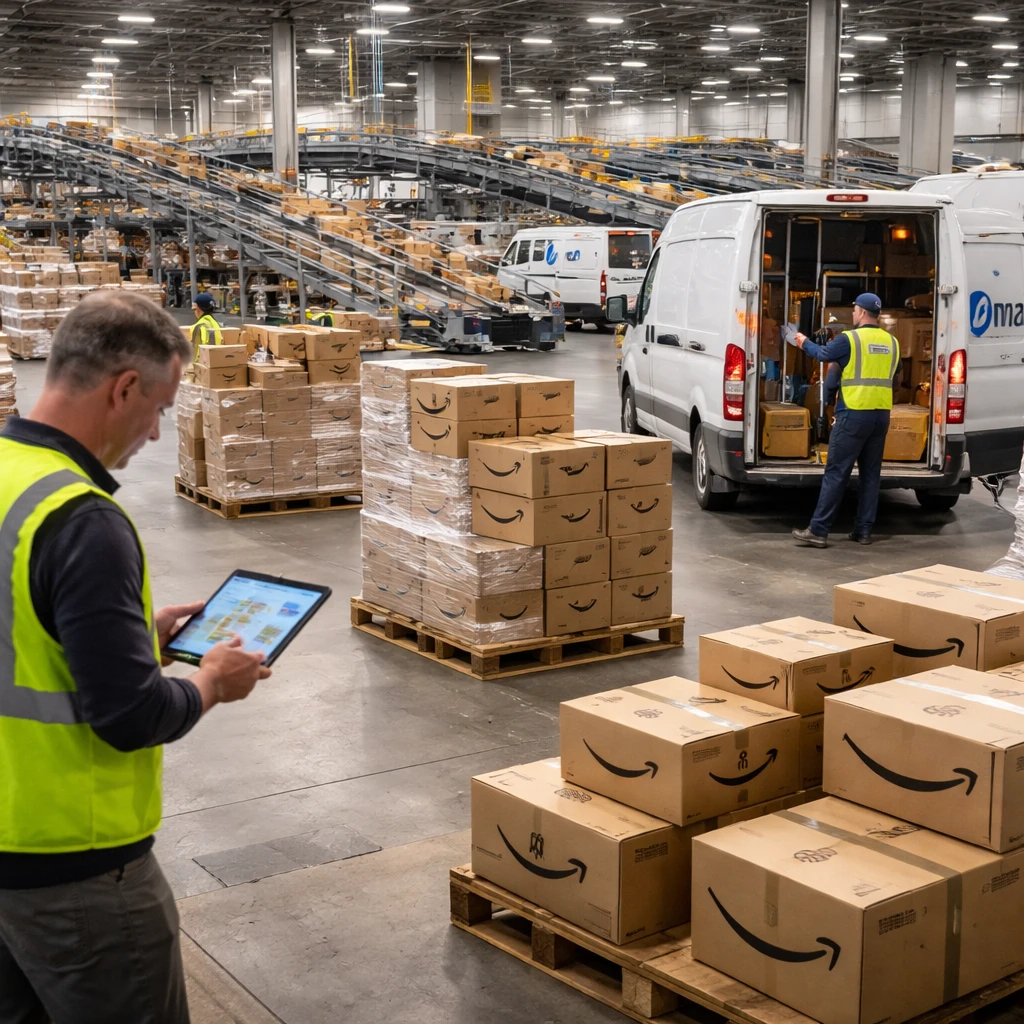
Amazon.com Inc is preparing to sharply reduce its reliance on the U.S. Postal Service (USPS), targeting a cut of at least two-thirds of the shipping volume it currently routes through the agency by this fall. The aggressive timetable coincides with the October expiration of Amazon’s existing delivery contract with the postal service.
Under the current arrangement, the Postal Service carried more than one billion Amazon packages last year, an amount that equated to roughly 15% of the agency’s domestic volume. Those guaranteed Amazon shipments have been an important stabilizer for the USPS, which recorded a $9 billion net loss in fiscal 2025.
To handle a larger parcel flow, the Postal Service has recently invested heavily in new facilities and automated sorting machinery. Analysts have warned that such capital-intensive upgrades depend on steady volume to justify utilization rates. If Amazon follows through on its planned reduction and that volume is not replaced, the newly installed infrastructure could face significant under-utilization.
The planned shift in parcel routing emerged as part of a confidential competitive bidding process for last-mile delivery services initiated by Postmaster General David Steiner. Steiner has defended the competitive approach as a means to establish the true market value of the USPS delivery network.
Amazon reportedly grew concerned about the bidding timetable, fearing insufficient time to reconfigure its logistics network if its bid to retain current levels of postal service was rejected. In response, the company has begun cutting back on its dependence on the postal system to reduce the risk of abrupt operational disruption.
If the two sides cannot reach a new agreement, Amazon may have to accelerate investments in its own proprietary delivery fleet. While the company already handles most urban deliveries internally, it continues to rely on the Postal Service for between 30% and 40% of its more costly rural routes.
Results from the current competitive bidding process are expected to be released during the second quarter of this year. With an October contract expiry and bidding outcomes due in Q2, both Amazon and the USPS now confront a high-stakes summer of negotiations that could reshape delivery patterns across the U.S. e-commerce network.
Sector impacts and context
The announced reduction would directly affect parcel carriers, postal operations, and last-mile delivery economics, particularly for rural route coverage and the capital planning of the Postal Service. It also has implications for Amazon’s own logistics scaling and the utilization of recently added postal automation assets.