
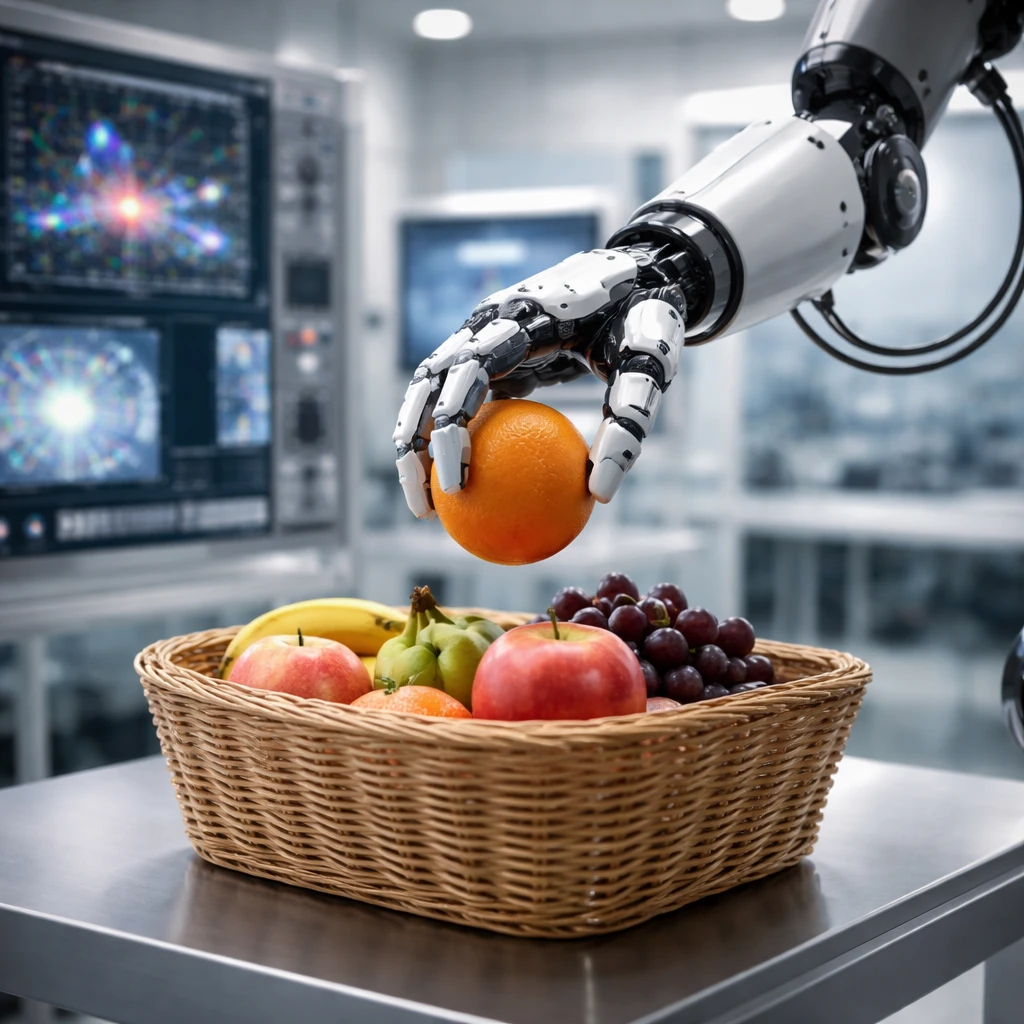
Alibaba unveiled a new AI system called RynnBrain on Tuesday, describing it as a model purpose-built to give robots a clearer understanding of the physical world and the objects within it. The company released a demonstration via its DAMO Academy in which a robot recognizes fruit and places it into a basket - an operation that appears simple to observers but requires coordinated capabilities in perception and motion control.
The demonstration illustrates two capabilities Alibaba highlights: object recognition and the capacity to direct mechanical movement based on sensory input. In the video released by DAMO Academy, the sequence of identifying fruit and performing a pick-and-place action is used as a tangible example of the model's intended applications.
Alibaba's announcement situates RynnBrain within a broader field often described as "physical AI," which encompasses AI systems embedded in machines that interact directly with their surroundings. The term covers a range of applications including autonomous vehicles and other robots that must interpret and act within physical environments. The company framed the effort as an expansion of its AI portfolio, following work on its Qwen family of models, which it counts among its advanced AI offerings.
At the same time, the introduction of RynnBrain puts Alibaba in a competitive set with other technology companies investing in robotics-focused AI. The article references Nvidia, which markets multiple models for training and operating robotics AI under its Cosmos brand, and Google DeepMind, which has developed a model named Gemini Robotics-ER 1.5 aimed at related robotics tasks. The piece also notes activity by Tesla's CEO in the space with work on the company's Optimus robot, and cites commentary from Nvidia's CEO expressing bullish views on the opportunity in AI and robotics.
From Alibaba's perspective, RynnBrain is positioned as a point of entry into the robotics market and as a complement to the company's existing AI developments. The company showcased the model through the DAMO Academy demonstration rather than through detailed technical disclosures in the announcement. As presented, the demonstration focused on an illustrative task that highlights core capabilities without offering deeper operational metrics or deployment timelines.