
Correction/clarification: The cheapest seat available on the Korean Air flight cited in fare examples was first class.
Airline stocks fell heavily on Monday as a sharp rally in oil prices and escalating Middle East conflict disrupted flight patterns and lifted fuel costs. Brent crude climbed above $105 a barrel, up roughly 15% on the day and reaching intra-session moves as large as 29% at one point, after some major producers reduced supplies and market concerns about prolonged shipping disruptions intensified.
That rise in crude fed through to jet fuel, with some jet fuel prices doubling since the start of the conflict, placing further strain on carriers already dealing with constrained airspace. Pilots have been forced to reroute flights to avoid conflict zones, producing longer sectors, additional fuel burn and, in many cases, unplanned refuelling stops. Thousands of passengers have been stranded amid cancellations and reroutings.
Market reaction and share movements
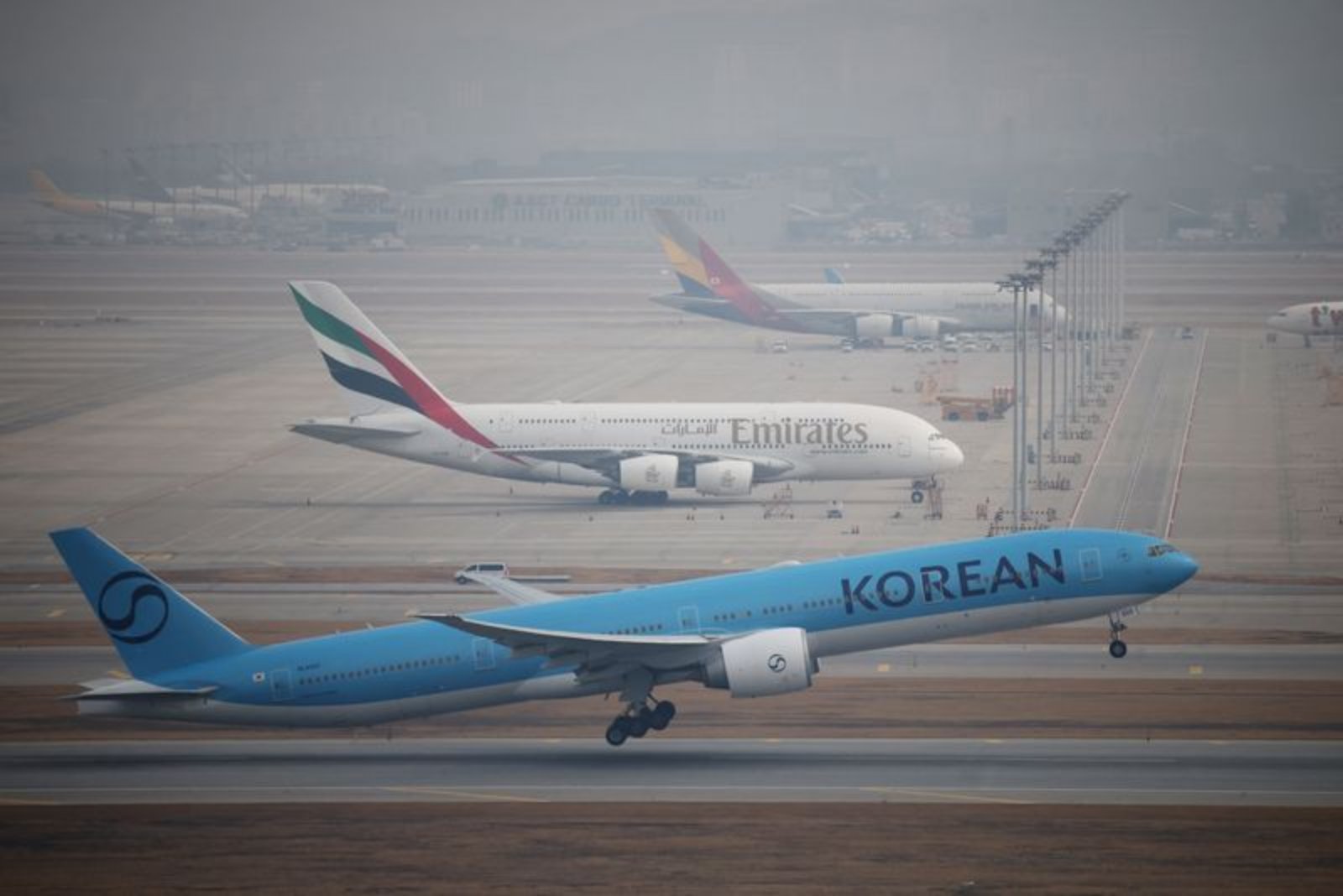
Asian airline shares were among the hardest hit. Korean Air Lines slid 8.6%, Air New Zealand fell 7.8% and Hong Kong-based Cathay Pacific dropped 5%. European carriers, including Air France KLM, IAG (owner of British Airways), Wizz Air and Lufthansa, recorded morning declines in the range of 2.5% to 6%.
Major U.S. carriers were also lower in afternoon trading, with share movements between about 1% and 5%. JetBlue Airways recorded a 5.35% decline while American Airlines was down 3.44%.
Sharp jumps in fares on affected routes
Consumers felt the impact directly through markedly higher fares on routes that remained open. For example, direct Seoul-to-London service on March 11 with Korean Air Lines rose to $4,359 from $564 just seven days earlier, a change driven in part by seat availability constraints such that first class was the cheapest option listed. A Los Angeles-to-Lima fare on LATAM Airlines jumped to $2,125 from $499 over the same period. A one-way trip from Newark to Quebec City on Air Canada nearly tripled to $1,499 compared with a week earlier, according to airfare search data cited in the market commentary.
Analysts and equity researchers warned that such increases risk pricing out leisure travellers and could also lead companies to restrict business travel amid the uncertain outlook. Lorraine Tan, director of equity research for Asia at Morningstar, said the combination of higher costs and the uncertain environment could reduce travel demand, potentially extending into 2026.
Fuel, hedging and margin pressure
Fuel is the second-largest cost item for airlines after labour, typically accounting for about a fifth to a quarter of operating expenses. Some large Asian and European carriers have hedging programs in place to mitigate price swings, while most U.S. airlines largely abandoned fuel hedging over the past two decades.
Tom Fitzgerald, vice president of equity research at TD Cowen, said analysts assume airlines will be able to recapture some of the recent fuel cost increases through higher fares, but he added that margin expansion this year is difficult to imagine without a rapid retreat in energy prices.
Deutsche analysts warned clients that absent quick relief, carriers worldwide could be forced to ground thousands of aircraft, and some of the financially weaker airlines might have to halt operations entirely.
Operational stress and historical parallels
Longer flight times and constrained routes are adding crew and operational cost pressures. Subhas Menon, head of the Association of Asia Pacific Airlines, noted that if crude rises 20%, jet fuel may increase by several times that amount due to scarcity, multiplying costs alongside stretched crew resources caused by extended sectors when airspace is closed.
Deutsche analysts pointed to a prior episode in 2005 when a sharp spike in jet fuel costs after hurricanes Katrina and Rita inflicted widespread harm on the industry, ultimately contributing to major U.S. carriers like Delta and Northwest filing for Chapter 11 bankruptcy that year.
Cancellations, route shifts and regional impacts
Since February 28, when the U.S.-Israeli war on Iran began, more than 40,000 flights to and from the Middle East have been cancelled through March 9, according to Cirium data. With airspace limited, airlines are rerouting service, carrying extra contingency fuel or making additional fuel stops to allow flexibility in the event of last-minute diversions or longer corridors.
Cirium data show that Emirates, Qatar Airways and Etihad normally handle about one-third of passengers travelling from Europe to Asia and more than half of passengers on Europe-to-Australia, New Zealand and nearby Pacific Islands itineraries. Disruption to those Gulf-based carriers therefore has an outsized effect on traffic flows between Europe and the Asia-Pacific region.
Turkey also reported flight suspensions: Turkish Airlines, AJet, Pegasus and SunExpress have cancelled services to Iraq, Syria, Lebanon and Jordan until March 13, according to Turkish Transport Minister Abdulkadir Uraloglu.
Outlook and immediate uncertainties
High oil and jet fuel prices, tightened airspace and large-scale cancellations present immediate cost and revenue challenges for airlines and create downside risks for travel-related sectors. The combination of higher fares and reduced connectivity could constrain tourism and business travel volumes, while carriers face elevated operating expenses and potential capacity reductions if the situation persists.
Industry participants and analysts are watching energy prices and airspace developments closely for signs of stabilization. In the near term, carriers will contend with elevated fuel bills, disrupted schedules and weaker passenger demand in certain markets until operational conditions improve or energy prices retreat.