
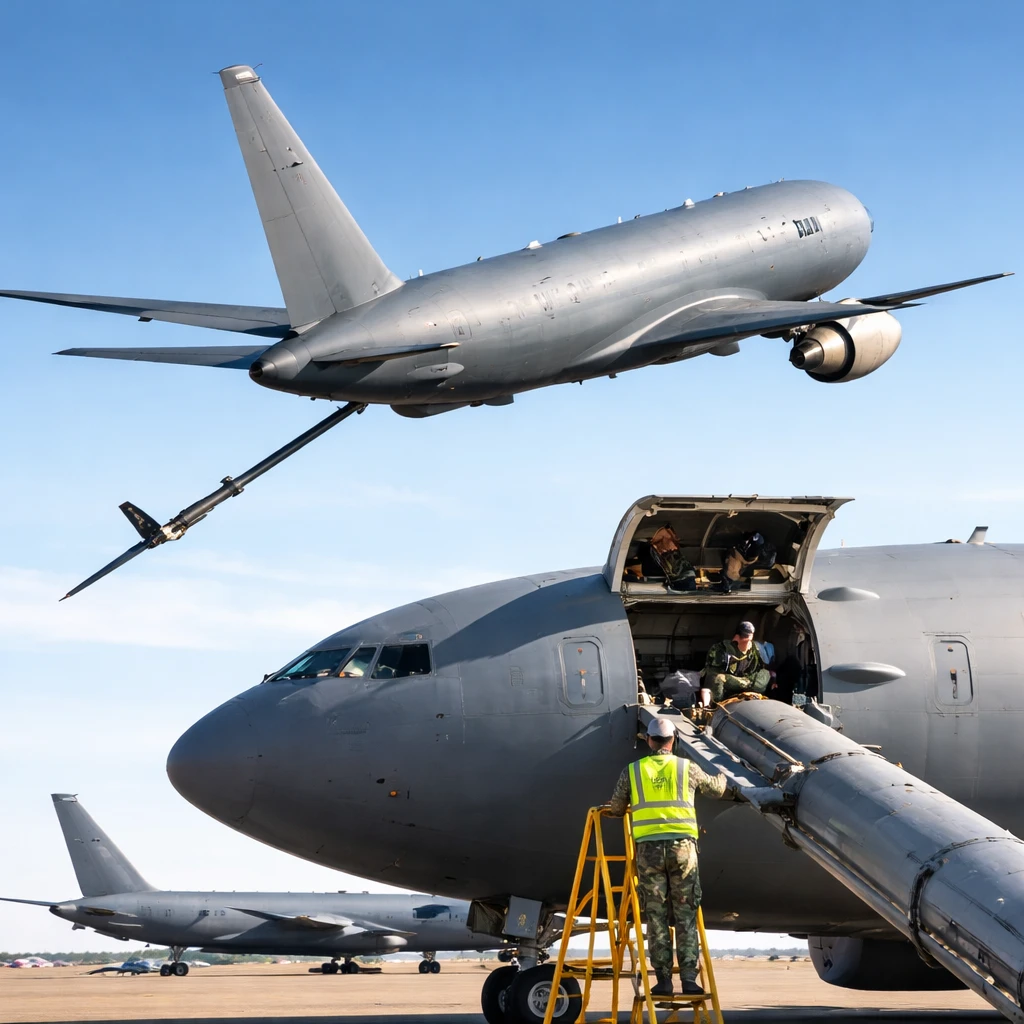
During a March 4 congressional hearing, U.S. Air Force Vice Chief of Staff Gen. John Lamontagne told lawmakers that Boeing must correct ongoing problems with the KC-46 tanker before the Air Force will move forward with another order.
Lamontagne did not enumerate all of the specific issues that could delay a follow-on award to the current contract for 183 tankers. He said, however: "We are working through a couple of issues with the contractor, and we are not going to get a new contract for another 75 KC-46s until we work through some of those deficiencies."
The general told a Senate Armed Services subcommittee that a decision on whether to award the next contract is likely to be about two years away. He added that he is "confident that a good plan is in place" to address the problems sometime next year.
For years Boeing and the Air Force have been confronting faults related to the KC-46's refueling boom and the visual system used by boom operators to guide the boom during refueling operations. The program also experienced a temporary pause in deliveries last year after cracks were detected in a small number of newly built tankers.
The KC-46, which is derived from Boeing's 767 airliner, was selected to replace the Air Force's older KC-135 fleet, with more than 100 KC-46s already delivered. In November, the Air Force committed to the next block of 15 tankers under the existing contract.
Flight records show that several KC-46s have been employed in support of U.S. air strikes on Iran.
A Boeing spokesperson declined to comment on the hearing and instead pointed to remarks made by CEO Kelly Ortberg during a January 27 earnings call with analysts. Ortberg said the program is requiring elevated resource levels to meet delivery targets. "It is taking us more resources to make the deliveries," he said, noting the company delivered 14 tankers in 2025 and plans to deliver 19 in 2026. He added that Boeing intentionally kept resources at a higher level to help ensure timely deliveries.
Financially, Boeing reported a $565 million charge in its fourth-quarter results tied to the program and has accumulated more than $7 billion in losses on the fixed-cost contract. Ortberg characterized the existing contract as problematic, saying: "Obviously, this has been a bad contract for the last decade, this existing contract." He said Boeing will adjust its pricing when bidding on the next contract to ensure "we can make money" on future work.
This sequence of technical, delivery and financial challenges places the KC-46 program at the center of both procurement scrutiny and operational planning for aerial refueling capacity. Lawmakers examining the contract were told that resolving deficiencies is a prerequisite for any additional large-scale award of airframes.