
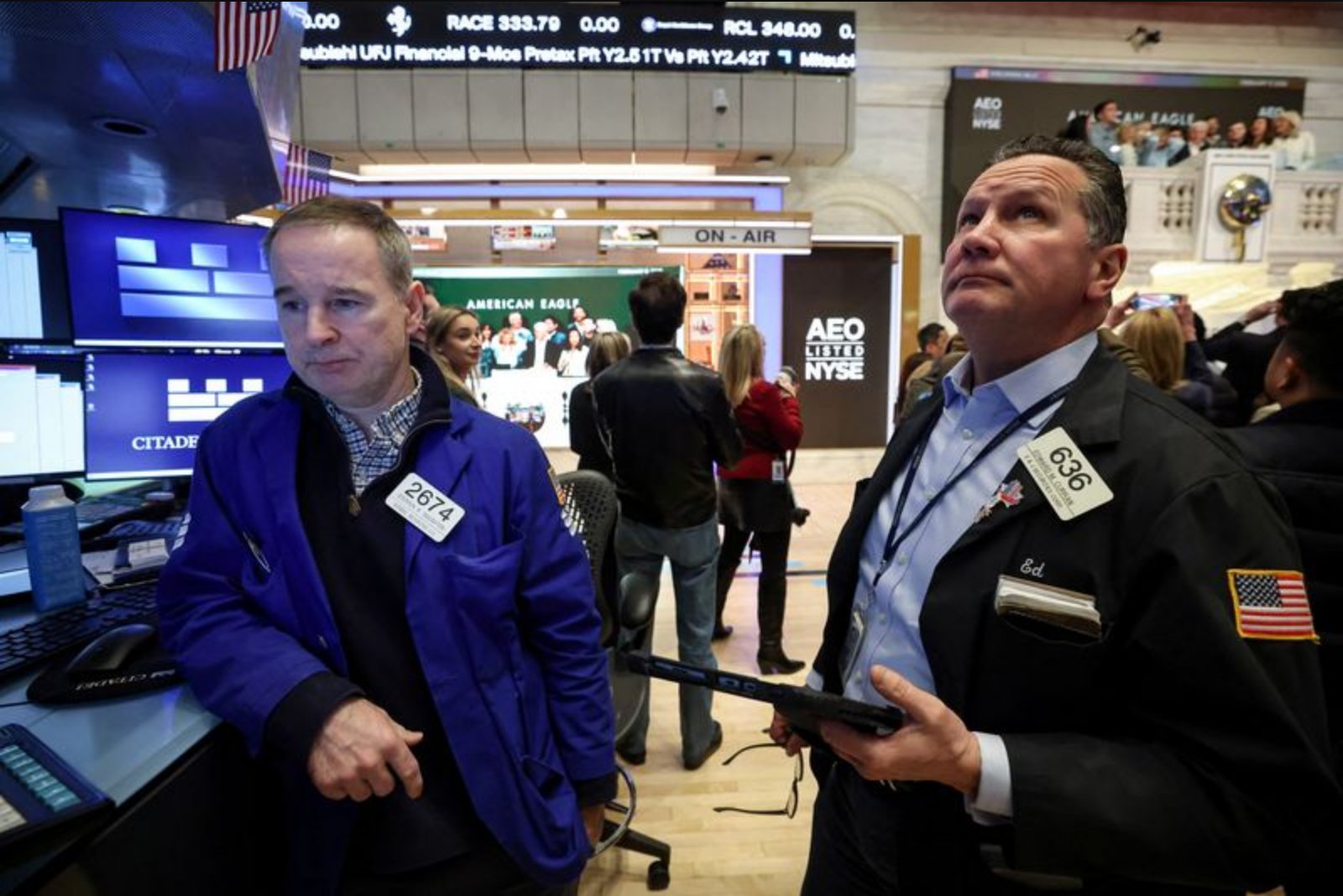
Wall Street moved quickly from targeted selling in software shares to a wider, cross-sector rout as investor concern over the disruptive potential of artificial intelligence intensified. The initial shock came after Anthropic unveiled a legal AI plug-in and accelerated again as several firms released upgraded AI models and new AI-driven features, prompting market participants to reprice exposure across industries.
Market strategists described a sentiment dominated by caution. Barclays equity strategist Emmanual Cau said that with fear front and center, "investors remain in 'sell first think later' mode, asking 'who is next' and showing no mercy for anything remotely seen as an AI loser." The nervousness extended quickly beyond obvious technology targets into areas traditionally viewed as more resilient to automation.
Software and loans tied to software
The S&P 500 Software & Services index has lost about $2 trillion in market value from its October peak, with roughly half of those losses occurring over a recent two-week stretch as AI tools advanced rapidly. Investors have focused on the potential for AI to change the economics of subscription and enterprise software that has been reliably profitable for many years.
Several large Nasdaq names were among the worst performers so far this year: Atlassian fell 47%, Intuit declined 40%, and Workday lost roughly one third of its value. Other major software and security providers were hit as well, with Salesforce down about 30% in 2026, Adobe off 25% and CrowdStrike down 12%.
Those moves also weighed on alternative asset managers that hold loans or leverage tied to software companies. Ares, Blackstone, Blue Owl, Apollo, TPG and KKR have each dropped between 13% and 24% this year, reflecting concern that a weakening software sector could ripple through credit exposures. Estimates cited in market commentary put roughly one fifth of the private credit market's exposure into the software sector.
Brokerages, data analytics and legal services
The selloff spread to wealth management, brokerage and data analytics businesses after a wealth management firm introduced AI-enabled tax planning tools that underscored how fast the technology is evolving and highlighted possible threats to core revenue streams. Shares of brokers including LPL Financial, Raymond James Financial and Charles Schwab fell more than 7% on a single trading day.
Major information and index providers also suffered heavy losses. S&P Global, which issued a downbeat earnings outlook for 2026, fell more than 25% in February and was on pace for its worst monthly performance since 2009. Moody's, FactSet Research and MSCI all experienced sharp declines during the same period. Nasdaq-listed Thomson Reuters hit a near five-year low amid investor concern about AI's effects on legal services revenue.
Commercial real estate services
Commercial real estate (CRE) firms and investment managers were among the sectors to see pronounced selling as investors rotated away from businesses described by analysts as high-fee and labor-intensive - attributes market participants judged potentially vulnerable to automation. On a single trading day, CBRE Group and Jones Lang LaSalle each fell about 12%, Cushman & Wakefield slipped nearly 14%, and CoStar Group dropped 5.9%.
Morningstar analyst Sean Sunlop cautioned that market concerns may be overstated, pointing to fragmented CRE end markets and noting that for many clients real estate activities are not core. He also observed that valuations remained elevated despite recent declines.
Insurance industry
Insurance brokers and underwriters experienced meaningful weakness after an online platform introduced an AI-powered insurance comparison tool that plugs into ChatGPT, allowing users to compare car insurance rates. The S&P 500 insurance index plunged 3.9% on a Monday, marking its largest single-day drop since mid-October.
Brokerage shares were particularly hard hit: Willis Towers Watson lost 15% over the week and was set for its worst weekly performance since the pandemic-induced selloff in March 2020. Aon fell 9% and Arthur J. Gallagher declined 15% during the same timeframe.
Morgan Stanley equity strategist Bob Jian Huang said he expects a bifurcation among brokers. He suggested simpler insurance products such as term life, personal auto and home could face significant AI disruption over the next five years, while higher-valued brokers are likely to employ AI to enhance analysis and underwriting rather than be displaced by it.
Trucking and logistics
Trucking and logistics stocks plunged when an AI-focused logistics company reported that its SemiCab unit had increased customer freight volumes by 300% to 400% "without a corresponding increase in operational headcount." The announcement triggered dramatic moves in names such as Landstar System and C.H. Robinson, and helped push the Dow Jones Transportation Average down 4.4% on the day.
Jefferies analysts described the market reaction as disconnected from fundamentals, noting that proprietary freight data and physical networks remain durable moats for logistics operators.
Broader market implications and investor posture
The wave of selling demonstrates how investor concern about AI's reach has begun to intrude into sectors not traditionally grouped with technology. Where specific AI product launches or upgrades have signaled a potential for rapid change in business models, market participants have reacted swiftly across asset classes and industries. The movement has affected equities directly and has pressured firms with credit exposure to vulnerable sectors.
While the selloff originated with software stocks following the legal AI plug-in release, subsequent model upgrades and product introductions intensified investor unease, amplifying losses and prompting reassessments of revenue and loan exposure in multiple areas of the economy.
Note on scope: This report outlines the sectors and companies that market participants specifically cited as affected during the recent period of selling. It reports the reactions and comments as conveyed by market participants and analysts; where estimates were referenced, they were presented as such in market commentary.