
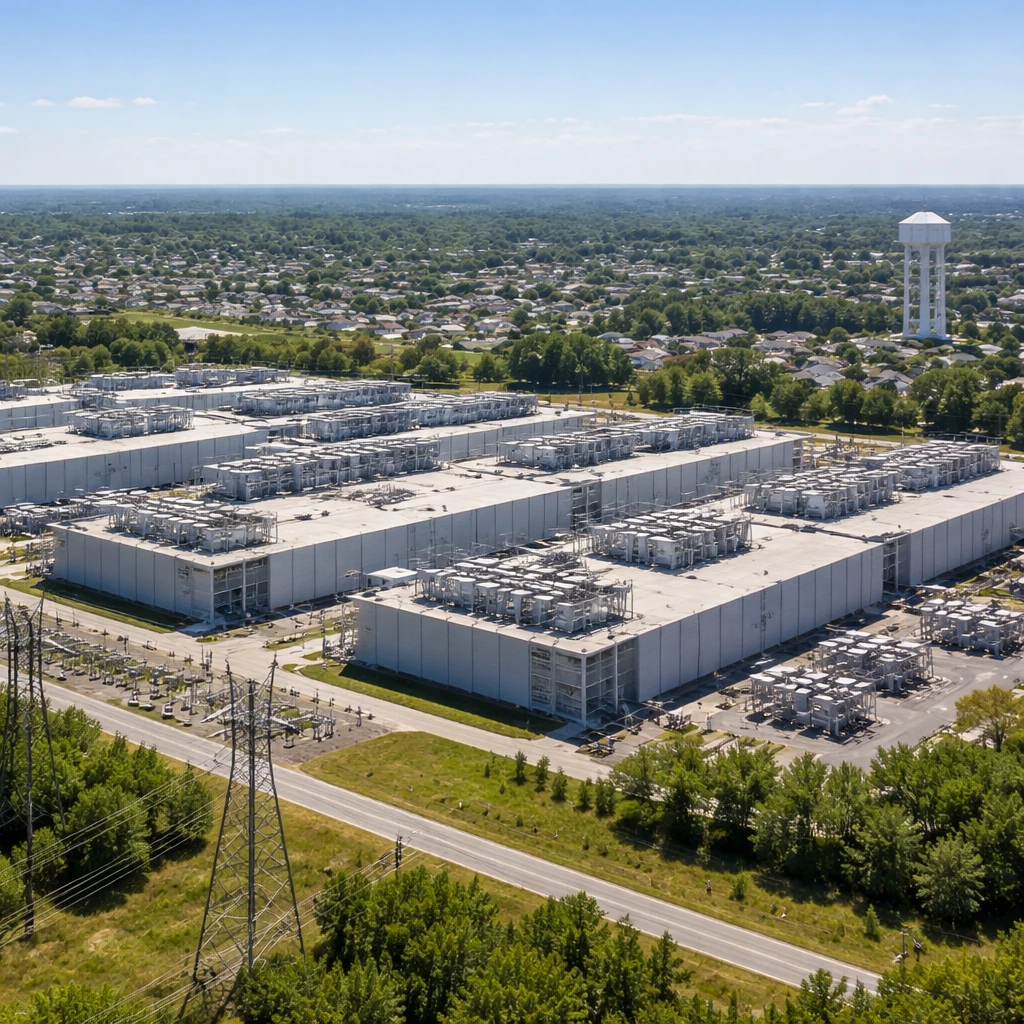
The Trump administration is asking the world's largest technology companies to agree to a voluntary compact designed to limit the local effects of an accelerated build-out of artificial intelligence data centers, two administration officials said.
The proposed agreement would ask major data center builders - which could include Microsoft, Alphabet, OpenAI, Meta and Amazon - to pledge that their facilities will not drive up household electricity costs, place undue pressure on water supplies, or undermine the stability of public electricity grids.
Administration officials described the approach as a voluntary arrangement between the White House and large-scale data center operators. The officials said the compact is intended to provide reassurances to communities and regulators that the rapid expansion of AI infrastructure will not come at the expense of local utility affordability or reliability.
Officials point to growing public concern around the local consequences of data center construction. As AI models demand increasing amounts of processing power, data centers have moved to the forefront of that debate because of the substantial energy and water inputs they can require. The compact is aimed at addressing those concerns through industry commitments rather than formal regulation.
In January, the president said he was partnering with major technology companies to ensure data centers do not increase electricity bills for households. The current push for a voluntary compact follows that comment and reflects heightened scrutiny of how fast-growing AI infrastructure interacts with community resources.
Context and implications
Data centers are central to the AI industry because they provide the extensive compute resources needed to run advanced models. The administration's outreach frames the issue as one of local public impact - household energy costs, water consumption and grid health - rather than a direct intervention in how companies design or operate AI systems.
Officials emphasized the voluntary nature of the compact. They characterized it as a cooperative measure aimed at balancing industry expansion with protections for public utilities and residents where data centers are built.
What remains limited in public detail
The officials noted the compact but did not provide public details on specific commitments, enforcement mechanisms or timelines. As described by the officials, the effort is presented as an agreement in principle, with particulars to be determined between the administration and participating companies.